
Best Decking Shapes: How to Choose the Perfect Layout for Your Garden
Embark on a journey to discover the perfect decking shape for your next project! Explore popular shapes that elevate your garden's aesthetic while meeting your practical needs. From classic rectangles to captivating curves, multi-level marvels, and geometric wonders, unravel the advantages, drawbacks and considerations of each and find inspiration for your decking project.

Author Name
Chief Writer
Thu, 28 Jul 2026
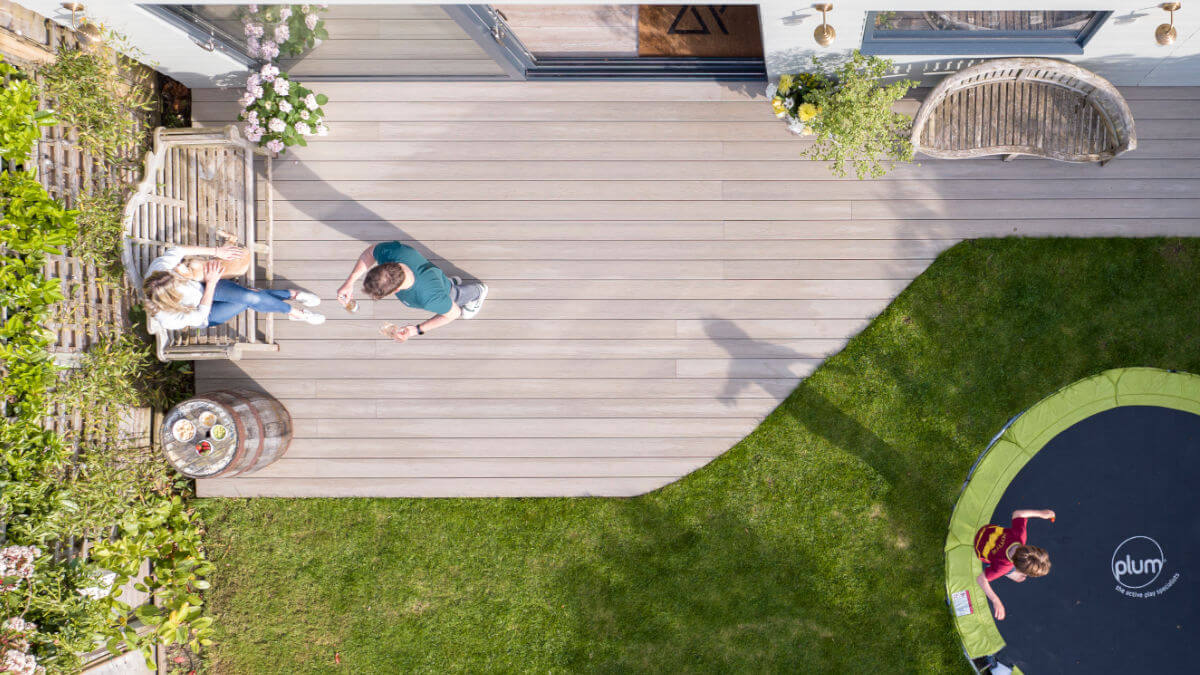
Creating the ideal outdoor space involves careful consideration of various elements, with decking being a prominent feature that can greatly enhance both the aesthetic appeal and functionality of your garden.
When embarking on a decking project, one of the key decisions to make is selecting the right shape that complements your garden's overall theme and meets your practical needs.
In this guide, we'll explore some of the most popular decking shapes, along with their advantages, drawbacks, and considerations to help you make an informed choice for your next project.
Rectangular Decking
The rectangular deck remains the most popular choice for UK homes, and for good reason. Its simple, symmetrical design suits almost any property style, from contemporary terraces to traditional gardens.
Advantages:
Easy to plan, install and furnish.
Works well with composite decking board lengths for minimal cuts and waste.
Ideal for defined spaces like dining or lounge areas.
Rectangular shapes also provide flexibility for multi-zone designs, where a straight-edged deck connects seamlessly to a paved area or lawn.
Tip: For a refined finish, consider picture framing the edges with a contrasting deck board colour or running the boards diagonally for visual depth.
Curved Decking
For a more contemporary or natural feel, curved decking shapes add elegance and fluidity to outdoor spaces. Arched edges or circular platforms help soften angular garden designs and pair beautifully with composite materials, which can be cut precisely for smooth curves.
Advantages:
Blends harmoniously with landscaping and planting schemes.
Creates visual interest and movement in large spaces.
Ideal for modern gardens, around pools or alongside lawns.
Curved designs work best with composite decking systems, which offer dimensional stability and consistent colour. The installation process may demand a bit more time and precision compared to traditional rectangular shapes, requiring careful planning to achieve those desired curves.
Multi-Level Decking
When your garden features slopes or height variations, multi-level decking can create a striking statement. By combining several connected platforms, you can define different functions, dining, relaxing or entertaining, while enhancing flow and usability.
Design Tips:
Use steps or planters to visually separate levels.
Choose contrasting board colours or directions for definition.
Integrate lighting along risers for safety and ambience.
Composite decking is ideal for multi-level builds thanks to its lightweight construction and hidden fastener systems, which provide consistent spacing and a seamless finish. Multi-level decking emerges as a versatile solution for utilising garden space effectively, particularly in sloped or uneven terrains. With its ability to maximise space, it not only adds dimensions to your outdoor area but also enhances the overall visual interest.
Island Decking
A circular or island deck is a freestanding platform placed within a lawn or garden area, creating an independent space for dining, sunbathing or socialising.
Benefits:
No need to attach to a building or boundary.
Flexible placement, ideal for large gardens or integrating with garden features.
Can include pergolas, benches or planters for a built-in look.
Tip: Using plastic lumber joists for the substructure ensures stability and prevents ground moisture from affecting longevity, a perfect pairing for sustainable composite boards.
Octagonal Decking
For something different, an octagonal or polygon-shaped deck adds a geometric twist to traditional layouts. These symmetrical designs work especially well for hot tubs, pergolas or garden pavilion decking.
Benefits:
Creates a strong central focal point.
Enhances formal garden layouts.
Offers symmetry that complements circular lawns.
Although more intricate to install, modern composite systems make it easier to achieve clean, consistent edges with minimal maintenance required. Hexagonal or octagonal decking injects a modern geometric flair into your garden. With its unique shape, it offers multiple angles that capture different perspectives of the surroundings, transforming your outdoor space into a captivating environment.
Triangular Decking
Triangular decking offers creative and space-efficient design, perfect for tight corners, angled plots or garden nooks that can’t accommodate standard rectangular decks.
Benefits:
Makes use of unused or irregular garden space.
Adds geometric interest and contrast to curved landscapes.
Can act as a linking platform between main deck levels or pathways.
Triangular designs are easier to achieve with composite materials, which allow precise cutting and consistent edge finishing. While the striking geometry of a triangular deck adds flair to your garden, potential drawbacks may include potentially higher construction costs due to the intricate shape.
L-Shaped Decking
An L-shaped deck wraps neatly around a property or garden corner, helping to define multiple areas while maximising space.
Benefits:
Ideal for linking two elevations or façades.
Creates natural separation for dining and lounge zones or walkways.
Works well on both raised and ground-level installations.
This shape is also great for extending living areas around garden rooms or conservatories, providing a wraparound terrace that feels connected to the building.
Tip: Use adjustable pedestals to easily adjust levels between sections for a smooth transition.
Decking Pathway
Decking pathways are a stylish alternative to paving or gravel. They guide movement through a garden while maintaining a unified, modern look.
Benefits:
Create cohesive transitions between areas such as patios, pergolas or garden rooms.
Provide a level, slip-resistant surface that’s ideal for wet conditions.
Pair beautifully with composite decking boards for consistency and low maintenance.
Creating a decking pathway offers a charming and practical solution to navigating your garden with style. Whether winding through lush foliage or leading to a secluded corner, decking pathways effortlessly blend functionality with aesthetic appeal.
How to Choose the Best Decking Shape
When planning your deck, consider:
Space and proportion – Large gardens can support bold shapes; smaller spaces benefit from simplicity.
Functionality – Decide whether you need zones for dining, lounging or connecting walkways.
Orientation – Position shapes to maximise sun exposure or shade.
Materials and substructure – Composite boards, pedestals and plastic joists make complex shapes easier to build and maintain.
Aesthetic preference – Choose shapes that echo your home’s architecture and garden geometry.
Ultimately, the best decking shape for your garden will depend on a combination of factors, including your personal preferences, garden layout and intended use of the outdoor space. While each shape has its own set of advantages and drawbacks, thoughtful consideration of these factors will help you select a shape that not only enhances your garden's aesthetic appeal but also fulfils your practical needs.
Whether you opt for a classic rectangular design, a sweeping curved layout or something more unconventional, investing time and effort into choosing the right decking shape will undoubtedly pay off in creating a beautiful and functional outdoor space for years to come.