

Composite Decking Care Guide: How to Clean and Maintain Composite Decking
Clean composite decking monthly (or as needed) with a soft-bristle brush and warm, soapy water, rinsing thoroughly afterwards. Sweep away leaves and debris regularly to stop tannin staining and algae growth. If pressure washing, stay below 1,500 PSI (about 100 bar) and keep the nozzle at least 30 cm from the boards. Never use bleach, metal shovels, or abrasive pads on capped boards.
At a glance
Maintenance aspect
Recommended guidance
Routine cleaning frequency
Monthly, or as needed
Deep clean frequency
At least twice a year (spring and autumn)
Tools needed
Soft-bristle brush or broom, bucket, garden hose, mild soap/biodegradable detergent
Pressure washer limit
Below 1,500 PSI / ~100 bar, fan-tip nozzle, 30 cm+ distance, clean along the board grain
Avoid
Bleach and chlorine-based cleaners, harsh solvents, metal shovels/scrapers, sanding capped boards, paints or coatings
Typical lifespan when maintained
25 years or more (capped boards)
Composite decking is designed to be far lower-maintenance than timber, but “low-maintenance” doesn’t mean “no-maintenance.” A few habits people bring over from timber decking — bleach, wire brushes, aggressive pressure washing — can do more harm than good on composite boards. This guide explains what to do, how often, and why, based on EnviroBuild’s own product guidance, cross-checked against independent composite decking manufacturers.
Why composite decking needs a different cleaning approach than wood
Capped composite boards, such as EnviroBuild’s Frontier range, have a hard polymer cap bonded over a wood-fibre/recycled-plastic core. That cap gives the board its stain and fade resistance — but it’s a surface finish, not a self-renewing material like timber. Sanding it or scouring it with abrasive pads and strong solvents can dull or strip the cap permanently, exposing the more absorbent core underneath. Uncapped boards (such as EnviroBuild’s Explorer range) don’t have this outer layer: they can tolerate light sanding to lift a scratch, but are also more porous and pick up stains more readily. Knowing which type you have changes what maintenance is safe.
How often should you clean composite decking?
A light clean — sweeping off debris and washing with soapy water — is generally enough once a month, or whenever the deck visibly needs it. Many manufacturers, including Trex and TimberTech, additionally recommend a more thorough deep clean at least twice a year, typically at the spring/autumn changeovers, to clear the pollen, tree debris and biofilm that build up over a season and that a quick sweep won’t shift. Spills (drinks, sauces, oils) should be wiped up straight away rather than left to soak in, since stain-resistance warranties on capped boards typically only cover marks cleaned within about a week of exposure.
Basic monthly routine:
Sweep off leaves, grit and dust with a soft broom.
Wash the surface with warm water and a mild, biodegradable detergent or soap, using a soft-bristle brush (not a wire or stiff-bristle brush, which can scratch the cap).
Scrub along the direction of the board grain, not across it.
Rinse thoroughly with clean water so no soap residue is left to attract dirt.
Allow to air dry. No oils, stains or sealants are needed or recommended on composite boards.
Can you pressure wash composite decking?
Yes, but with limits. Pressure washing suits capped composite decking as a rinse-and-refresh step, not as the main cleaning method — the water jet alone won’t lift ingrained dirt without a cleaning solution first. Keep the pressure below 1,500 PSI (roughly 100 bar), fit a fan-tip nozzle rather than a narrow turbo nozzle, and hold it at least 30 cm from the board surface, sweeping in line with the grain. Other composite manufacturers set similar limits: TimberTech also caps power washing at 1,500 PSI, while MoistureShield sets 1,300 PSI with a minimum 10-inch (25 cm) standoff — the general principle is “low pressure, wide nozzle, keep moving.”
Uncapped composite is softer and more vulnerable to a jet washer gouging or fraying the surface, so hand-washing is the safer default if you’re unsure which board type you have. Whatever the board, never rest the nozzle directly on the decking or hold it stationary — even at 1,500 PSI, a jet held too close for too long can etch the surface.
How do you remove algae and mould from composite decking?
Green or black patches, especially in shaded, damp corners, are usually algae or mould feeding on trapped moisture, pollen and organic debris rather than the board itself — composite doesn’t rot, but organic growth can sit on top of it. Standard soapy water and a soft brush will shift most light growth. For more established patches, a dilute white vinegar solution (roughly equal parts vinegar and water) scrubbed on with a soft or medium-nylon-bristle brush and rinsed off is a widely recommended, low-risk approach. Avoid bleach or chlorine-based products: several composite manufacturers explicitly warn that bleach and sodium hypochlorite cleaners can fade, chip or permanently discolour the cap layer, and using them may also fall outside a warranty’s approved-cleaning requirements. Keeping the deck swept clear of leaf litter, seeds and pollen is the most effective preventative step, since that debris is what feeds mould in the first place.
How do you remove tannin (leaf) stains from composite decking?
Tannin stains are the brownish discolouration left when wet leaves, seed pods or stacked timber sit on a board and leach tannic acid into the surface. They’re a cosmetic surface stain, not structural damage, but they set faster in damp weather. Prompt removal of wet leaves — before they’ve had time to sit — prevents most tannin marks from forming. Where staining has already occurred, a deck cleaner or “brightener” containing oxalic acid (the same mild acid used in many wood-cleaning products) is the standard remedy: applied per the product instructions and rinsed thoroughly, it lifts tannin discolouration without the need for sanding. This is why autumn leaf clearance matters more for composite decking than it might seem.
How to remove ice & snow from composite decking?
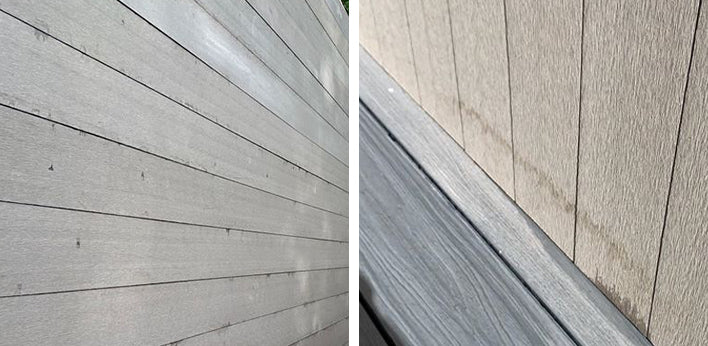
Clear snow and ice with a plastic shovel rather than a metal one, since a metal edge can scratch or gouge the board surface. Avoid calcium chloride-based de-icers: several manufacturers, EnviroBuild included, exclude marks caused by calcium chloride from their warranty, and it's one of the products most consistently flagged as damaging to composite surfaces. Where a de-icer is genuinely needed, a plain rock salt (sodium chloride) or urea-based product is the lower-risk choice, used sparingly and rinsed off once the ice has cleared. Removing snow and ice promptly, rather than letting it sit, limits how long moisture is trapped against the board and reduces the chance of surface marking.
How do you remove grease and rust stains from composite decking?
Grease and cooking oil:
Blot up excess liquid immediately with paper towel rather than wiping it around, then work a mild dish soap or biodegradable degreaser into the area with a soft brush, rinsing thoroughly. The longer grease sits, the further it soaks in, so speed matters more than the product used.
Rust marks:
These typically come from metal furniture feet, plant pot stands or tools left in contact with the deck, especially where moisture collects underneath. A 50/50 vinegar-and-water solution or lemon juice left on the mark for around 10 minutes, then gently scrubbed and rinsed, lifts light rust staining; for stubborn marks, oxalic-acid-based rust or deck-brightening cleaners are the standard next step. Avoid scrubbing hard enough to scratch the cap, and avoid acetone, undiluted bleach, or solvents like WD-40, which can damage the surface finish. Felt or rubber pads under furniture legs prevent most rust staining before it starts.
Seasonal maintenance table
Season
Task
Why It Matters
Spring
Deep clean to remove winter grime, pollen and any residual de-icing residue; check fixings and boards for movement after cold weather
Clears the debris that feeds mould over the growing season and catches any winter damage early
Summer
Wipe up spills (food, drink, suncream, barbecue grease) promptly; check shaded/damp areas for early algae
Warm, humid conditions speed up staining and organic growth; capped-board stain warranties often require quick clean-up
Autumn
Sweep leaves, seed pods and other organic debris off the deck regularly rather than letting them accumulate
Wet leaves are the main cause of tannin staining and provide food for mould and algae going into winter
Winter
Clear snow and ice with a plastic (not metal) shovel; avoid calcium chloride-based de-icing salts; brush off standing water where possible
Metal shovel edges can scratch or gouge the board surface, and some de-icing salts are known to affect composite and timber finishes; both are typically excluded from manufacturer warranties
Do you need to oil, stain or seal composite decking?
No. Unlike timber, composite decking doesn’t need oiling, staining, painting or sealing at any point in the year, and manufacturers generally advise against applying any of these — coatings don’t bond properly to the polymer cap and can peel, and applying paint or stain to composite boards is commonly listed as a warranty exclusion. The material’s colour and texture are baked into the board itself, not a surface treatment that wears off.
How do you repair scratches in composite decking?
Repair method depends entirely on board type, so identify whether your boards are capped or uncapped before doing anything abrasive.
Uncapped boards (e.g. EnviroBuild’s Explorer range):
Light surface scratches can often be reduced by gently working the mark with a fine-grade steel scourer along the direction of the grain. Deeper scratches typically need 60–80 grit sandpaper, again sanded along the grain rather than across it, followed by a light clean to remove dust. Because the composite is exposed on every face, sanding here removes the scratch rather than a protective layer.
Capped boards (e.g. EnviroBuild’s Frontier range):
The polymer cap is more resistant to scratching in the first place, but for shallow surface scuffs, some manufacturer guidance suggests gently passing a heat gun over the mark on a low setting to help the cap layer re-flow and smooth out, then very lightly sanding with 60–80 grit paper only if needed. This is a more delicate repair than on uncapped boards: too much heat or pressure can discolour or distort the cap, and sanding through it removes the stain- and fade-resistant surface permanently, leaving a duller, more absorbent patch behind. Test on an inconspicuous area first, and treat this as a last resort for visible scratches rather than routine maintenance.
If you’re not sure which type you have, treat the board as capped and avoid sanding or heat until you’ve confirmed with the manufacturer.
Can you paint or stain composite decking?
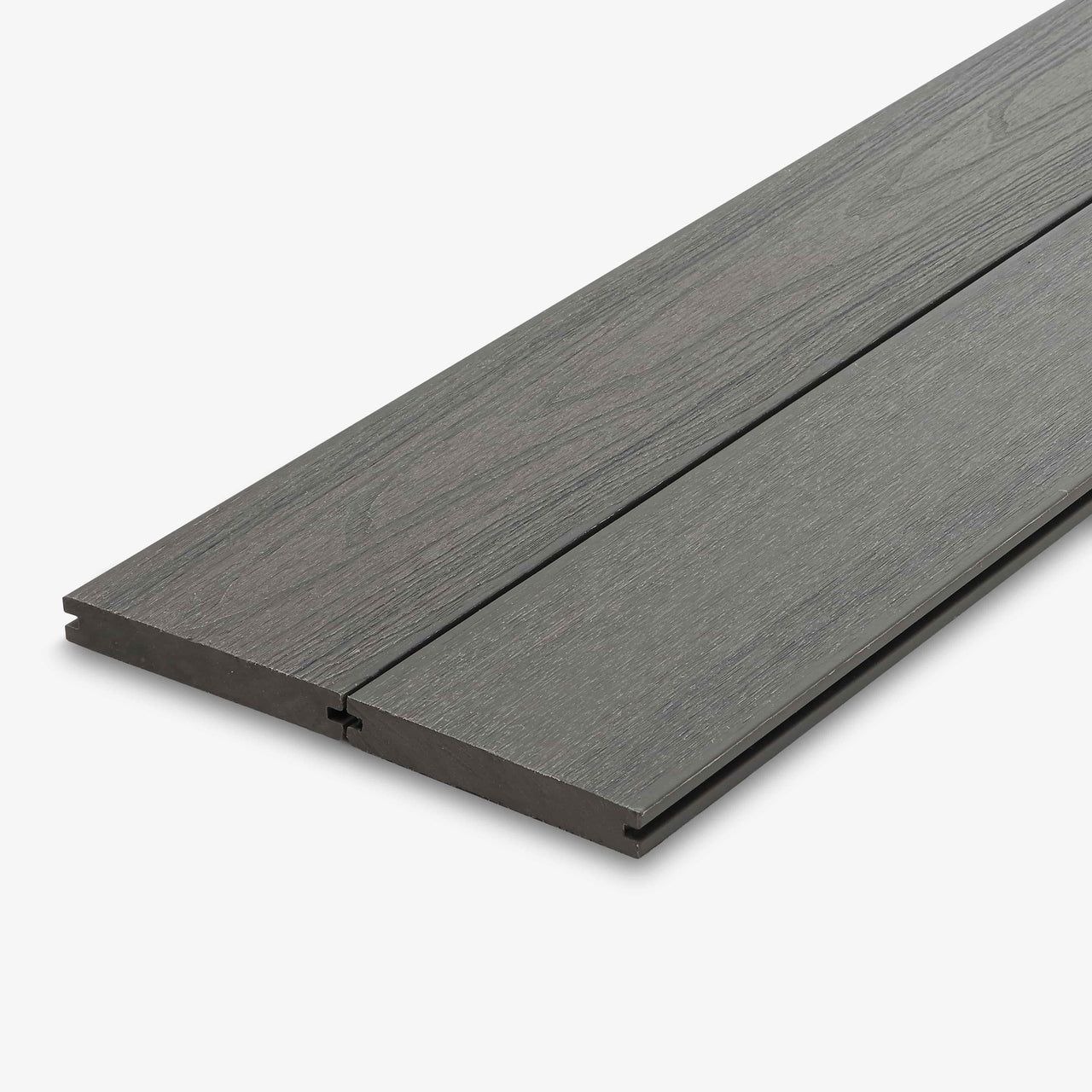
Technically yes, but it isn’t recommended. Composite boards get their colour from pigment embedded throughout the cap or core during manufacturing, not from a surface coating, so paint or stain has nothing to properly bond to and typically adheres poorly, peels, or wears unevenly compared with timber. Manufacturers generally advise against it, and applying paint, stain or aftermarket coatings is commonly listed as a warranty exclusion. If a board must be painted or stained for some reason, most guidance suggests waiting until the initial weathering period (roughly the first 8–10 weeks after installation, during which natural tannins and surface residues wash out) has passed, cleaning thoroughly, and following the paint or stain manufacturer’s instructions for exterior composite/plastic substrates — with the understanding that this may affect your warranty.
Does composite decking fade over time, and can you slow it down?
Some fading is normal and expected in the first few months: tannins and manufacturing residues wash out over roughly 8–10 weeks, after which the board’s colour largely stabilises. Beyond that initial settling period, slow, gradual UV fade can continue over years, especially on uncapped boards and in south-facing, high-sun locations; capped boards are formulated with UV-stabilising additives in the cap layer specifically to slow this. Regular cleaning to remove surface grime, and optional shading (a pergola, umbrella or awning) for particularly exposed decks, can reduce the rate of visible fade, but no composite board is entirely fade-proof. See EnviroBuild’s fade guide and specific fade-warranty thresholds for each range before making a claim based on colour change alone.
Quick maintenance checklist
Sweep weekly (or as needed) and keep board gaps and drainage clear of debris
Wash with soap and water monthly, along the grain, and rinse thoroughly
Deep clean at least twice a year (spring and autumn) to clear pollen and biofilm
Wipe up spills, especially oils and tannin-heavy leaf litter, within about a week
Pressure wash only as a rinse step: under ~1,500 PSI, fan-tip nozzle, 30 cm+ standoff
Never use bleach, wire brushes, metal shovels or abrasive pads on capped boards
Don’t oil, seal, stain or paint the boards — it isn’t needed and may void the warranty
Use felt/rubber pads under furniture and plant pots to prevent rust and pressure marks
In winter, clear snow/ice with a plastic shovel and avoid calcium chloride-based de-icers

Frequently Asked Questions
How often should I clean my composite decking?
A light monthly clean — sweeping debris and washing with soapy water — is generally enough, with a more thorough deep clean at least twice a year (commonly spring and autumn) to clear built-up pollen, dirt and biofilm.
Is it safe to pressure wash composite decking?
Yes, for capped composite boards, provided you stay below around 1,500 PSI (roughly 100 bar), use a fan-tip nozzle, keep it at least 30 cm from the surface, and clean in line with the board grain. Uncapped boards are more vulnerable and are safer hand-washed.
Can I use bleach on composite decking?
No. Bleach and other chlorine-based cleaners can fade, discolour or chip the protective cap on composite boards. Mild soap, biodegradable detergent, or a diluted white vinegar solution are safer alternatives for most stains.
What causes dark or green patches on composite decking?
Usually algae or mould feeding on trapped moisture, pollen and leaf debris sitting on the board surface, particularly in shaded or damp spots. Regular sweeping and washing prevents most of it from developing.
Do I need to oil or seal composite decking?
No. Composite decking doesn’t require oiling, staining or sealing, and applying paints or coatings is generally not recommended and may affect warranty cover.
What should I avoid using on composite decking in winter?
Avoid metal shovels or sharp-edged tools for clearing snow and ice, and avoid calcium chloride-based de-icing salts — both are commonly excluded from manufacturer warranties and can mark or damage the board surface.
Can you get scratches out of composite decking?
On uncapped boards, light scratches can often be worked out with a fine steel scourer and deeper ones with 60–80 grit sandpaper along the grain. On capped boards, sanding through the protective cap causes permanent, irreversible dulling, so a cautious heat-gun technique is sometimes used instead for shallow scuffs — treat this as a last resort and confirm the method won’t affect your warranty first.
Can you paint or stain composite decking?
It’s technically possible but not recommended. The colour is embedded in the board itself rather than sitting on the surface, so paint and stain typically adhere poorly and may void the manufacturer’s warranty.
A note on warranty cover
Manufacturer warranties on composite decking typically only apply if the board has been cleaned and maintained as instructed. On EnviroBuild’s Frontier range, for example, the stain-resistance element of the warranty requires spills to be cleaned within roughly a week of occurring, and warranty cover is void if metal shovels or sharp tools are used to clear snow/ice, or if paints or coatings are applied to the boards. Always check the specific warranty terms for your product range and, where a cleaning product isn’t explicitly approved by the manufacturer, test it on an inconspicuous area first.
Further Reading
Further Reading on EnviroBuild:
External sources: