
Composite Fencing Care Guide
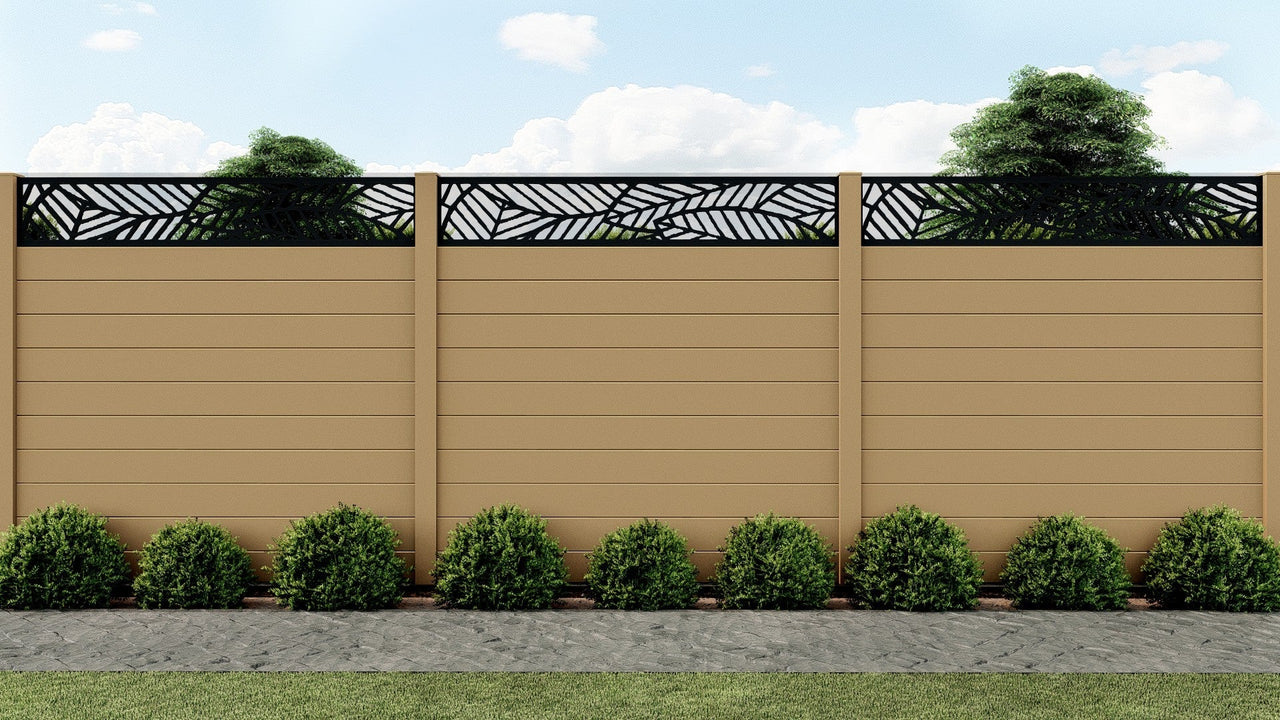
Composite fencing from EnviroBuild is designed to deliver long-lasting style and performance with minimal effort. Made from recycled materials and built to withstand the UK’s changing weather, it offers a sustainable, low-maintenance alternative to traditional timber fencing.
While these systems are exceptionally durable, occasional cleaning and inspection will help keep your fencing looking its best year after year. This guide covers cleaning, seasonal care and long-term maintenance.

Author Name
Chief Writer
Thu, 28 Jul 2026
Routine Cleaning & Maintenance
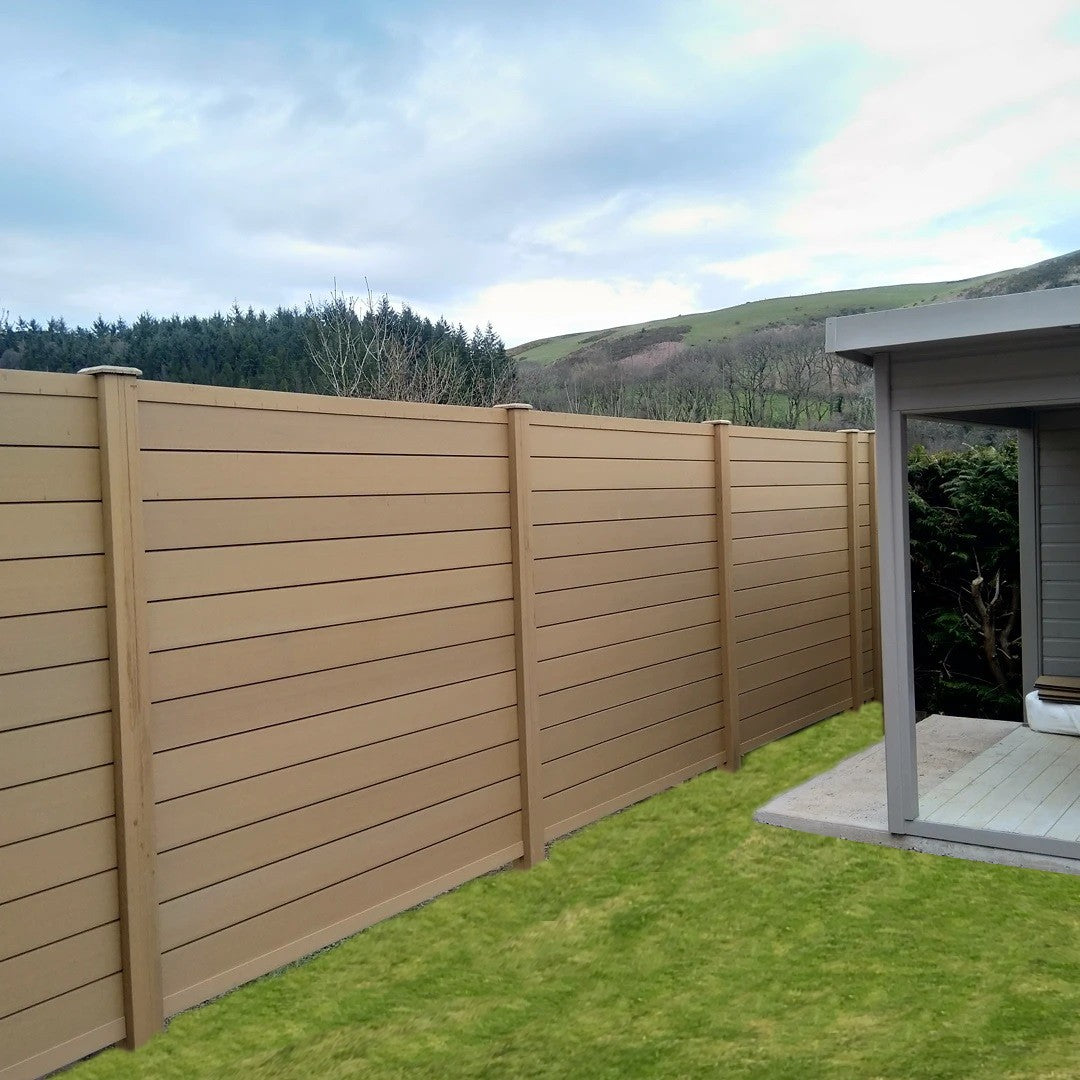
Composite fencing requires little upkeep compared to timber, no painting, sealing or staining is ever needed. However, regular cleaning keeps the surface fresh and ensures that panels and posts continue to perform as intended.
How to Clean Composite Fencing (step-by-step)
Remove loose dirt and debris using a soft broom or brush.
Prepare a mild cleaning solution with warm water and standard washing-up liquid.
Scrub gently using a soft-bristle brush or cloth, working along the grain of the boards.
Rinse thoroughly with clean water to remove any soapy residue.
Allow to air dry naturally.
Additional Tips
Clean once or twice a year, or after heavy build-up.
For deeper cleaning, use a low-pressure washer (<1500 psi) held at least 30 cm from the surface.
Avoid solvents, bleach, or abrasive pads, as these may damage the finish.
Long-Term Durability & Colour Stability
Composite fencing systems are engineered for a lifespan exceeding 20 years, with minimal maintenance.
Natural Weathering: Colour may gently lighten in the first few months as panels settle into a stable shade.
UV Resistance: Built-in UV stabilisers protect against fading.
Structural Checks: Inspect fixings, posts and panels annually to ensure they remain secure and properly aligned.
Composite Fencing Care Guide: How to Clean and Maintain Composite Fencing
Clean composite fencing at least twice a year — typically spring and autumn, with an extra clean if a section sits in permanent shade — using a soft-bristle brush and warm water with a mild soap or biodegradable detergent, rinsed thoroughly afterwards. Unlike timber fencing, it never needs staining, painting or sealing. The main ongoing job isn’t the boards themselves but checking the posts, ground fixings and any retrofit brackets periodically, since a fence’s weak point is usually where it meets the ground, not the panel face.
At a Glance
Task
Guidance
Routine cleaning frequency
At least twice a year (spring and autumn); more often for shaded panels or fences near trees/hedges
Tools needed
Soft-bristle brush, bucket, garden hose, mild soap/biodegradable detergent
Pressure washer limit
Low pressure only (well under ~1,500 PSI/100 bar), fan-tip nozzle, 30 cm+ distance, along the board rather than jabbed at one spot
Post/fixing check frequency
At least once a year, and after any storm or high-wind event
Avoid
Bleach and chlorine-based cleaners, wire brushes/abrasive pads, metal tools resting against boards, paints, stains or sealants
Warranty length (EnviroBuild)
15 years residential / 10 years commercial
Warranty height exclusion (EnviroBuild)
Fences above 2 metres in height are not covered
Composite fencing is sold on being far less demanding than timber fencing, and day to day that’s true — there’s no re-staining every couple of years and no rot to watch for in the boards. But “low-maintenance” still means periodic cleaning, and a fence has upkeep needs a deck or a wall of cladding doesn’t: it takes the impact of garden tools, sits closer to soil and vegetation on both sides, and depends on ground-level posts and fixings staying sound. This guide covers what that upkeep actually involves, based on EnviroBuild’s own published fencing guidance, cross-checked against independent composite fencing suppliers. Where EnviroBuild hasn’t published specific guidance on a point, that’s flagged clearly below as general best practice rather than EnviroBuild-specific advice.
Why does composite fencing need different care to timber fencing?
Timber fence panels need regular re-staining or painting to stay weatherproof, and left untreated they’re prone to rot, splitting and warping at ground level. Composite fencing, such as EnviroBuild’s Hyperion range (around 90% recycled wood fibre and plastic), is manufactured to resist all of that without any coating being applied or reapplied — EnviroBuild states plainly that “composite fencing never needs painting, staining, or sealing.” That removes the biggest recurring timber job entirely, but it doesn’t remove maintenance altogether: the boards still collect surface dirt, algae and organic grime like any outdoor surface, and the posts and fixings holding the fence up are still subject to wind load, ground movement and wear regardless of what the panels are made from.
How often should you clean composite fencing?
EnviroBuild’s own product guidance recommends “a simple wash with mild soap and water,” with an annual deep clean specifically called out for shaded areas where grime and algae build up faster. In practice, that means a wash at least twice a year — spring and autumn are the natural points, mirroring the guidance EnviroBuild gives for its composite cladding — with extra attention to any run of fencing that sits under trees, against a north-facing boundary, or backed by dense planting, since those sections dry out more slowly after rain and get dirty faster.
Basic monthly routine
Brush off loose dust, cobwebs and dry debris before wetting the panel.
Wash with warm water and a mild, biodegradable detergent or soap, using a soft-bristle brush.
Work along the length of the boards rather than scrubbing in circles.
Rinse thoroughly with clean water so no soap film is left to attract new dirt.
Allow to air dry. No oils, stains or sealants are needed at any point.
Can you pressure wash composite fencing?
Yes, cautiously. General composite-fencing guidance (this is a widely repeated cross-manufacturer benchmark rather than an EnviroBuild-published PSI figure) recommends staying on a low, domestic pressure setting — comfortably under the roughly 1,500 PSI/100 bar ceiling used as a benchmark for composite decking — with a wide fan-tip nozzle held at least 30 cm from the board and moved steadily along its length rather than held on one spot. A jet held too close or too long, even at low pressure, can etch or gouge the surface, and on a fence panel that’s usually more exposed to accidental contact than a raised deck board. If you’re not confident about pressure and distance, hand-washing with a hose and brush is the safer default, and it’s usually enough for a routine clean anyway.
How do you remove algae and moss from composite fencing?
Green or black patches on fencing tend to appear where a panel stays damp longest: north-facing boundaries, sections shaded by trees or a neighbouring building, and the bottom of panels near soil, mulch or overgrown planting where moisture collects. This is the same pattern seen on composite cladding, and for the same reason — it’s about how quickly a surface dries out after rain, not about the composite itself deteriorating, since the material doesn’t rot. A regular wash is the main prevention, since it clears the surface film that algae and moss feed on before it establishes. For patches that have already taken hold, a dilute white vinegar solution (roughly equal parts vinegar and water) worked in with a soft brush and rinsed off afterwards is a widely used, low-risk treatment. Avoid bleach and chlorine-based products, which can dull or discolour the surface and typically fall outside what’s approved for cleaning under a stain-resistance warranty.
How do you clean composite fencing after garden work?
This section reflects general best practice for composite materials rather than EnviroBuild-published guidance specifically
— EnviroBuild’s own fencing pages don’t currently address strimmer or herbicide contact directly.
Strimmer line can scuff or nick the lower edge of a fence panel if it’s run too close, so keeping a small working gap or fitting a guard/edging strip along the base of the fence is the simplest prevention; a light soapy wash usually clears any surface scuffing that does happen, since it’s typically cosmetic rather than structural. Weed killer overspray or drift from spraying nearby borders is worth rinsing off promptly with clean water rather than left to dry on the board — most composite surfaces tolerate incidental contact fine once rinsed, but leaving concentrated chemical residue to sit and dry on any painted or coated surface is generally worth avoiding as standard garden practice. If in doubt about a specific herbicide product, check its manufacturer guidance on contact with plastics/composites before spraying near the fence line.
How do you check fence posts and fixings?
The posts and ground fixings are where a composite fence is most likely to develop a real problem, since they carry the panel’s full weight and wind load and sit where moisture, frost and ground movement do the most work over time. EnviroBuild’s fencing systems use two different post approaches, and what to check depends on which one is installed:
New installations with full kits: These use composite posts set with steel ground anchors. Check periodically that the post sits square and firm in the ground, with no visible rocking, and that the anchor’s concrete base hasn’t been exposed or undermined by soil erosion, digging, or a burrowing animal near the base.
Retrofit panels on existing concrete posts:
These use channels fixed into the grooves of the existing concrete post to hold the composite panel. Check that the channel is still securely fixed to the concrete post, that the panel is seated fully in the channel, and that the original concrete post itself isn’t cracking, leaning or spalling — since a retrofit panel is only as sound as the post it’s fitted into.
On both systems, check fixing screws/brackets for corrosion or loosening at least once a year, and again after any storm or period of sustained high wind, since wind load on a solid fence line is one of the most common causes of post movement. EnviroBuild’s installation guidance also notes leaving at least 20 mm clearance between the top of the panel and the top of the post, which is worth checking hasn’t closed up if a post has shifted or the ground has settled.
How do you care for a composite gate?
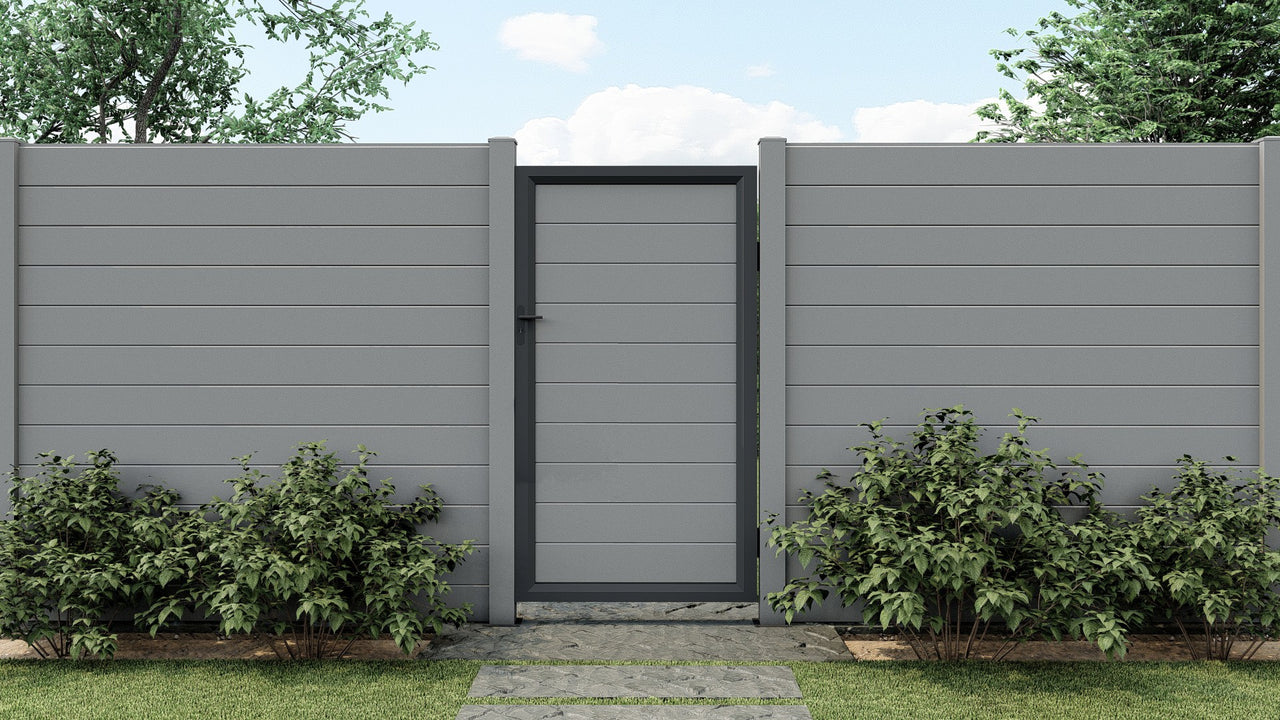
EnviroBuild sells matching composite garden gates alongside its fence panels, built with the same low-maintenance material and finished with an integrated lock. Clean the gate panel the same way as the fence — soapy water and a soft brush — but give the moving parts their own periodic check: hinges and the lock/latch mechanism are metal hardware, not composite, so they benefit from an occasional check for corrosion, stiffness or loosening screws, and a light lubricant on the hinge pins if it starts to bind or sag. A gate takes far more repeated movement and stress at its fixing points than a static fence panel, so it’s worth checking the hinge-side post specifically each time you do the annual post check, since that’s the point carrying the most repeated load.
Does composite fencing need staining, painting or sealing?
No. This is one of the main differences from timber fencing: EnviroBuild states directly that composite fencing “never needs painting, staining, or sealing,” and applying any of these isn’t recommended. The colour is built into the board during manufacture rather than sitting on top as a coating, so paint and stain typically adhere poorly, and adding an aftermarket coating is the kind of unapproved treatment that can put a warranty claim at risk.
Seasonal maintenance table
Season
Task
Why It Matters
Spring
Full wash-down of both faces; check posts, fixings and the panel-to-post gap after winter weather
Clears winter grime and catches any movement or damage before the growing season starts
Summer
Trim back plants, hedges or climbers growing against or through the fence; spot-clean any garden-work marks promptly
Keeps airflow around shaded sections and stops sap, strimmer marks or spray residue from setting in
Autumn
Clear leaves and organic debris from the base of the fence line on both sides; give the boards a second wash before winter
Wet leaf litter against the base feeds algae and moss and traps moisture against ground fixings
Winter
Check posts and fixings after any storm or high-wind event; avoid piling snow or ice against the base of panels
Wind load is a leading cause of post movement; sustained snow/ice contact keeps the base of the fence wet for longer
Quick maintenance checklist
Wash both faces at least twice a year (spring and autumn); add an extra clean for shaded or tree-lined sections
Use a soft-bristle brush, mild soap and warm water, rinsed thoroughly — never bleach or chlorine-based cleaners
Pressure wash only on low pressure with a fan nozzle, 30 cm+ standoff, kept moving along the board
Check posts, ground fixings and retrofit channels/brackets at least once a year and after storms
Keep the base of the fence clear of leaf litter, mulch and overgrown planting on both sides
Rinse off any weed killer overspray or strimmer contact promptly rather than letting it dry on the board
Check gate hinges, latch and lock hardware periodically, and lubricate hinge pins if they start to stiffen
Don’t paint, stain or seal the boards — it isn’t needed and may affect warranty cover
Remember fences over 2 metres fall outside EnviroBuild’s standard fencing warranty
FAQ
How often should I clean composite fencing?
At least twice a year, typically spring and autumn, with an extra clean for any section that sits in shade or near trees and dries out slowly after rain.
Is it safe to pressure wash composite fencing?
Yes, on a low pressure setting with a wide fan nozzle held at least 30 cm from the board, moving steadily along its length. Hand-washing with a brush and hose is the safer option if you’re unsure about pressure or distance.
Do I need to stain, paint or seal composite fencing?
No. EnviroBuild is explicit that its composite fencing never needs painting, staining or sealing, and adding a coating isn’t recommended and may affect warranty cover.
What causes green or black patches on composite fencing?
Usually algae or moss growing on surface grime in spots that stay damp longest — shaded, north-facing or tree-lined sections, and the base of panels near soil or planting. Regular washing and keeping vegetation trimmed back is the main prevention.
Does composite fencing warranty cover tall fences?
Not fully. EnviroBuild’s composite fencing warranty states that fences above 2 metres in height are not covered, alongside standard exclusions for normal weathering, improper installation, and ground movement.
Will strimmer damage or weed killer affect my composite fence?
EnviroBuild hasn’t published specific guidance on this, but as general practice: keep strimmer line clear of the panel base to avoid scuffing, and rinse off any herbicide overspray promptly with clean water rather than letting it dry on the board.
A note on warranty cover
EnviroBuild’s composite fencing warranty runs 15 years for residential use and 10 years for commercial use, covering material defects and issues like splitting, splintering, rot, and termite or fungal damage under normal conditions. It explicitly excludes fences above 2 metres in height, along with the more general exclusions common to composite warranties: improper installation, ground movement or settling, natural events, and “normal weathering” — the expected fading, chalking or dirt accumulation that comes from ordinary sun and weather exposure. Always check the current warranty terms for your specific fencing range before treating a mark or colour change as a defect.
Sources
Further Reading
Looking for fencing that’s easier to keep looking good? EnviroBuild’s Hyperion composite fencing is made from around 90% recycled material, never needs painting or staining, and comes with matching gates and a 15-year residential warranty. Browse the full composite fencing range at EnviroBuild.
Technical Support & Resources
For product-specific care information, download our detailed technical documents:
Composite Fencing Downloads
Contact our expert technical team on 020 8088 4888 for help with cleaning methods, stain removal or maintenance planning for your project.