
Composite Fencing Suppliers: What to Check First
Upgrading your garden boundary is one of the most effective ways to improve both the look and functionality of your outdoor space. It is no surprise that more homeowners are searching for composite fencing suppliers near me when planning a modern, low-maintenance solution that lasts.
Composite fencing offers a clean, contemporary aesthetic while solving many of the issues associated with traditional timber, such as rot, warping, and ongoing upkeep. In this guide, we explore what to look for in a supplier, how composite systems work, and why choosing the right provider makes all the difference to your finished result.

Author Name
Chief Writer
Thu, 28 Jul 2026
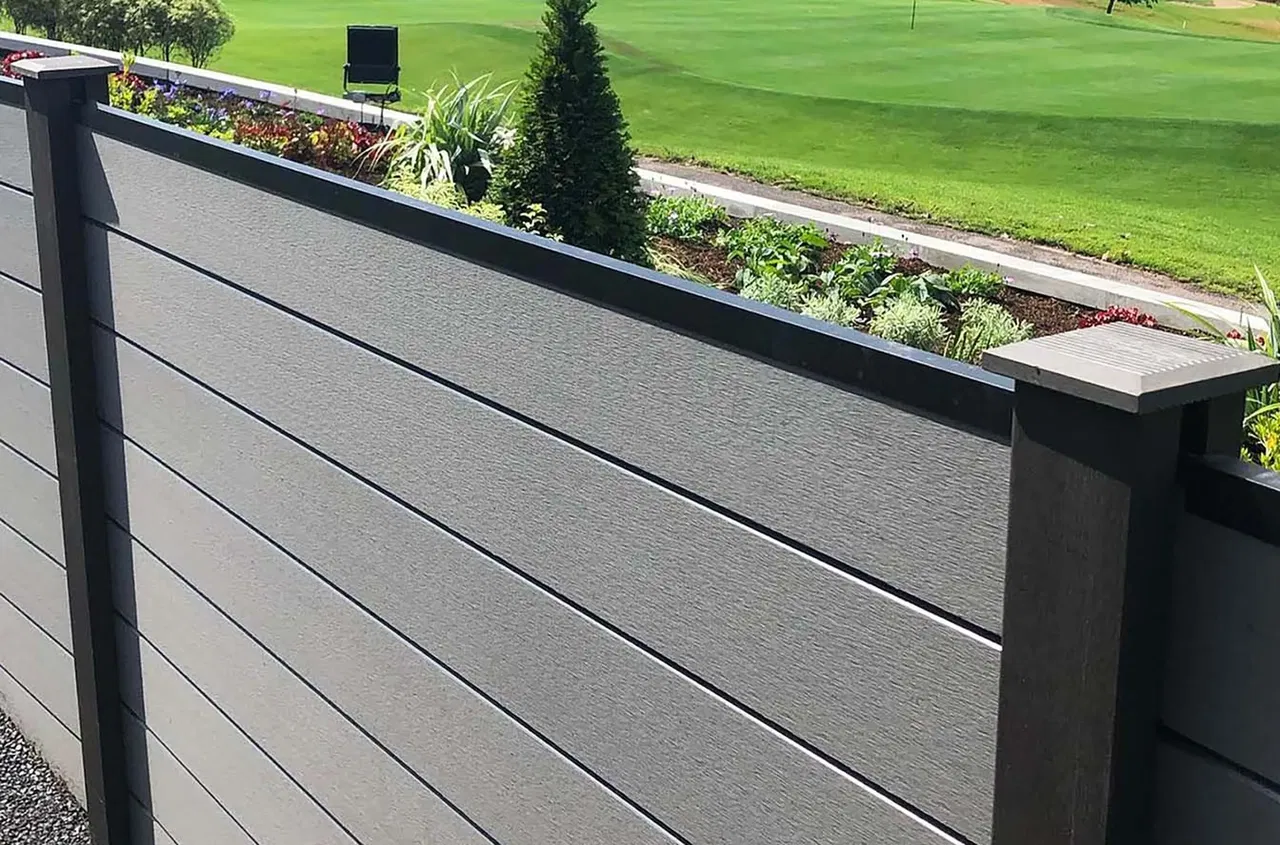
Composite Fencing Suppliers Near Me — What to Check Before You Buy
Direct answer: Before buying from any composite fencing supplier, check whether boards meet the European product standard for WPC fencing profiles (BS EN 15534-6), whether the wood-fibre content carries FSC or PEFC chain-of-custody certification, and get the warranty document itself rather than a headline "years" figure, since most composite fencing warranties are prorated and exclude fences over 2m in height. Also confirm whether you're buying from the manufacturer or a reseller, as this affects stock availability, pricing, and how warranty claims are handled. Proximity to a local stockist matters far less than these checks — a manufacturer delivering nationwide in 2–3 working days is usually a stronger choice than the nearest yard with limited stock.
At a Glance: Supplier Due-Diligence Checklist
Topic
Detail
Product standard
BS EN 15534-6:2015+A1:2017 — the European specification for WPC/NFC fencing profiles and elements, restricted to non-structural garden fencing (excludes security fencing, handrails and load-bearing systems) [1]
Manufacturer vs. reseller
Ask directly — manufacturers control stock, warranty decisions and pricing; resellers add a margin and a middleman for any claim
Wood-fibre certification
FSC or PEFC chain-of-custody certification, checkable via a licence number on the certifying body's public database [2]
Recycled content
EnviroBuild's composite fencing range uses up to ~90% recycled material (post-consumer plastics plus reclaimed wood fibre); ask any supplier for the equivalent figure and how it's verified [3]
Warranty terms
EnviroBuild's fencing: 15 years residential / 10 years commercial, prorated, excluding fences over 2m tall and installation costs [4]
Post installation depth
Industry guidance generally recommends composite fence posts set 600–850mm deep in concrete, depending on fence height and local wind exposure [5]
UK delivery lead time
2–3 working days as standard across mainland England & Wales (next-day available in designated zones for orders before noon); free samples typically arrive in 2–3 working days [6]
Shop EnviroBuild Composite Fencing
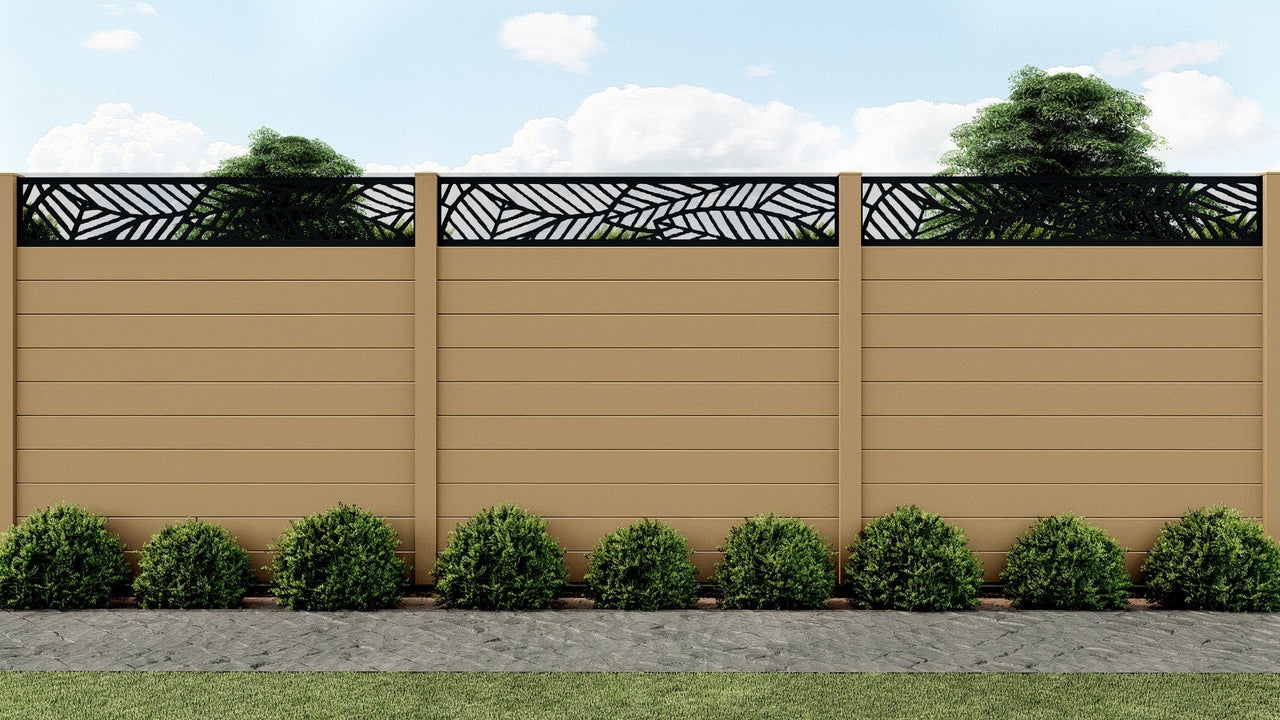
If you already know composite fencing is right for your boundary or garden project, you don’t need to keep searching for a “supplier near me” — you can buy directly from the manufacturer. Browse the full EnviroBuild composite fencing range, including standard panels, slatted panels, retrofit panels for existing concrete posts, and matching garden gates. See every colour and finish in the fencing gallery, use the online calculator to work out exactly how many panels and posts your boundary needs, or order free samples before committing. Ready to move forward? Request a quote directly from EnviroBuild.
Why Isn't “Near Me” the Right Place to Start?
Searching “composite fencing suppliers near me” answers a logistics question, not a quality one. Proximity tells you nothing about whether the boards meet a recognised standard, whether the wood content is certified, or whether a warranty will actually pay out if a panel fails. This guide sets out what to check before you order, so the decision is based on paperwork rather than which yard happens to be closest.
Is the Supplier the Manufacturer or a Reseller?
This is one of the most overlooked questions when comparing fencing suppliers. A manufacturer that makes its own boards controls its own stock levels, sets its own pricing without a reseller markup, and handles warranty claims directly rather than passing them back up a supply chain. A reseller — a local timber merchant, builders' merchant, or general fencing contractor stocking a third-party composite range — adds a layer between you and the people who actually made the product.
Ask directly: “Do you manufacture this product, or are you reselling someone else's range?” A straight answer is itself useful information. If a supplier is a reseller, ask who the manufacturer is, whether the warranty is honoured by the reseller or the manufacturer, and what happens if the reseller stops stocking that range in future.
What Product Standard Should Composite Fencing Meet?
Composite decking has a well-known European standard (BS EN 15534-4), and composite fencing has its own equivalent part of the same standard family: BS EN 15534-6:2015+A1:2017, which specifies characteristics for WPC/NFC fencing profiles and elements (en-standard.eu) [1].
Two things are worth knowing about its scope before you use it to judge a product:
It applies to non-structural garden and boundary fencing only. Security fencing, perimeter protection systems, handrails, and any load-bearing application are explicitly excluded.
It references test methods from the general part of the standard family, EN 15534-1, rather than setting out entirely separate test procedures.
Are There Wind Load or Structural Standards for Garden Fencing?
There is no single mandatory UK wind-load standard specifically for domestic composite garden fencing in the way BS EN 1991-1-4 (the Eurocode for wind actions) applies to larger structural elements. In practice, wind performance for composite fencing is usually described by manufacturers using informal comparisons (some brands cite Beaufort Scale equivalents for the wind speeds their panels have been tested to withstand) rather than a single named British Standard test (Ecoscape) [7].
What does affect real-world wind performance, regardless of the board itself, is installation: post depth, concrete volume, and post centres. Industry guidance generally suggests composite fence posts or post supports should be set roughly 600–850mm deep, with depth increased for taller fences or more exposed sites [7]. Ask any supplier for their specific post-spacing and post-depth recommendations for the fence height you're planning.
Does the British Standard for Fences (BS 1722) Cover Composite?
BS 1722 is the long-established UK standard series for fences, but it’s organised entirely around traditional materials: chain link, woven wire, cleft chestnut pale, close-boarded timber, wooden palisade, wooden post-and-rail, and various steel/wrought-iron types across its 18 parts (BSI) [8]. No part of BS 1722 specifically addresses wood-plastic composite fencing — that gap is exactly what BS EN 15534-6 fills. If a supplier cites “BS 1722 compliance” for a composite product, ask which part and how it applies, since the series wasn’t written with composite materials in mind.
Is FSC or PEFC Certification Relevant to Composite Fencing?
Composite fencing, like composite decking, typically combines recycled plastic with wood fibre. Where wood fibre is present, FSC or PEFC chain-of-custody certification gives third-party assurance that the timber component came from a certified or controlled source (FSC Chain of Custody) [2]. EnviroBuild states that the wood content in its fencing ranges is FSC® 100% certified. Whatever a supplier claims, ask for the licence number so you can check it on the FSC or PEFC public database yourself, rather than relying on a logo on a product page.
How Do You Verify Recycled Content Claims on Composite Fencing?
“Made from recycled materials” is used loosely across the composite fencing market. To check it properly:
Ask what percentage is recycled, and of what — recycled HDPE from post-consumer waste (bottles, packaging) is a different claim from reclaimed wood fibre left over from manufacturing.
Ask whether the figure is independently verified, for example through an ISO 14021-aligned scheme or third-party recycled-content certification (SCS Global) [9].
Where a manufacturer publishes an Environmental Product Declaration (EPD) for a related product line, check whether the fencing range's composition is covered by it specifically, or only inferred from a decking or cladding EPD — the two products aren't always made from the same formulation.
EnviroBuild's fencing range is described as using up to around 90% recycled content, combining post-consumer recycled plastics with reclaimed wood fibre from its own manufacturing process [3].
What Should Be Included in a Composite Fencing Warranty?
A fencing warranty is only as useful as its exclusions. Before comparing headline lengths across suppliers, get the following in writing:
The length for residential use and, separately, commercial use — EnviroBuild's fencing carries 15 years residential and 10 years commercial cover [4].
Whether it's prorated. Most composite fencing warranties pay a decreasing percentage of replacement value the longer you've owned the product, rather than a full replacement at any point to account for general wear and tear.
Height exclusions. It's common for composite fencing warranties to exclude fences built above a certain height (2m is a frequently used cut-off) since taller fences carry greater structural and wind-load risk.
What's excluded. Installation and removal costs, damage from improper installation, normal weathering and colour variation, ground movement, mould/mildew, and "Acts of God" are typically excluded across the industry.
Transferability. Check whether the warranty transfers with the property if it's sold, and how many times — EnviroBuild's residential warranty transfers once within 5 years, while its commercial warranty transfers freely to subsequent owners [4].
Get the actual warranty document, not a salesperson's summary. Two "15-year warranties" from different suppliers can mean very different things once the exclusions and proration schedule are compared side by side.
Does the Supplier Offer Free Samples?
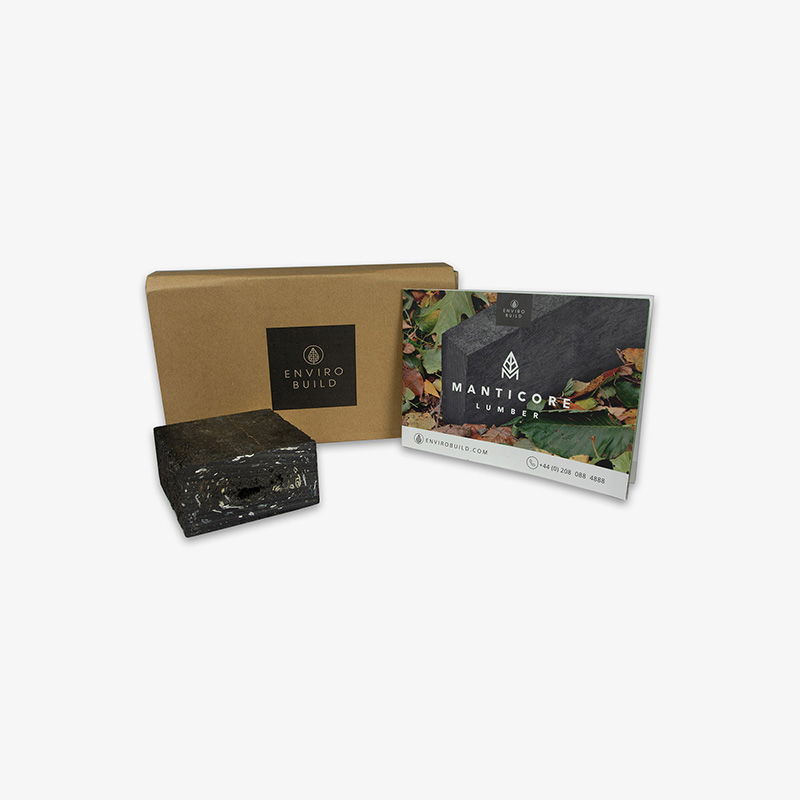
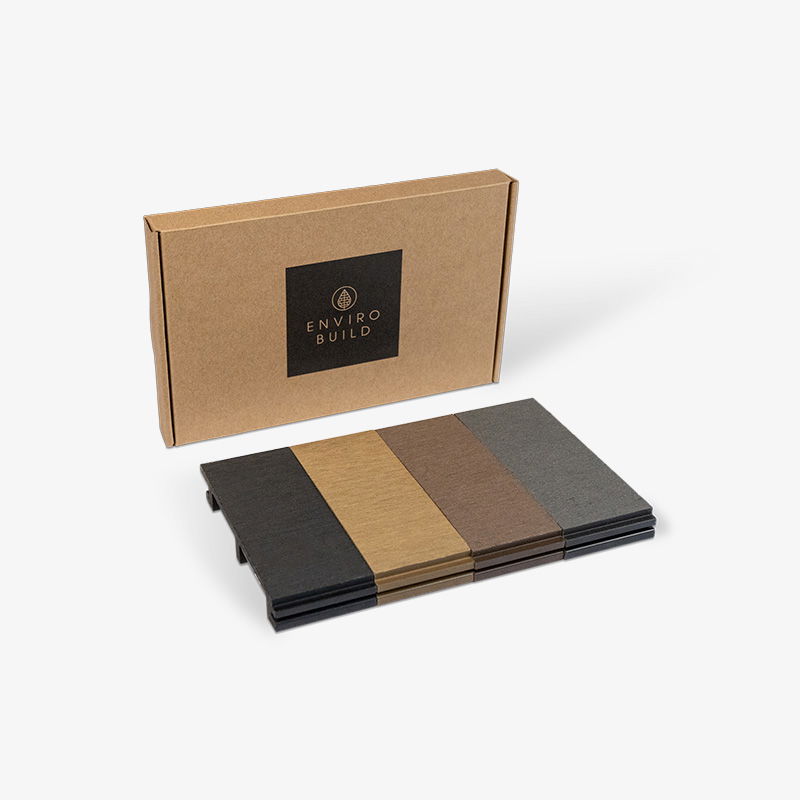
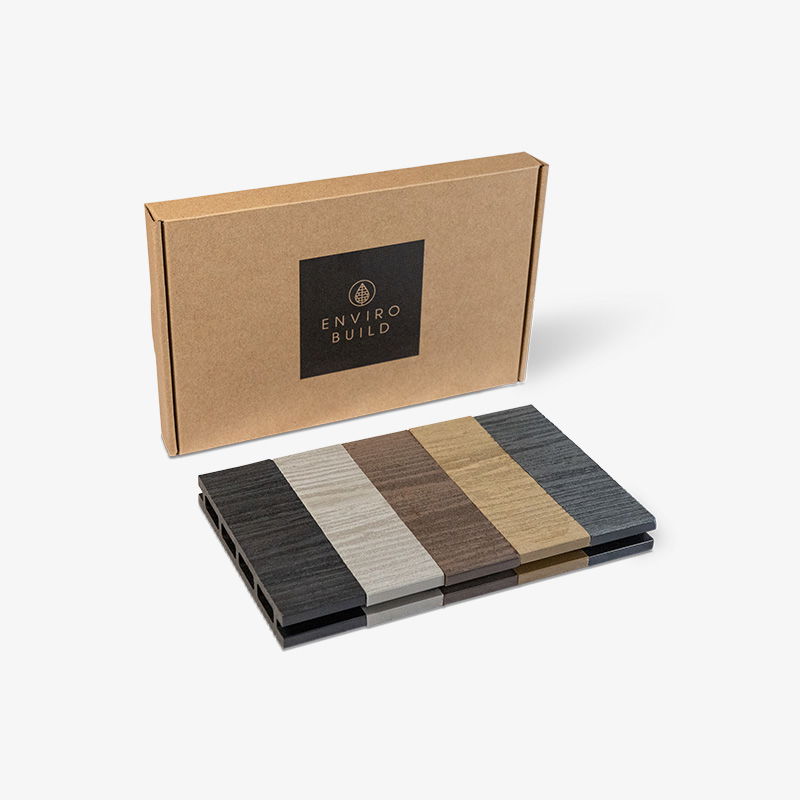
A colour or finish that looks right on a website or in a photo can look different in your garden's actual light. Reputable composite fencing suppliers, including manufacturers selling direct, will send free or low-cost physical samples so you can compare colours and textures before ordering full panels. If a supplier won't offer a sample, or only offers a digital swatch, that's worth factoring into the decision — a company confident in its product usually wants you to handle it first.
Why Does Fast Nationwide Delivery Often Beat the Closest Stockist?
It's tempting to assume the nearest fencing supplier is automatically the most convenient option. In practice, a local stockist's range is limited to whatever colours, panel styles, and post types they happen to have on the shelf that week — which can mean compromising on the finish, warranty terms, or component range you'd actually have chosen from a full catalogue.
EnviroBuild delivers standard fencing orders across mainland England & Wales in 2–3 working days [6]. Free samples typically arrive within 2–3 working days too. That's a difference of a couple of days against "whatever's nearby," in exchange for the specific colour, panel style, and warranty terms you actually researched — not what a local yard happened to be holding in stock. For a fence expected to last 15–30 years, a short wait for the right materials is a small trade-off against living with the wrong ones.
This is particularly relevant for anyone searching "composite fencing suppliers near me" who finds that local stockists carry only one or two composite ranges, or none at all — specialist composite fencing is still a smaller category than timber fencing in most local merchants' stock. Buying direct from a manufacturer with nationwide delivery gives access to the full colour range, all component types (posts, retrofit panels, gates, trims), and support from the people who actually made the product, rather than a reseller's narrower shelf stock. Full delivery zones, surcharges for Scotland/Highlands/Islands, and lead times are set out on EnviroBuild’s delivery information page.
What Should Be Included in a Composite Fencing Warranty?
A fencing warranty is only as useful as its exclusions. Before comparing headline lengths across suppliers, get the following in writing:
The length for residential use and, separately, commercial use — EnviroBuild's fencing carries 15 years residential and 10 years commercial cover [4].
Whether it's prorated. Most composite fencing warranties pay a decreasing percentage of replacement value the longer you've owned the product, rather than a full replacement at any point to account for general wear and tear.
Height exclusions. It's common for composite fencing warranties to exclude fences built above a certain height (2m is a frequently used cut-off) since taller fences carry greater structural and wind-load risk.
What's excluded. Installation and removal costs, damage from improper installation, normal weathering and colour variation, ground movement, mould/mildew, and "Acts of God" are typically excluded across the industry.
Transferability. Check whether the warranty transfers with the property if it's sold, and how many times — EnviroBuild's residential warranty transfers once within 5 years, while its commercial warranty transfers freely to subsequent owners [4].
Get the actual warranty document, not a salesperson's summary. Two "15-year warranties" from different suppliers can mean very different things once the exclusions and proration schedule are compared side by side.
Does the Supplier Offer Free Samples?
A colour or finish that looks right on a website or in a photo can look different in your garden's actual light. Reputable composite fencing suppliers, including manufacturers selling direct, will send free or low-cost physical samples so you can compare colours and textures before ordering full panels. If a supplier won't offer a sample, or only offers a digital swatch, that's worth factoring into the decision — a company confident in its product usually wants you to handle it first.
Why Does Fast Nationwide Delivery Often Beat the Closest Stockist?
It's tempting to assume the nearest fencing supplier is automatically the most convenient option. In practice, a local stockist's range is limited to whatever colours, panel styles, and post types they happen to have on the shelf that week — which can mean compromising on the finish, warranty terms, or component range you'd actually have chosen from a full catalogue.
EnviroBuild delivers standard fencing orders across mainland England & Wales in 2–3 working days [6]. Free samples typically arrive within 2–3 working days too. That's a difference of a couple of days against "whatever's nearby," in exchange for the specific colour, panel style, and warranty terms you actually researched — not what a local yard happened to be holding in stock. For a fence expected to last 15–30 years, a short wait for the right materials is a small trade-off against living with the wrong ones.
This is particularly relevant for anyone searching "composite fencing suppliers near me" who finds that local stockists carry only one or two composite ranges, or none at all — specialist composite fencing is still a smaller category than timber fencing in most local merchants' stock. Buying direct from a manufacturer with nationwide delivery gives access to the full colour range, all component types (posts, retrofit panels, gates, trims), and support from the people who actually made the product, rather than a reseller's narrower shelf stock. Full delivery zones, surcharges for Scotland/Highlands/Islands, and lead times are set out on EnviroBuild's delivery information page.
What Installation Support Should a Fencing Supplier Provide?
Composite fencing performs differently from timber during installation — post depth, panel expansion gaps, and fixing methods all matter more than with traditional wooden panels. A good supplier should provide:
Written installation guides specific to their product range, not generic "fencing installation" advice.
Clear guidance on post depth, concrete volumes, and spacing for different fence heights and wind exposures.
Access to a professional installer network or approved-installer list, since there's no UK-wide accreditation scheme specific to composite fencing installers (similar to composite decking, where the Timber Decking and Cladding Association's schemes cover timber only, not composite) [10].
An online calculator or equivalent tool to help you work out exact quantities of boards, posts and trims before ordering, reducing the risk of under- or over-ordering.
EnviroBuild provides an online fencing calculator, written installation resources, and access to a professional installer network for customers who want a contractor familiar with composite systems specifically.
What Should a Complete Fencing System Include?
A composite fence is more than boards. A supplier offering a genuinely complete system should be able to supply:
Composite fence boards/panels, in both standard closed-panel and contemporary slatted styles.
Posts — either full composite posts, or retrofit channel posts designed to fit onto existing concrete posts where a fence is being upgraded rather than rebuilt from scratch.
Trims, caps and finishing components to close off exposed edges cleanly.
Matching garden gates, ideally with integrated lock systems, so a boundary doesn't mix composite panels with a mismatched timber gate.
Optional trellis toppers for additional height or privacy without needing a taller base panel.
EnviroBuild's range covers all of these — standard and slatted composite panels, full posts, retrofit panels for existing concrete posts, trims, and matching gates — across five to nine colour options depending on panel style (Stone, Walnut, Granite, Oak, Silver Birch, plus slatted-specific finishes including Grey Ash, Balau, Onyx Black and Cedar).
What Environmental Credentials Should You Ask About?
Beyond FSC certification for wood content, ask a fencing supplier about:
How the boards are manufactured — EnviroBuild manufactures using 100% wind-generated electricity.
Embodied carbon — EnviroBuild states its Hyperion Explorer decking has roughly 64% lower embodied carbon than equivalent timber decking, based on its own life-cycle assessment; that figure is decking-specific and not independently published for fencing, so ask any supplier for a fencing-specific comparison and what it's actually benchmarked against.
End-of-life and recyclability — what happens to the panels at the end of their service life, and whether the manufacturer has a take-back or recycling route.
As with recycled-content claims, treat unverified sustainability statements as marketing until you've seen the certification or data behind them.
Supplier Due-Diligence Checklist
Criterion
Why It Matters
How To Verify
Manufacturer vs. reseller
Affects pricing, stock control, and who actually handles a warranty claim
Ask directly; check whether the company name on the invoice matches the brand on the product
BS EN 15534-6 compliance
The specific European standard for WPC fencing profiles and elements
Ask for the test report number and confirm it covers this product, not a related cladding/decking line
FSC/PEFC chain of custody
Verifies traceable, responsibly sourced wood fibre
Look up the supplier's licence number on the FSC or PEFC public database
Recycled content claims
Loosely used marketing term unless independently verified
Ask for ISO 14021-aligned or third-party certification
Warranty terms and proration
Headline "years" figures can hide exclusions, height limits, and a decreasing payout schedule
Request the actual warranty document, not a verbal summary
Post depth/installation guidance
Wind performance depends more on installation than on the board itself
Ask for written, product-specific post-depth and spacing guidance
Free samples
Colour and finish should be checked in person before ordering full panels
Ask whether physical samples are free, and how long they take to arrive
Delivery coverage and speed
A wider product range delivered in days often beats a limited local range
Check standard lead time, next-day cutoff, and surcharge zones (Scotland, Highlands, Islands)
Installer support
No UK-wide accreditation scheme exists specifically for composite fencing installers
Ask for an approved-installer network or verifiable case studies
Complete system components
Mismatched posts, trims or gates undermine the finished look and performance
Confirm posts, retrofit options, trims and gates are all available in matching finishes
FAQ
Is composite fencing covered by the same standard as composite decking?
No — it's a related but distinct part of the same standard family. Composite decking is covered by BS EN 15534-4, while composite fencing has its own part, BS EN 15534-6:2015+A1:2017, which applies specifically to non-structural fencing profiles and elements.
Does BS EN 15534-6 cover security fencing or handrails?
No. The standard explicitly excludes security fencing, perimeter protection systems, handrails, and any load-bearing application — it covers non-structural garden and boundary fencing only.
Why does it matter whether a fencing supplier is a manufacturer or a reseller?
Manufacturers control their own stock, pricing and warranty decisions. Resellers add a margin and an extra layer between you and the people who made the product, which can slow down or complicate a warranty claim.
How deep should composite fence posts be installed?
Industry guidance generally suggests 600–850mm, with depth increased for taller fences or more exposed, windy sites. Always check the specific supplier's written guidance for the fence height you're installing, since this varies by product and post type.
What warranty length is typical for composite fencing?
There's no single "correct" figure — it varies by manufacturer and product tier. EnviroBuild's Pioneer fencing carries 15 years residential and 10 years commercial cover, prorated over that period, excluding fences over 2m in height. Always request the full written terms rather than relying on the headline number.
Is it better to buy from the nearest fencing stockist or order from a manufacturer for delivery?
Not necessarily. A local stockist's advantage is measured in days, not weeks — EnviroBuild delivers standard fencing orders across mainland England & Wales in 2–3 working days, with next-day delivery available in designated zones for orders before noon. That short wait typically buys the full colour range, published composition data, and a warranty you've actually checked, rather than whatever a local yard happens to have on the shelf.
Sources
BSI/CEN, BS EN 15534-6:2015+A1:2017 — Composites made from cellulose-based materials and thermoplastics (WPC/NFC): specifications for fencing profiles and elements (en-standard.eu)
Industry-standard composite fence post installation depth guidance (600–850mm), cross-checked against manufacturer installation resources
SCS Global Services — Recycled Content Certification (ISO 14021-aligned)
Wind-resistance and post-depth figures above reflect general industry guidance rather than independently verified, product-specific test certificates for EnviroBuild's Pioneer fencing range — EnviroBuild should confirm exact figures against current test documentation before these are presented as brand-specific claims.