
Porcelain Paving vs Natural Stone: Which Is Better?
Cost, porosity, frost resistance, sealing and slip resistance compared - to help you choose the right patio material.

Author Name
Chief Writer
Thu, 28 Jul 2026
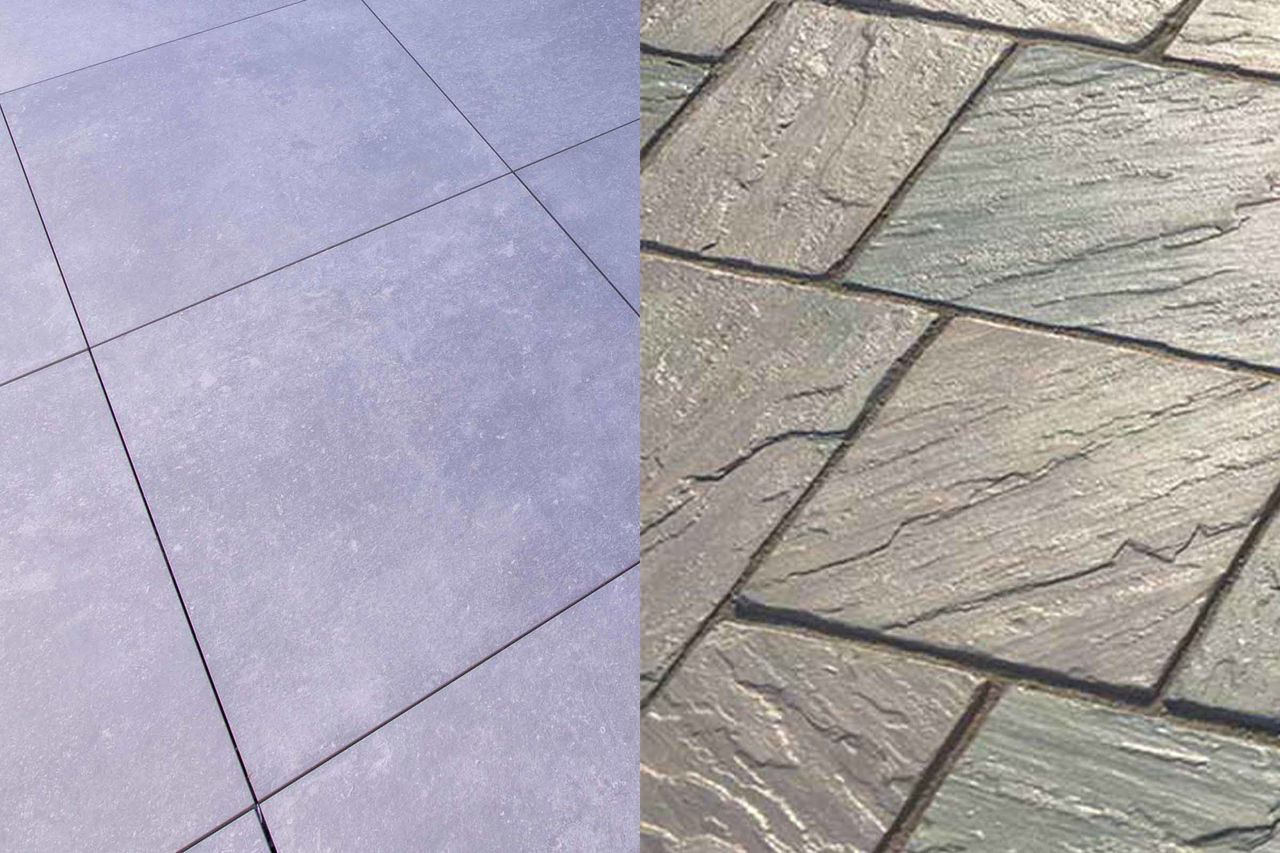
Porcelain Paving vs Natural Stone: Which Is Right for Your Garden?
Porcelain paving is a manufactured, kiln-fired material with very low water absorption (typically under 0.5%), highly consistent colour and a textured, slip-resistant finish that generally needs no sealing. Natural stone — sandstone, limestone, granite or slate — offers unique colour and texture variation that many gardeners prefer, but it’s more porous, varies by quarry batch, and usually needs periodic sealing to resist staining and, in softer stones, frost damage. The right choice depends on how much natural variation you want versus how little maintenance you’re willing to do, and your budget.
At a Glance
Factor
Porcelain Paving
Natural Stone
What it is
Manufactured, kiln-fired ceramic (clay, silica, feldspar, quartz)
Quarried rock (sandstone, limestone, granite, slate)
Typical cost (supply only)
Roughly £25–£70 per m²
Roughly £40–£120 per m² depending on stone type
Water absorption
Typically less than 0.5%
Varies widely — sandstone highly porous, granite/slate much less so
Sealing required
Generally no
Often recommended, especially for sandstone/limestone
Colour consistency
Very high, batch to batch
Varies — natural variation, no two batches identical
Frost resistance
Very good, engineered for it
Good in dense stones, riskier in softer/porous ones
Typical lifespan
25+ years with minimal upkeep
25+ years, but maintenance-dependent
What Is Porcelain Paving, Exactly?
Porcelain paving is made by grinding refined clay, silica, feldspar and quartz, pressing the mixture under high pressure, and firing it in a kiln at temperatures exceeding 1,200°C [1]. This “vitrification” process melts the feldspar into liquid glass that fuses through the material, closing up the microscopic pores that make natural materials porous. The result is a dense, glass-like slab classified under BS EN 14411 as having water absorption of less than 0.5%, the lowest-absorption category the standard defines [1].
What Counts as Natural Stone for Paving?
Natural stone paving covers a genuinely diverse family of quarried rock, most commonly Indian sandstone, limestone, granite and slate [5]. Each behaves differently: sandstone is relatively soft and porous, granite and slate are much denser, and limestone sits somewhere in between. Because every slab is cut from natural rock, no two quarry batches look identical — colour, veining and texture vary from pack to pack, which is precisely the appeal for many garden designs [6].
Which Is More Porous, and Does It Matter?
Porosity is where the two materials diverge most. Porcelain’s sub-0.5% water absorption makes it effectively non-porous, so it resists staining, moss and algae growth without any surface treatment [1]. Natural stone varies hugely: porous sandstones can absorb a droplet of water in under a minute, while dense granites and slates barely absorb at all and let sealant sit on the surface rather than soak in [2]. That porosity matters practically — it’s the main reason porous stone stains more easily from leaves, rust, oil and hard-water deposits [3].
How Do They Compare on Frost Resistance?
Porcelain’s near-zero porosity means there’s almost no water inside the slab to freeze and expand, so frost damage is rare [1]. Natural stone is more variable: in softer, more porous stones like some sandstones, moisture trapped in the pores can freeze, expand and cause cracking, surface delamination or spalling (flaking) over repeated freeze–thaw cycles, particularly if drainage is poor [3]. Denser stones such as granite and slate are naturally more frost-resistant, so the risk depends heavily on which stone you choose.
Do You Need to Seal Natural Stone but Not Porcelain?
Porcelain generally doesn’t need sealing at all — its low porosity already does the job, and it’s typically cleaned with just warm water and mild detergent [1]. Natural stone is more nuanced: one widely cited industry view is that sealing isn’t strictly essential everywhere, but it’s still commonly recommended for porous stones in damp, shaded or algae-prone spots, and for enhancing colour on darker stones [2]. In practice, expect to reseal porous natural stone roughly every one to two years to keep staining at bay, adding an ongoing cost and time commitment that porcelain doesn’t carry.
Which Looks More Natural — and Which Is More Consistent?
This is largely down to taste. Natural stone’s quarried origins mean genuine variation in colour, veining and texture between slabs, which many people find gives a garden a more organic, characterful finish [6]. Porcelain paving is manufactured to a consistent pattern, size and colour, including realistic stone-effect and wood-effect finishes, so what you see in a sample is very close to what you’ll get across an entire patio, with none of the batch-matching effort that natural stone can require [6].
How Do the Costs Compare?
Based on current UK supply-only pricing guidance, porcelain paving typically runs from around £25 to £70 per m², Indian sandstone from about £40 to £55 per m², limestone from about £45 to £70 per m², and granite from about £70 to £120 per m² — with slate spanning roughly £50 to £90 per m² [4]. Installation labour adds a further £20–£40 per m² on top for most materials [4]. Porcelain often sits at the low-to-mid end of the range, and because it needs no sealing and rarely needs replacing slabs for staining or frost damage, its lifetime cost can work out much lower than budget natural stone that requires regular resealing.
Is One Safer Underfoot Than the Other?
Both materials can be made genuinely slip-resistant, but it depends on the specific product’s finish rather than the material itself. In the UK, slip resistance is measured using the BS 7976 pendulum test, which produces a Pendulum Test Value (PTV) — the HSE-recognised benchmark, where a higher number means better grip [7]. Reputable outdoor porcelain ranges are tested to a minimum PTV of 36+ (wet, shod foot), which is generally regarded as low slip potential, with premium anti-slip ranges reaching PTV 46 or higher; R11 is commonly cited as the minimum R-rating to look for outdoors [8]. Textured or riven natural stone finishes can perform similarly well, but smooth, honed or heavily sealed surfaces can become slippery when wet, so it’s worth checking test data for the specific product either way.
How Do Weight and Installation Differ?
Porcelain paving is generally supplied as large-format, consistent-thickness slabs (commonly around 20mm for outdoor use), which makes for predictable, relatively straightforward laying once a solid, well-drained base is prepared. Natural stone slabs, especially riven sandstone, often vary in thickness from slab to slab, meaning more time spent bedding each piece to a level, even finish. Both materials are heavy and are typically laid on a full mortar bed or, for raised/free-draining patios, on adjustable pedestal systems.
Comparison Table: Porcelain Paving vs Natural Stone
Factor
Porcelain Paving
Natural Stone
Cost (supply only)
~£25–£70/m² [4]
~£40–£120/m² depending on type [4]
Porosity / staining
Water absorption typically <0.5%; highly stain-resistant [1]
Varies widely; porous stones like sandstone stain more easily [2][3]
Slip resistance
Manufactured textured finishes tested to BS 7976 (PTV 36+ typical minimum, up to 46+ premium) [7][8]
Depends on finish; riven textures grip well, honed/sealed surfaces can be slippery
Maintenance
Low — no sealing needed, occasional clean with detergent [1]
Higher — periodic sealing recommended, roughly every 1–2 years for porous stones [2]
Colour consistency
Very high, engineered to match across a whole patio [6]
Natural variation between slabs and quarry batches [6]
Frost resistance
Very good due to near-zero porosity [1]
Good in dense stone (granite, slate); softer/porous stone can spall over time [3]
Lifespan
25+ years, appearance holds with minimal upkeep
25+ years, but appearance depends on ongoing maintenance
Installation
Consistent slab thickness, predictable laying
Thickness can vary slab to slab, more bedding time
FAQ
Is porcelain paving more expensive than natural stone?
Not always — porcelain (roughly £25–£70/m² supply-only) overlaps with limestone, slate, and budget Indian sandstone but below premium granite [4]. Porcelain’s lower long-term maintenance offers great value over time.
Does porcelain paving need sealing?
No — its low water absorption (typically under 0.5%) means it resists stains and moisture without a sealant, so it’s usually just cleaned with warm water and mild detergent [1].
Can natural stone paving crack in frost?
Some can. Softer, more porous stones such as certain sandstones can suffer freeze–thaw damage — cracking, delamination or spalling — if water trapped in the pores freezes repeatedly, especially with poor drainage [3]. Denser stones like granite and slate are more frost-resistant.
Which is less slippery, porcelain or natural stone?
It depends on the specific finish, not the material category. UK outdoor porcelain is often tested to BS 7976, with a minimum PTV of 36+ considered low slip potential and premium ranges reaching PTV 46+ [7][8]. Textured natural stone can match this, but smooth or heavily sealed surfaces can become slippery when wet.
Will my natural stone patio look consistent across the whole area?
Expect some variation — natural stone is quarried, so colour and texture differ between slabs and batches, which is part of its appeal but does mean less uniformity than a manufactured material [6].
How long do porcelain paving and natural stone last?
Both can last 25 years or more. Porcelain tends to hold its appearance with minimal upkeep, while natural stone’s longevity and looks depend more on ongoing sealing and cleaning [2].
Sources
Further Reading
Thinking of Making the Switch? If low-maintenance, colour-consistent paving sounds like the right fit for your garden, take a look at EnviroBuild’s porcelain paving range — stone-effect and wood-effect finishes are available, along with free samples so you can check the colour and texture in your own space before you commit.