

Scotland's Fire Regulations for Cladding & Balconies
In July 2019, the Scottish Government published a new technical handbook addressing fire safety within both domestic and non-domestic buildings. The planned changes in guidance came into force on the 1st of October 2019.

Author Name
Chief Writer
Thu, 28 Jul 2026
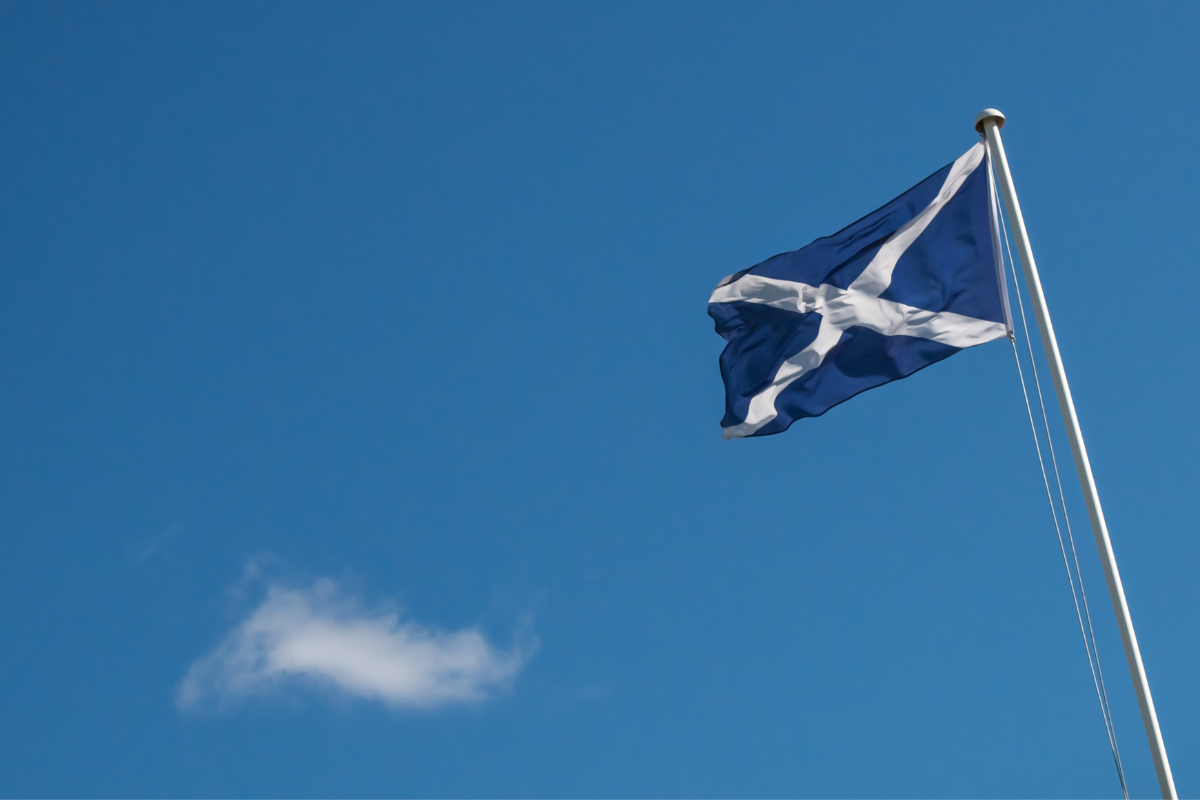
Scotland's Fire Regulations for Cladding and Balconies Explained
Scotland regulates external wall and cladding fire safety through its own regime — the Building (Scotland) Regulations 2004 (as amended) and the Scottish Building Standards Technical Handbooks — which is separate from, and in key respects stricter than, England's Building Regulations. Since 1 June 2022, the Building (Scotland) Amendment Regulations 2022 have required cladding, insulation and "specified attachments" such as balconies on relevant buildings with a storey 11 metres or more above ground to achieve European Class A1 or A2-s1,d0 (BS EN 13501-1), closing an earlier loophole that allowed a large-scale fire test as an alternative route to compliance. This 11-metre threshold is considerably lower than the 18-metre threshold that applies under England's combustible materials ban, and it has applied in Scotland, in some form, since 2019.
Disclaimer
This article is general information for a UK audience with an interest in composite building products. It is not legal, fire engineering or building control advice, and it does not cover every detail of Scottish building standards law. Building standards guidance changes periodically — always check the current Scottish Building Standards Technical Handbook and confirm requirements with your local authority verifier or a suitably qualified fire engineer before specifying materials or submitting a building warrant application.
At a Glance
Topic
Detail
Applies in
Scotland only — under the Building (Scotland) Regulations 2004 (as amended) and Scottish Building Standards Technical Handbooks, not England's Building Regulations/Approved Document B
Key standard
Standard 2.7 ("Spread on external walls"), Technical Handbooks — domestic and non-domestic
Height threshold
A storey at 11 metres or more above ground level (measured to the top occupied storey)
Core requirement
External wall cladding, insulation and "specified attachments" (including balconies, solar panels and solar shading) must achieve European Class A1 or A2-s1,d0 to BS EN 13501-1
Key tightening
Building (Scotland) Amendment Regulations 2022, in force for building warrants from 1 June 2022, removed the option of using a large-scale BS 8414 fire test as an alternative to material classification
Metal composite material (MCM) panels
The highest-risk category of MCM cladding is prohibited on any new building, regardless of height
Buildings covered
Dwellings, residential care buildings, sheltered housing, shared multi-occupancy residential buildings, hospitals, places of assembly, recreation or entertainment, and (from 6 April 2026) hotels, guest houses, hostels and boarding houses
Hotels, hostels & boarding houses
Now covered too — the Building (Scotland) Amendment Regulations 2025 extended the ban to these building types, in force from 6 April 2026, following the September 2025 evidence review and the Cameron House Hotel Fatal Accident Inquiry recommendations
Comparison with England
Scotland's 11m threshold is lower than England's 18m threshold for the equivalent new-build combustible materials ban
Separate but related
Housing (Cladding Remediation) (Scotland) Act 2024 (in force from 6 January 2025) governs assessment and remediation of existing buildings — a different regime from the new-build rules above
What are Scotland's current fire safety rules for external walls and cladding?
Scotland’s requirements sit in Standard 2.7 of the Building Standards Technical Handbooks, which is supported by the Building (Scotland) Regulations 2004 as amended. For a “relevant building” — broadly, one with a storey 11 metres or more above ground — cladding, insulation and specified attachments on the external wall must achieve European Classification A1 or A2-s1,d0 when tested to BS EN 13501-1.
This requirement was first introduced with an updated Technical Handbook that took effect on 1 October 2019, applying an 11-metre threshold years before equivalent proposals were even consulted on in England. At that point, however, a cladding system that failed to meet A1/A2 classification could still be used if the whole external wall build-up passed a full-scale BS 8414 fire test.
The Building (Scotland) Amendment Regulations 2022 — laid before the Scottish Parliament on 22 April 2022 and applying to building warrant applications made on or after 1 June 2022 — removed that fire-test alternative. Since then, relevant buildings above the 11-metre threshold must use materials meeting Class A1 or A2-s1,d0 outright; there is no longer a “pass the test and use it anyway” route. The 2022 amendment also introduced an outright ban, at any height, on the highest-risk category of metal composite material (MCM) cladding panel — the type implicated in the Grenfell Tower fire.
How does Scotland's 11-metre threshold compare with England's 18-metre rule?
Scotland's height trigger for its combustible materials restriction — 11 metres — is considerably lower than the 18-metre threshold that applies in England under the Building Regulations 2010 (as amended). England's Government has consulted on lowering its own threshold to 11 metres, but as of mid-2026 that change is not in force in England — 18 metres remains the operative figure there.
It's easy to conflate the two regimes because both talk about "combustible materials bans," Euroclasses and similar height figures, but they are legally distinct instruments made under different legislation. Scotland's rule is not an extension of England's Building Regulations — it is a separate requirement under Scotland's own Building (Scotland) Regulations 2004 and Technical Handbooks, and it has applied at 11 metres since 2019, several years before England's equivalent debate began in earnest.
Which buildings are covered — and which aren't?
The Scottish requirement applies to what the Technical Handbooks describe as "relevant buildings" at or above the 11-metre threshold, including:
Dwellings and flats
Residential care buildings and sheltered housing complexes
Shared multi-occupancy residential buildings
Hospitals
Places of assembly, recreation or entertainment
Hotels, boarding houses and hostels were not originally within scope of Scotland’s combustible cladding ban, even though England added these building types to its own ban in 2022. That has since changed: in September 2025 the Scottish Government published research reviewing fire incident data and cost-benefit evidence on extending the ban to these building types, and the Building (Scotland) Amendment Regulations 2025 subsequently extended the combustible materials ban to hotels, guest houses, hostels and boarding houses, in force from 6 April 2026 — alongside related changes on automatic fire suppression systems following the Cameron House Hotel Fatal Accident Inquiry. Reported detail on exactly how the height threshold applies to this newly added building-type list varies slightly between sources, so anyone working on a Scottish hotel, hostel or boarding house project should confirm the current position and any transitional arrangements (for contracts entered into before 6 April 2026) directly with gov.scot or their local authority verifier.
What about balconies and other "specified attachments"?
Standard 2.7 explicitly extends the classification requirement beyond the wall cladding itself to what it calls "specified attachments" — a category that includes balconies, solar panels and solar shading fixed to the external wall of a relevant building. On buildings with a storey 11 metres or more above ground, these attachments must also achieve Class A1 or A2-s1,d0.
This matters for balcony construction specifically: a balcony deck, balustrade or soffit lining fixed to a qualifying Scottish building is treated the same way as cladding for fire classification purposes, not as a separate, lower-scrutiny element. Below the 11-metre threshold, Standard 2.7 allows more flexibility — cladding more than 1 metre from a boundary may generally use Classes B, C, D or E, while cladding within 1 metre of a boundary should still be A1 or A2 (with a narrower exception for houses below 11 metres where Class B may be acceptable, subject to the fire resistance of the wall behind it).
What does this mean for composite decking, cladding and balconies in Scottish developments?
Most wood-plastic composite (WPC) decking and cladding boards on the market carry a Euroclass rating of B to D to BS EN 13501-1 — a reasonable performance level for typical use, but below the A1/A2-s1,d0 standard required for specified attachments on Scottish relevant buildings at or above 11 metres. That means standard composite decking used as a balcony deck on a qualifying high-rise Scottish development would not, on its own, satisfy Standard 2.7's classification requirement.
For lower-rise projects — houses, low-rise flats and single dwellings below the 11-metre threshold — the classification rules are less restrictive, and boundary distance (rather than overall building height) becomes the main factor to check under Standard 2.7. In practice this means:
Confirm the building's classification and height against the Scottish Technical Handbook definitions before specifying decking, cladding or balcony products — do not assume an England-oriented Euroclass B or C product is automatically acceptable.
Check product-specific fire test data (BS EN 13501-1 classification certificates) directly with the manufacturer for any project on or near a relevant building at 11 metres or above.
Treat balcony components as part of the external wall system, not as a separate lower-risk category, when assessing compliance in Scotland.
Engage the local authority Building Standards verifier early on any building warrant application involving external wall or balcony materials near the 11-metre threshold, since Scottish verifiers apply this regime independently of English building control practice.
Is anything else changing?
Two related but distinct developments are worth tracking separately from the new-build combustibles rule described above:
Existing buildings: The Housing (Cladding Remediation) (Scotland) Act 2024 came into force on 6 January 2025. It gives Scottish Ministers and local authorities powers to assess and remediate cladding on existing buildings, establishes a Cladding Assurance Register, and underpins the ongoing Single Building Assessment process. This is a remediation and enforcement framework for buildings that already exist — it does not change the design standard for new construction described above.
Technical Handbook updates: The Technical Handbooks are revised periodically; the current edition took effect on 6 April 2026. Alongside the hotel/hostel/boarding house ban extension covered above, that update also addressed traditional building conversions and fire suppression systems — it did not otherwise alter the core 11-metre/A1–A2 cladding requirement in Standard 2.7 for the building types already covered. Always check https://gov.scot for the current edition before relying on any figure in this article.
FAQ
Does England's 18-metre combustible cladding rule apply in Scotland?
No. Scotland has its own building standards regime under the Building (Scotland) Regulations 2004 (as amended) and the Technical Handbooks. Its equivalent threshold is 11 metres, not 18 metres, and it is enforced separately from England's Building Regulations.
When did Scotland's 11-metre cladding rule take effect?
An 11-metre threshold for restricting combustible external wall materials was introduced in the Technical Handbook update that took effect on 1 October 2019. It was significantly tightened by the Building (Scotland) Amendment Regulations 2022, in force for building warrant applications from 1 June 2022, which removed the option of using a large-scale fire test (BS 8414) instead of meeting the material classification directly.
Do balconies count as "cladding" under Scottish rules?
Balconies are treated as "specified attachments" under Standard 2.7 and must meet the same Class A1 or A2-s1,d0 requirement as wall cladding on relevant buildings 11 metres or more above ground.
Are hotels and hostels covered by Scotland's cladding ban?
Yes, as of 6 April 2026. England extended its ban to hotels, hostels and boarding houses in 2022; Scotland followed with the Building (Scotland) Amendment Regulations 2025, which brought hotels, guest houses, hostels and boarding houses into scope, following a September 2025 evidence review and recommendations from the Cameron House Hotel Fatal Accident Inquiry. If your project was contracted before that date, check whether transitional provisions apply.
Can standard composite decking be used on a Scottish high-rise balcony?
Typically not without further evidence. Most composite decking achieves Euroclass B or C, below the A1/A2-s1,d0 classification required for specified attachments on relevant buildings 11 metres or above. Below that threshold, requirements are less strict and depend partly on boundary distance — check product test certificates and the current Technical Handbook, or ask your local authority verifier, before specifying.
Is this article a substitute for checking with my local authority?
No. This is general background information. Scottish building standards guidance is updated periodically, and compliance is ultimately assessed by your local authority Building Standards verifier (or, for certification, an Approved Certifier of Design) against the current Technical Handbook and any project-specific circumstances.
Sources
Scottish Building Standards Technical Handbook (domestic) — 2.7 Spread on external walls, gov.scot
Building standards technical handbooks 2022: summary of changes for 1 June 2022, gov.scot
Extending the ban of combustible external wall cladding systems to hotels, boarding houses and hostels, gov.scot (September 2025)
Cladding remediation — building warrant applications: outline approach to verification, gov.scot
Cladding Remediation Programme: factsheet — Legislation and regulations, gov.scot
Building standards technical handbook: domestic — April 2026, gov.scot
Building (Scotland) Amendment Regulations 2022 — summary and legal commentary, Brodies LLP
The ban on combustible cladding on high risk buildings above 11 metres in Scotland, Lexology
Scotland to ban combustible materials on buildings taller than 11 metres, Inside Housing (2019)
Housing (Cladding Remediation) (Scotland) Act 2024, legislation.gov.uk
Mandatory sprinklers for historic hotel conversions (confirms hotel/hostel cladding ban extension, in force 6 April 2026), gov.scot