
Balcony Building Regulations: The 11m Rule Explained
The 11m Approved Document B balcony rule vs the 18m cladding ban, how they differ from Scotland and Wales, and what it means for existing balconies.

Author Name
Chief Writer
Thu, 28 Jul 2026
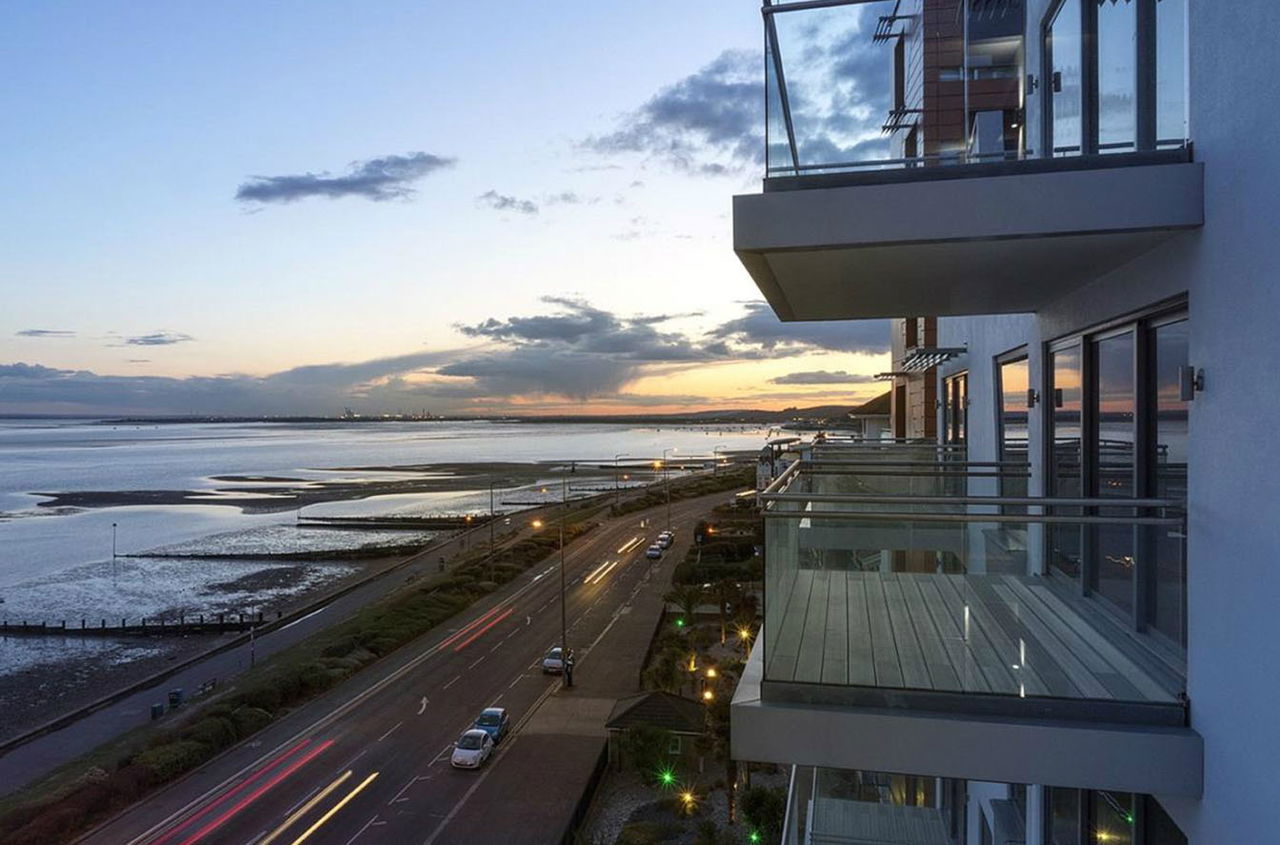
Balcony Building Regulations: What Are the Rules for Balconies Over 11 Metres?
Since 1 December 2022, Approved Document B has required balconies on residential buildings with a storey 11 metres or more above ground to be built from non-combustible materials (Class A1 or A2-s1,d0), or to use a fire-resisting soffit alternative. This 11-metre balcony rule is separate from — and lower than — the better-known 18-metre threshold that bans combustible materials in external walls generally. Most timber and wood-plastic composite decking does not meet this standard, which is why it's generally not used on balconies of qualifying buildings. This guide explains what the rule actually says, who it applies to, and what it means for existing balconies.
Disclaimer
This article is general information for UK homeowners, leaseholders, freeholders, specifiers and installers, correct to the best of our research as of August 2026. It is not legal advice, fire engineering advice, or building control guidance, and it is not a substitute for a site-specific fire risk assessment. Building regulations are technical, height and use are measured and classified in specific ways, and rules differ between England, Wales and Scotland. Always confirm applicability to your specific building with your building control body, a suitably qualified fire engineer, or a fire risk assessor before making decisions about balcony materials, replacement or remediation.
At a Glance
Question
Short Answer
What's the key threshold?
11 metres — the height of the top occupied storey above ground, not overall building height
What does it cover?
Balconies on residential buildings (Approved Document B "purpose groups 1 and 2" — dwellings, flats and institutions where people sleep)
What materials are required?
Class A1 or A2-s1,d0 to BS EN 13501-1, or an alternative fire-resisting soffit/compartment-band arrangement
Where does this come from?
Approved Document B, Volume 1, paragraph 10.10 (Volume 2, paragraph 12.11) — England, in force since 1 December 2022
Is this the same as the 18m cladding ban?
No. The 18-metre rule (Building Regulations 2010, Regulation 7(2)) bans combustible materials in external walls of "relevant buildings" generally. The 11-metre balcony rule is a separate, lower, more recent threshold specific to balconies
Does it apply to my existing balcony?
Generally no, automatically — the rule applies to new building work and material alterations from 1 December 2022 onward, not retrospectively. But existing fire risk assessment duties may still be relevant (see below)
Does composite decking comply?
Usually not. Most wood-plastic composite decking tests to Euroclass B, C or D, below the required A2-s1,d0/A1
Scotland / Wales?
Scotland has applied an equivalent 11m threshold to balconies as "specified attachments" since 2019 (tightened in 2022). Wales lowered a comparable threshold to 11m from 20 December 2025, though scoped to material change of use — check current Welsh guidance for your project
What is the 11-metre rule for balconies, exactly?
Since the Building Regulations amendments that took effect on 1 December 2022, Approved Document B, Volume 1 (paragraph 10.10) has required that in buildings including a "residential" purpose — dwellings and institutions where people sleep, referred to as purpose groups 1 and 2 — with a storey 11 metres or more above ground, balconies must meet one of two conditions.
The first option is that the balcony contains only materials achieving Class A1 or A2-s1,d0 to BS EN 13501-1, with a short list of specific exemptions (things like cavity trays, fire-stopping, seals, gaskets, thermal breaks, electrical fittings and fibre optic cables). The second option allows a combustible decking surface if it sits on an imperforate soffit that covers the full balcony area, achieves at least REI 30 fire resistance, and is itself built from A2-s1,d0 materials or better — effectively containing any fire to the balcony rather than letting it spread. The equivalent provision for buildings other than dwellings sits in Volume 2, paragraph 12.11.
How is this different from the 18-metre combustible materials ban?
It's easy to conflate the two, but they are distinct rules with different heights, scopes and legal sources — and getting this wrong is one of the most common inaccuracies in guidance on this topic.
The 18-metre rule (Building Regulations 2010, Regulation 7(2), in force since 21 December 2018) bans combustible materials in the external walls and "specified attachments" — including balconies — of "relevant buildings": broadly, those with a storey at least 18 metres above ground containing dwellings, or institutions such as care homes and hospitals, extended in 2022 to hotels, hostels and boarding houses.
The 11-metre rule (Approved Document B, paragraph 10.10, in force since 1 December 2022) applies specifically and only to balconies, on residential buildings, at the lower 11-metre threshold.
In practice this means a balcony on a residential building with a top occupied storey between 11 and 18 metres is caught by the balcony-specific rule even though the building sits below the general 18-metre wall threshold. A block of flats at, say, 13 metres would not trigger the wider Regulation 7(2) wall ban, but its balconies would still need to meet the 11-metre rule.
What does "combustible materials" mean for balcony decking and balustrades?
Under BS EN 13501-1 (the British/European reaction-to-fire test standard), construction products are classified from A1 (does not contribute to fire at any stage) down to F (untested or worst performing), with A2 materials receiving additional "s" (smoke) and "d" (flaming droplet) ratings — A2-s1,d0 being the best of that sub-band.
For balcony decking and balustrades, this means the decking boards, balustrade infill panels, and supporting structure generally need to test to A1 or A2-s1,d0. Aluminium decking and balustrade systems commonly achieve A2-s1,d0 (some mineral-coated or composite-aluminium products reach A1), as do stone, porcelain and fibre-cement products. Standard wood-plastic composite decking — made from a wood-fibre and plastic blend — typically tests to Euroclass B, C or D, which does not meet the bar, regardless of fire-retardant additives some manufacturers include.
Why doesn't timber or composite decking usually qualify?
Timber and wood-plastic composite decking are combustible by nature of their materials, and independent BS EN 13501-1 test data for most composite boards on the market shows Euroclass C or D performance (occasionally B), all below the A2-s1,d0/A1 standard required at the 11-metre threshold. This isn't a judgement on decking quality generally — it's specific to this height and building-type trigger.
Below 11 metres, and on non-residential buildings outside the scope of paragraph 10.10, timber and composite decking remain widely used and typically compliant choices for balconies, gardens and terraces, subject to any project-specific requirements from building control, insurers or freeholders.
Where does BS 8579 fit in?
BS 8579:2020 is a British Standard code of practice covering the wider design of balconies and terraces — spatial layout, drainage, wind effects, structural loading, inclusive design and safety — and it also recommends non-combustible construction on buildings above 11 metres, broadly aligning with Approved Document B's requirement.
It's worth being precise here: BS 8579 is design guidance, not law, and it is not itself the source of the statutory 11-metre balcony rule — that comes from the Building Regulations via Approved Document B. The two point in the same direction, but a competent designer should treat Approved Document B as the compliance requirement and BS 8579 as supporting good-practice guidance on top of it.
How does this relate to PAS 9980 and EWS1?
The 11-metre and 18-metre rules described above are design standards for new balcony construction and material alterations — they set out what materials a newly built or substantially altered balcony must use. They are not the same thing as PAS 9980 or EWS1, which are tools for appraising existing buildings:
A PAS 9980-based Fire Risk Appraisal of External Walls (FRAEW) is a fire engineer’s holistic risk assessment of an existing building’s external wall construction — which may include existing balconies with combustible decking — used to judge whether remediation is actually needed, rather than assuming any combustible material must be stripped out immediately. See our PAS 9980 compliance guide for how that process works.
EWS1
is a separate RICS/UK Finance valuation form that gives mortgage lenders a standardised fire-risk rating for a building’s external wall system, which can take balcony construction into account. See our guide to passing your EWS1 review.
Neither PAS 9980 nor EWS1 sets the balcony material standard itself — that's Approved Document B's job. But both are the mechanisms used to judge existing balconies that predate, or don't meet, the current rule.
What does this mean for an existing balcony with combustible decking on a building over 11m?
The 11-metre balcony rule applies to new building work and material alterations carried out from 1 December 2022 onward — it is not automatically retrospective to balconies that were already built and compliant with the rules in force at the time. Owners of buildings with existing combustible balcony decking above 11 metres are not necessarily in breach of Building Regulations simply because the rule has since tightened.
That said, several things can still make replacement or remediation relevant in practice:
Statutory fire risk assessment duties. Under the Fire Safety Order 2005 (as amended) and the Fire Safety (England) Regulations 2022, the "responsible person" for a residential building with two or more sets of domestic premises must assess fire risk in the building, including external wall construction — which can encompass balconies with combustible decking.
PAS 9980 / FRAEW appraisal. If the building's external walls are being appraised — for example, ahead of a sale, remortgage or insurance renewal — a fire engineer may specifically consider combustible balcony decking as part of that risk judgement, and recommend remediation, interim mitigation, or no action depending on the wider building context.
Material alteration or refurbishment. If an existing balcony undergoes work that counts as "building work" or a material alteration under the Building Regulations — such as replacing the decking or balustrade — the current rules, including the 11-metre threshold, would generally need to be met at that point, even if the original installation predated it.
Lender, insurer or freeholder requirements. Even without a strict legal duty to remediate, mortgage lenders, insurers and freeholders may independently require evidence that balcony materials meet current fire safety expectations, particularly where an EWS1 or FRAEW is already in progress for the building.
Owners in this position should not assume either extreme — that nothing needs to change, or that immediate wholesale replacement is mandatory. The proportionate approach is the same one PAS 9980 promotes for external walls generally: get a competent fire risk assessment of the specific building before deciding on remediation, retrofit or no action.
Are the rules different in Scotland or Wales?
Yes, to a degree, and the differences are worth checking rather than assuming England's position applies UK-wide.
Scotland
has applied an 11-metre threshold to cladding and “specified attachments” — including balconies — under its own Building (Scotland) Regulations 2004 and Building Standards Technical Handbooks (Standard 2.7) since a 2019 update, tightened further by the Building (Scotland) Amendment Regulations 2022. Scotland’s regime is separate legislation from England’s, though it arrived at a similar 11-metre figure for balconies independently and earlier. See our Scotland fire regulations guide for details.
Wales
historically applied an 18-metre threshold, aligned with England’s pre-2022 position, but the Building (Amendment) (Wales) Regulations 2025 made changes effective from 20 December 2025. We can now be more precise about what changed, having checked the regulations themselves: this specific amendment reduces the height at which regulation 6(1)(c) applies — the trigger requiring external walls to meet fire-spread requirements on a material change of use to a whole building — from 15 metres to 11 metres, not from 18 metres. (Some secondary commentary describes this as an 18m-to-11m change, but the regulations and at least two independent sources confirm 15m-to-11m for this specific provision; it's possible that commentary is conflating it with the separate combustible-materials-ban provision, which the same 2025 Regulations extended in scope — to hotels, hostels and boarding houses — without changing its height threshold.) The precise relationship between this Welsh material-change-of-use trigger and England's paragraph 10.10 balcony-specific rule is still worth confirming directly with Welsh Building Control or gov.wales for any project near this threshold, since the two nations' rules aren't drafted as directly equivalent provisions.
FAQ
Is the 11-metre balcony rule the same as the 18-metre cladding ban?
No. They are separate rules. The 18-metre rule (Regulation 7(2) of the Building Regulations 2010) bans combustible materials in external walls of relevant buildings generally. The 11-metre rule (Approved Document B, paragraph 10.10) is a lower, more recent, balcony-specific requirement that applies even when a building doesn't meet the 18-metre wall threshold.
Does this apply to my house?
Almost certainly not, unless it's a residential building (flats or similar) with a storey 11 metres or more above ground. Most houses and low-rise conversions fall outside this rule's scope.
Can I still use composite decking on a balcony below 11 metres?
Generally yes, subject to any project-specific requirements from building control, insurers or a freeholder. The 11-metre rule doesn't apply below that threshold or to non-residential buildings outside its scope.
Do I have to rip out my existing composite balcony decking if my building is over 11m?
Not automatically. The current rule applies to new building work and material alterations from December 2022 onward, not retrospectively. However, if the balcony is being replaced, altered, or is flagged by a fire risk assessment or FRAEW as presenting a risk, current standards would typically need to be met at that point. Always check with a fire risk assessor or building control.
What materials can I use instead of composite decking on a qualifying balcony?
Materials independently tested to Class A1 or A2-s1,d0 to BS EN 13501-1 — commonly aluminium decking, stone, porcelain paving, or fibre-cement/mineral-based boards. EnviroBuild supplies aluminium decking and cladding tested to these classifications as an alternative for balconies and buildings that fall under this threshold; always request the manufacturer's specific test certificate for the exact product and build-up being specified.
Who decides whether my building falls under this rule?
Ultimately your building control body (or, for Higher-Risk Buildings, the Building Safety Regulator), based on the building's height, use and construction. If your project is near the 11-metre or 18-metre threshold, or involves a mixed-use or converted building, get this confirmed before finalising a balcony specification.
Sources
gov.uk / Approved Document B, Volume 1: Dwellings (2019 edition, incorporating 2020 and 2022 amendments) — paragraph 10.10, balcony requirements
legislation.gov.uk — The Building Regulations 2010, Regulation 7 (materials and workmanship, including the combustible materials ban)
legislation.gov.uk — The Building etc. (Amendment) (England) Regulations 2022 (SI 2022/603) — Explanatory Note
legislation.gov.uk — The Building (Amendment) Regulations 2018 (SI 2018/1230)
BSI — BS 8579:2020, Guide to the design of balconies and terraces
gov.scot — Building Standards Technical Handbook (domestic), 2.7 Spread on external walls
gov.wales — Building (Amendment) (Wales) Regulations 2025 (WGC 004/2025)
The Fire Safety (England) Regulations 2022 (SI 2022/547) — legislation.gov.uk
Cundall — Amendment to the Approved Document B and Building Regulations, June 2022
Further Reading
This article does not constitute legal or fire engineering advice. See the disclaimer above.