

Check 1: Verify That the Sale Price Is a Genuine Reduction
To confirm a reduction is real, compare the cost per linear metre across multiple suppliers rather than comparing pack prices. Pack sizes can differ between brands, so a cheaper-looking pack can contain fewer boards and deliver a higher unit cost.
Check 2: Assess Discontinued Composite Colours with Care
Composite colours sold at clearance prices are often end-of-line stock with no possibility of reorder. Calculate your total board requirement with a minimum 10 percent wastage allowance, then confirm that enough clearance stock is available to cover that quantity in a single order. Buying short and being unable to match the colour later is one of the most common and entirely avoidable project mistakes.
Both checks take only minutes and address the two most frequent pricing errors buyers make when comparing the best deals on composite decking.

Check 3: Decode Bundle Offers Before Assuming Value
To assess a bundle accurately, calculate the cost per square metre and compare it to buying components separately. Bundles that combine boards with a full hidden fixing system often represent genuine value. Bundles that include accessories you will not use dilute the apparent saving. Ask explicitly whether a complete fixing kit is included or only a starter clip allowance, as the difference can be significant.
Check 4: Calculate Delivery Thresholds Before Finalising Your Order
Many UK composite decking suppliers offer free delivery above a spend threshold. Composite boards are heavy, and delivery charges for orders that fall below the threshold can vary considerably by supplier and should be confirmed at checkout before you finalise any basket. Topping up to the free-delivery threshold with additional boards, fixings, or accessories is often cheaper than paying for delivery under the threshold or paying for two separate deliveries because you might have ordered too little material.
Identifying what a deal includes and excludes is a core part of comparing the best deals on composite decking, and it removes the most common sources of unexpected cost.
Check 5: Order Composite Decking Samples Before Committing
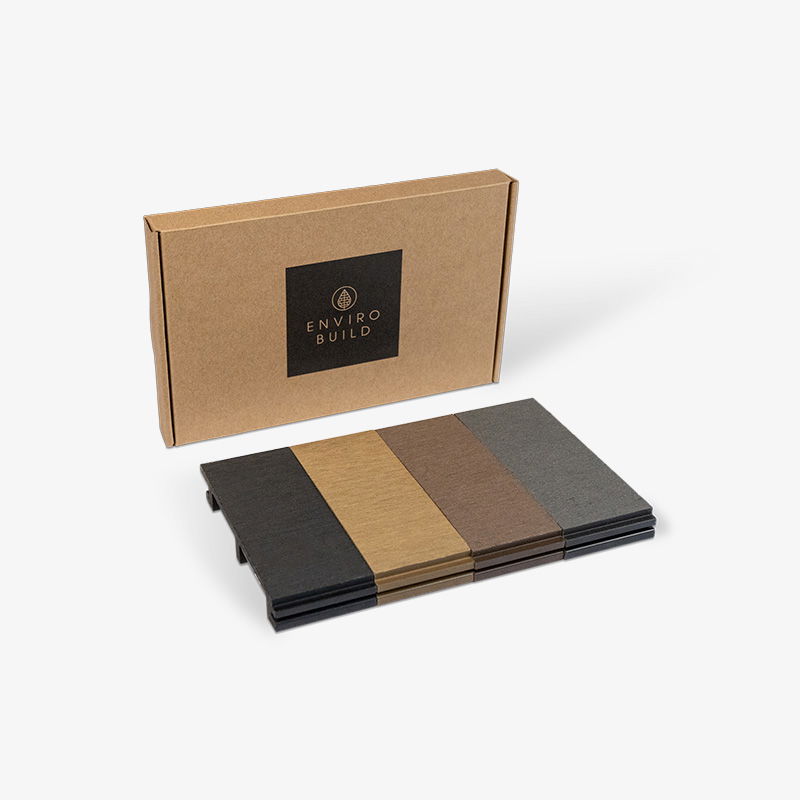
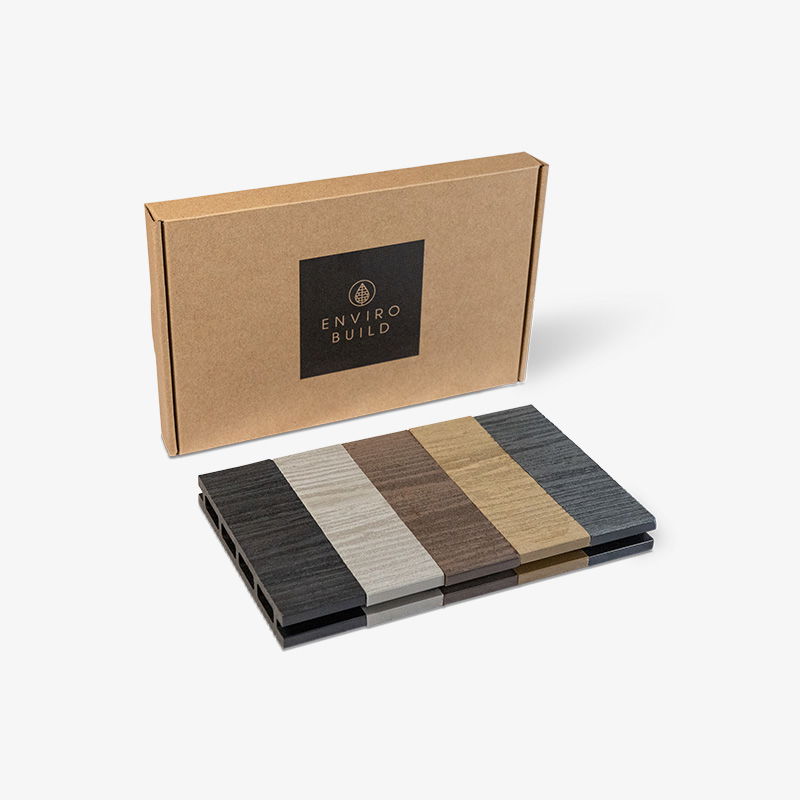
Ordering composite decking samples is essential before committing to any colour at any price. Screens render composite colours inconsistently, and a board that appears warm brown in a product image can look noticeably grey in northern light. We offer free sample packs for both of our decking ranges, delivered by Royal Mail so you can assess shade, texture, and surface grip in your own garden before placing a full order.

Check 6: Read the Warranty in Full
A 25-year residential warranty is widely offered by quality composite decking manufacturers in the UK, including several of the leading domestic suppliers. To put that in context, Homebuilding & Renovating magazine notes that timber decking typically lasts 10 to 20 years, compared to an average of 25 to 30 years for composite, making long-term warranty cover a meaningful indicator of product confidence. Before buying sale or clearance stock, confirm in writing that the same warranty applies as on full-price boards. Discontinued composite colours occasionally carry shortened or voided warranty terms. Check whether the warranty is held by the manufacturer or the retailer, since a retailer that discontinues a product line may be unable to honour long-term claims.
Check 7: Confirm the Return Policy Before You Order
Composite decking boards are bulky, and return delivery charges can equal or exceed the original outbound cost. Confirm the return window, who bears collection costs, and whether clearance or end-of-line products are excluded from the policy before placing any order. A non-returnable sale item carries significantly more purchase risk than a standard stocked board, and that risk should be factored into any price comparison.
Clearing these three checks guards against the risks that erode otherwise promising best deals on composite decking once an order has arrived.
Check 8: Price Every Required Accessory Before Committing
Boards represent only part of the total materials cost. Before finalising any order, price the following items:
Composite decking posts and post supports
Hidden fixings and starter clips
Fascia boards and edge trim
Joists and joist tape
Composite decking posts vary considerably in price between suppliers and are sometimes excluded from bundle deals entirely. Confirm that your chosen supplier stocks compatible accessories.
Pricing every accessory up front is what separates genuine best deals on composite decking from a board-only discount: the total delivered project cost is the only figure that counts.
Check 9: Confirm the Board Specifications Suit Your Subframe
Buying boards that do not match your subframe or design requirements is one of the most expensive mistakes in any composite decking project. Before placing an order, verify the following:
Profile
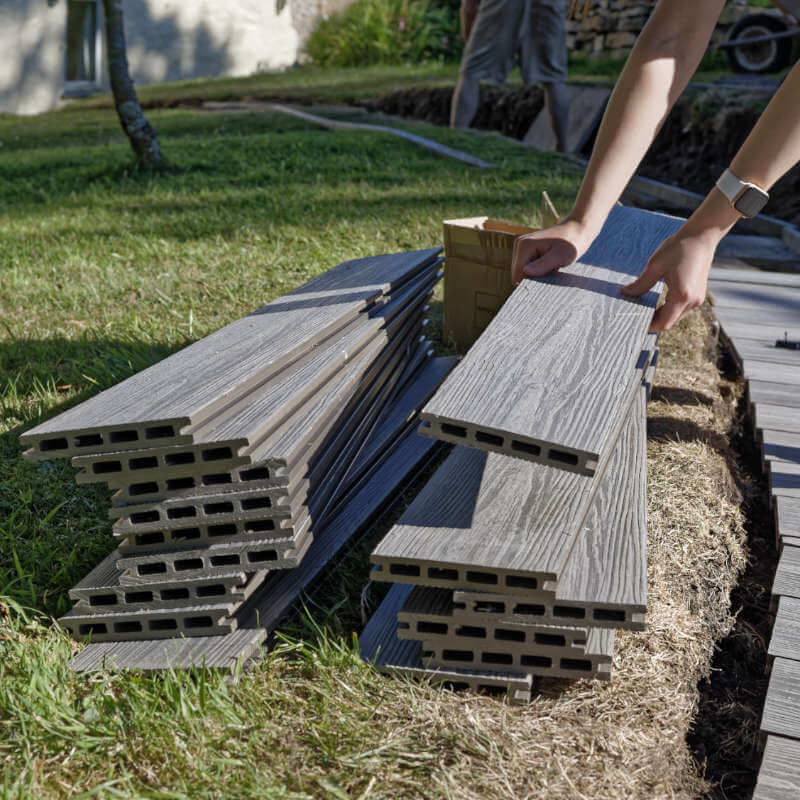
Hollow composite decking boards are lighter and generally less expensive, but they typically require joist spacing of no more than 300 mm centres. Solid boards can tolerate wider joist spacing in many specifications, which can reduce subframe material cost. Choosing the wrong profile can mean rebuilding or reinforcing the subframe after delivery.
Width
Standard composite decking width in the UK typically runs between 120 mm and 150 mm, with 140 mm the most commonly specified option. A narrower board requires more boards to cover the same deck area.
Length
Common composite decking lengths in the UK range from 2.2 m to 4.8 m. Matching available lengths to your deck dimensions reduces offcuts and waste.
Thickness
Most UK boards fall between 20 mm and 25 mm in composite decking thickness. Thinner boards may require closer joist spacing, adding a subframe cost that can more than offset any saving on the boards themselves.
Profile System
Tongue and groove composite decking delivers a clean, hidden-fixing finish and a refined look underfoot. However, tongue and groove composite boards require a specific installation sequence and compatible starter clips. Confirm that these are included in any deal or price them separately before ordering.
Verifying these five specifications against your existing subframe design before placing an order prevents the most costly structural surprises a composite decking project can produce.
Beyond the Board Price
Running through all nine of these checks redirects attention from board price to project price, which is the only meaningful measure of value. Suppliers who provide transparent warranty terms, free samples, and clear accessory compatibility make this assessment straightforward. Those who give vague answers to any of these checks are worth approaching with caution. Finding the best deals on composite decking is not about finding the lowest price on a single line item; it is about understanding the full picture before any money changes hands.
At EnviroBuild we offer two distinct decking ranges: our Explorer boards, made with up to 87% recycled materials and backed by a 15-year warranty, and our solid-capped Frontier boards, manufactured with up to 90% recycled materials and backed by a 25-year stain and fade warranty. Visit our website to compare both ranges in full, order free samples, browse our installation guides, and read our composite decking project case studies for inspiration before committing to any purchase.

Frequently Asked Questions
1. What makes a composite decking deal genuinely good value
The best deals on composite decking reduce the total project cost, not just the board price. That means the combined cost of boards, accessories, delivery, and any subframe adjustments must be lower than a comparable purchase elsewhere. A lower board price that triggers additional subframe costs or excludes accessories can cost more overall than a full-price option from a supplier who includes everything.
2. Can I mix clearance boards with boards I order later if I need more?
Mixing boards from different batches carries a real risk of colour and texture variation, even within the same product range. If you are buying clearance stock, calculate your full requirement with a minimum 10% wastage allowance added and order everything in a single transaction. This is the only reliable way to ensure batch consistency across the finished deck.
3. Is hollow or solid composite decking better value for a standard residential deck?
The better value choice depends on your existing subframe. Hollow boards are lighter and less expensive to buy, but if your joists are spaced beyond 300 mm centres, you may need to add additional joists to meet the manufacturer's specification, which adds cost. Confirm your joist spacing before selecting a board profile, because subframe changes can cost more than the saving on the boards themselves.
4. How do I know whether a supplier's deal includes free samples?
Check the supplier's website for a dedicated samples section before placing any order. Reputable suppliers make sample ordering simple and low cost. The best deals on composite decking are almost always offered by suppliers confident enough in their product to let customers assess boards in their own outdoor space, in natural light, before committing to a full purchase.