

What Should You Consider Before Buying Deck Boards UK?
The right deck boards UK homeowners choose for one project will not necessarily suit another. Working through the following considerations before you commit will save both time and money.
Budget and Long-Term Value
The cost of decking boards at purchase is only part of the picture. Timber may carry a lower upfront price, but annual treatment costs (sanding, staining, sealing) add up significantly over a decade. Composite boards cost more initially but require very little maintenance, making them more economical across the life of the deck.
Intended Use
Consider how the space will be used. A family garden with children and pets has very different demands from a commercial terrace or an elevated balcony.
Maintenance Commitment
High-traffic areas require enhanced durability; entertaining spaces tend to prioritise aesthetics. Match your material choice to how much maintenance you are genuinely prepared to carry out each year.
Expected Lifespan
Softwood decking typically lasts 10 to 15 years with regular upkeep, while well-maintained capped composite boards can last 25 years or more.
Style and Aesthetics
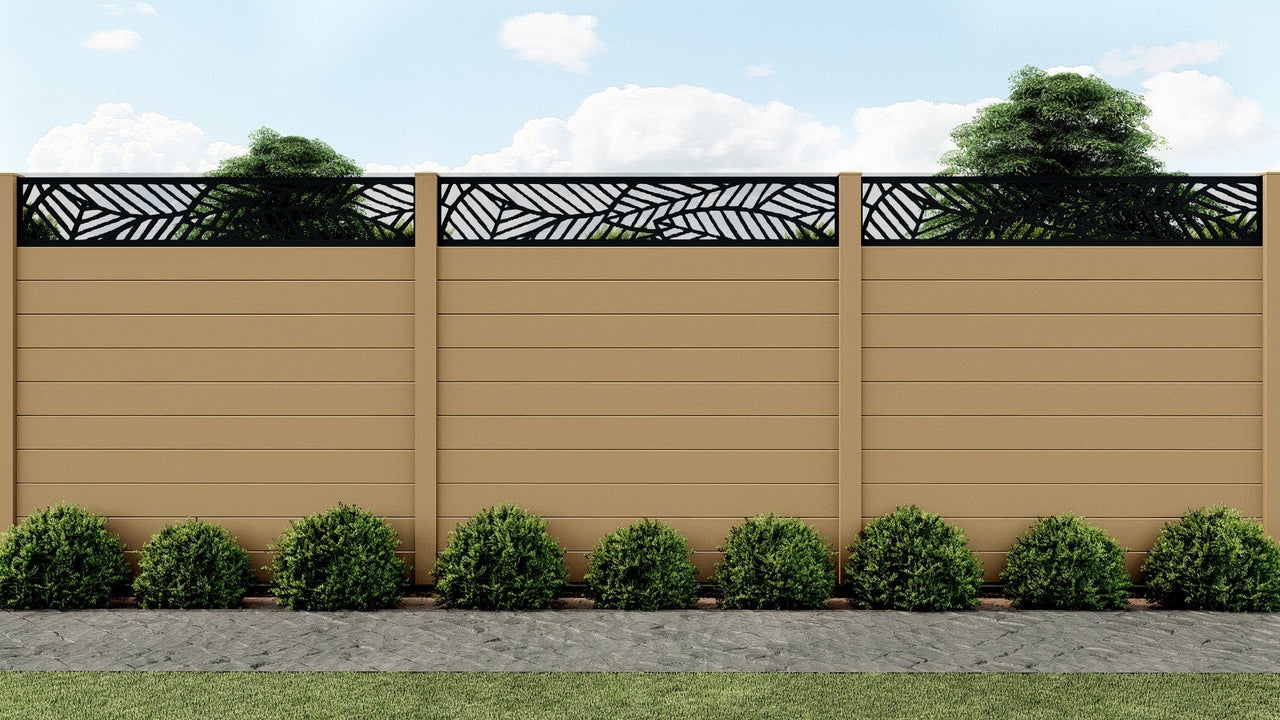
Consider how the boards will sit alongside existing fencing, cladding and planting to create a cohesive outdoor scheme.
Environmental Credentials
If sustainability is a priority, look for boards made from recycled content or certified timber sources, both of which reduce the environmental impact of your project.
Keeping all six considerations in mind before you start comparing products will help you narrow down your options quickly and choose deck boards that genuinely suit your project rather than simply the ones that look good in a brochure.
How Do You Choose the Right Decking Material for Your Outdoor Space?
Focusing on how your deck will actually be used, rather than simply comparing materials side by side, is the most reliable way to identify which characteristics matter most for your project. Let us have a look at some of the most important considerations.
Low-Maintenance Gardens
For homeowners who want a high-quality finish without annual upkeep, materials that resist rot, fading and staining without regular treatment are worth the higher initial investment. Capped composite boards need only an occasional wash to stay in excellent condition.
Homes with Children or Pets
Prioritise splinter-free surfaces, good slip resistance and a dense, hard-wearing composition that can withstand heavy daily use without showing signs of wear quickly.

Areas Exposed to Rain and Damp
Untreated softwood absorbs a significant amount of moisture when exposed to sustained rain, making it prone to rot and warping over time. Capped composite boards absorb very little water by comparison, keeping them stable through prolonged wet conditions.
Entertaining Spaces
Where appearance is a priority, look for consistent colouring, a refined surface finish and a range of tones that complement the wider garden design and any adjacent cladding or fencing.
High-Traffic Areas
Boards such as solid capped composite boards offer better structural integrity and surface hardness than hollow-core alternatives, making them better suited to busy residential decks and commercial terraces.
Longevity and Colour Stability
For projects where long-term performance matters most, look for boards with UV stabilisers built into the cap layer, which slow fading significantly compared with untreated timber.
There is no single universal answer when selecting deck boards UK suppliers: the right material balances maintenance expectations, appearance, durability and budget across the full lifespan of the deck.
Which Deck Board Finish Is Right for Your Project?
The finish selection affects both the look of a composite deck and its day-to-day practicality. Understanding the options before purchasing helps ensure you are happy with the result long after installation.
Woodgrain and Grooved Finishes
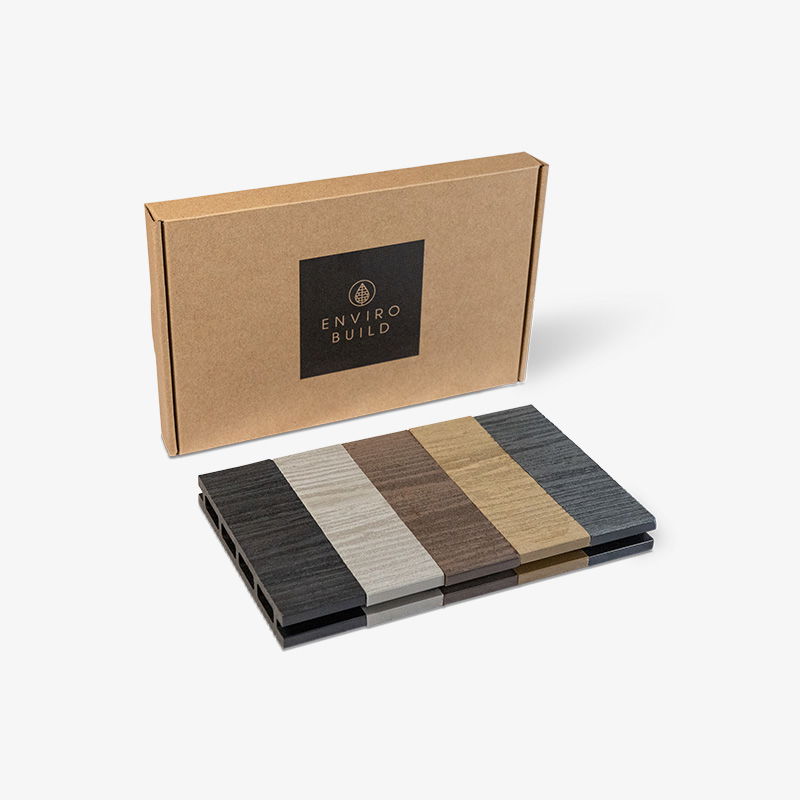
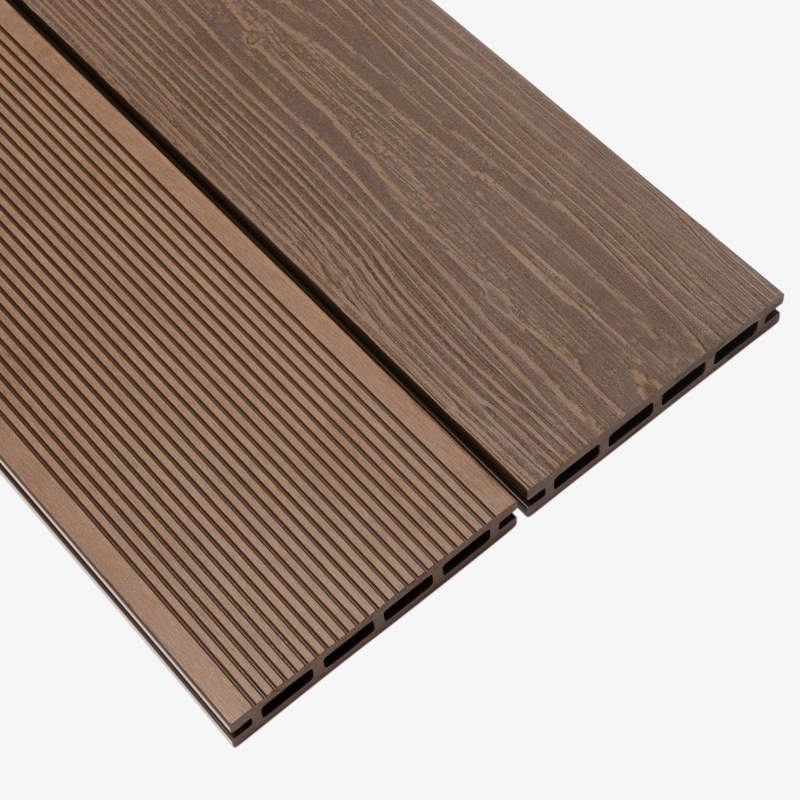
Woodgrain embossed boards replicate the texture of natural timber, working well in traditional or cottage-style garden settings. Grooved boards are often associated with hidden fixing systems and a cleaner surface appearance. Many composite ranges now offer double-sided boards, with a grooved finish on one face and a woodgrain emboss on the other, giving flexibility in both the fixing method and the finished look.
Colour and Coordination
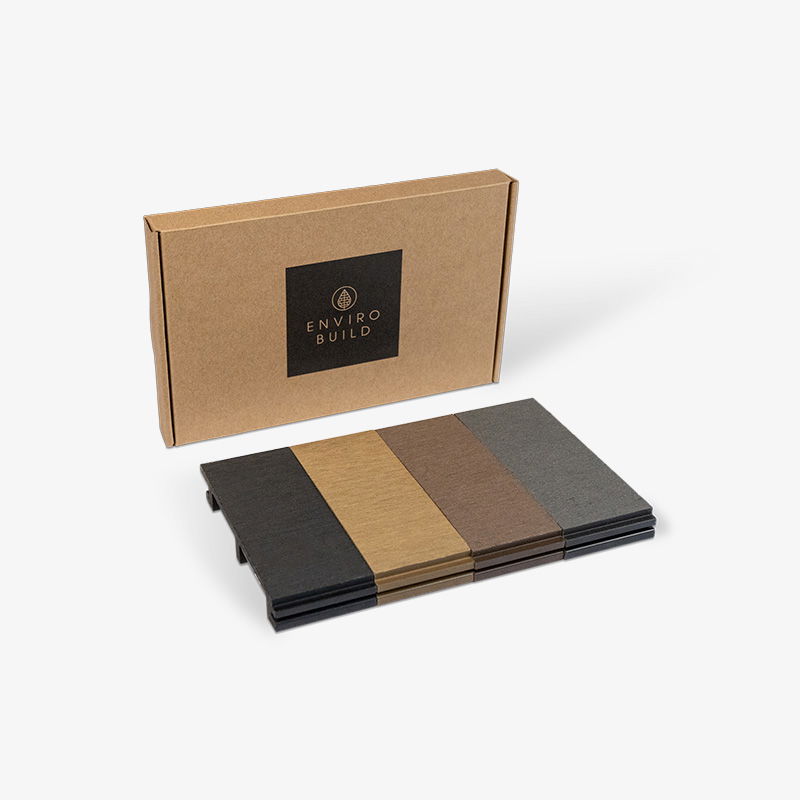
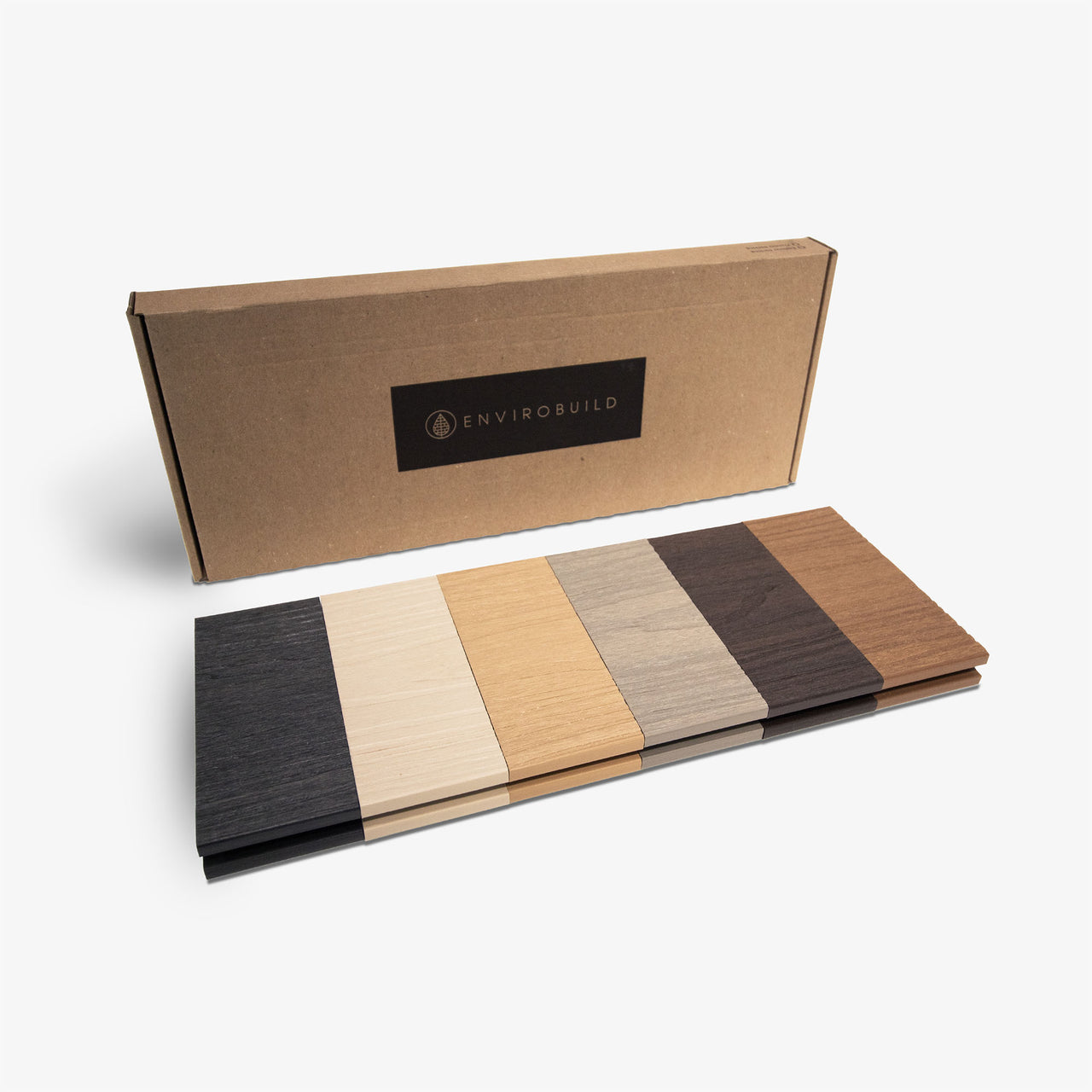
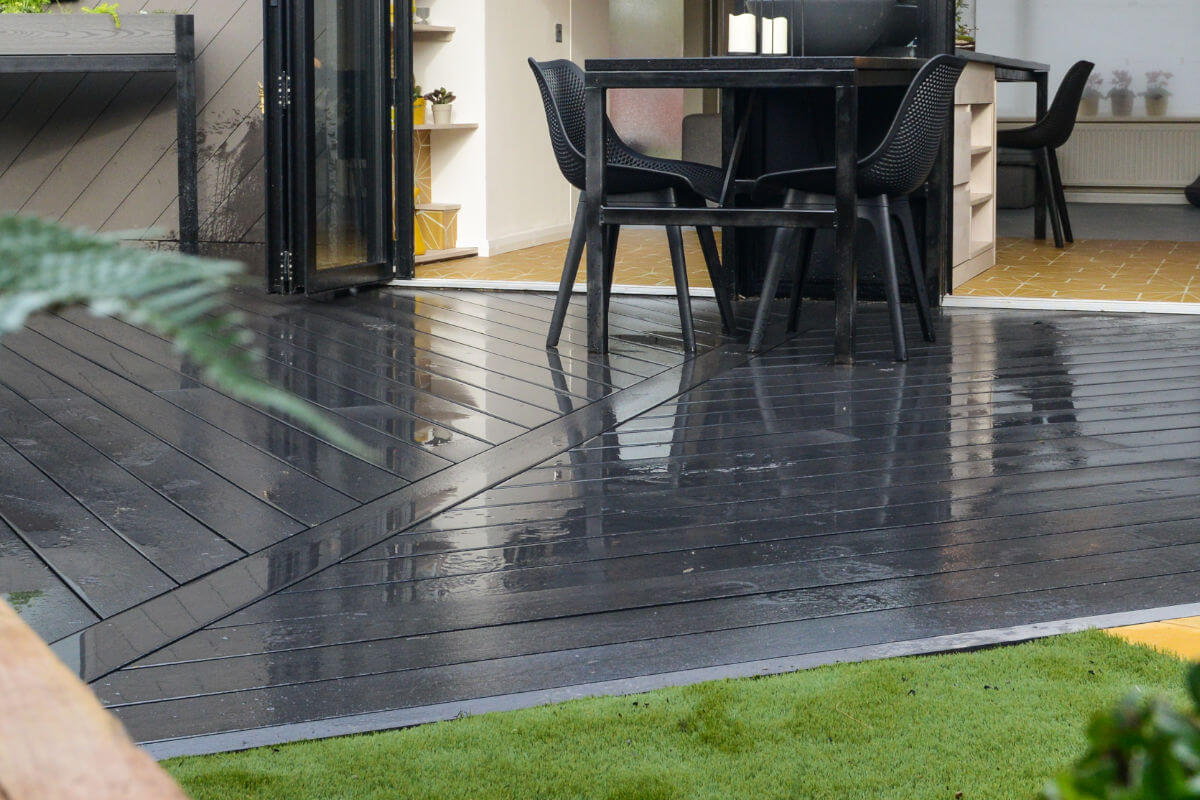
Deck board colours range from pale stone and ash tones to deep charcoal and rich brown shades. The smooth decking boards UK homeowners choose for contemporary schemes pair well with clean architectural lines and minimal fencing, while embossed textures complement more traditional settings. Lighter colours make compact gardens feel more open while darker shades create a bold, sophisticated finish. Think about how the boards will coordinate with adjacent cladding and landscaping for a cohesive result.
Deck Board Sizes and Profiles
Understanding decking sizes before purchasing helps you plan accurately and avoid waste.
The width of the board influences the finished look: wider boards suit contemporary designs, while narrower boards complement traditional layouts. Thickness determines how well a board spans the gap between joists. Longer lengths reduce the number of joins across a surface, producing a cleaner finish.
When calculating how much decking you need, factor in the fixing gap between boards, any angle cuts and a wastage allowance. EnviroBuild offers both lightweight hollow-core boards and solid capped boards, each suited to different structural and aesthetic requirements.
What Else Do You Need Besides Deck Boards UK?
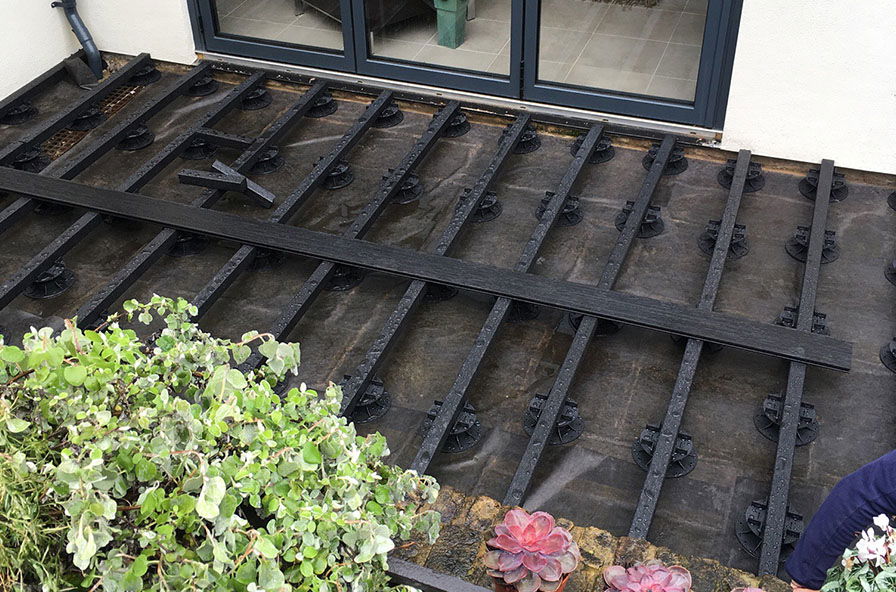
A professional deck relies on more than the boards themselves. Planning the full system from the outset avoids delays and ensures every component works together.
The key components of a composite deck are:
and
for a stable, level base.
Hidden fixing clips and starter clips to secure boards without visible screws.
Stainless steel fixings for structural connections.
Fascia boards and edge trims to create a clean perimeter finish.
Balustrades for elevated areas where safety barriers are required.
Deck lighting and finishing accessories.
Using compatible products from the same supplier for your deck boards UK will ensure colour consistency and will simplify installation.
Why the UK Weather Matters When Choosing Deck Boards
Britain's climate creates specific challenges for outdoor decking that buyers should factor into their decision. Persistent wet-dry cycling, winter frost, summer UV exposure and, in many areas, coastal salt air all affect how a deck performs and looks over time.
Rain, Frost and Seasonal Movement
The UK averages over 1,200mm of annual rainfall in many western and northern regions. Sustained moisture combined with freeze-thaw cycles through winter causes untreated timber to expand, contract and crack. Quality composite boards absorb minimal moisture and remain dimensionally stable across seasons, significantly reducing the risk of warping or splitting.
UV, Coastal Conditions, and Biological Growth
Premium capped boards incorporate UV stabilisers into the polymer cap layer, slowing colour change substantially compared with untreated timber. In coastal locations, salt air corrodes fixings and degrades surface finishes faster, making capped composite and stainless steel hardware the recommended pairing. Moss and algae thrive on porous surfaces, but the low-porosity surface of quality composite resists biological growth, reducing maintenance and slip risk year-round.
What Should You Look for from a Decking Supplier?
Choosing the right supplier is as important as choosing the right boards. Use this checklist when comparing your options.
A reliable supplier should offer:
Product warranties of 15 to 25 years
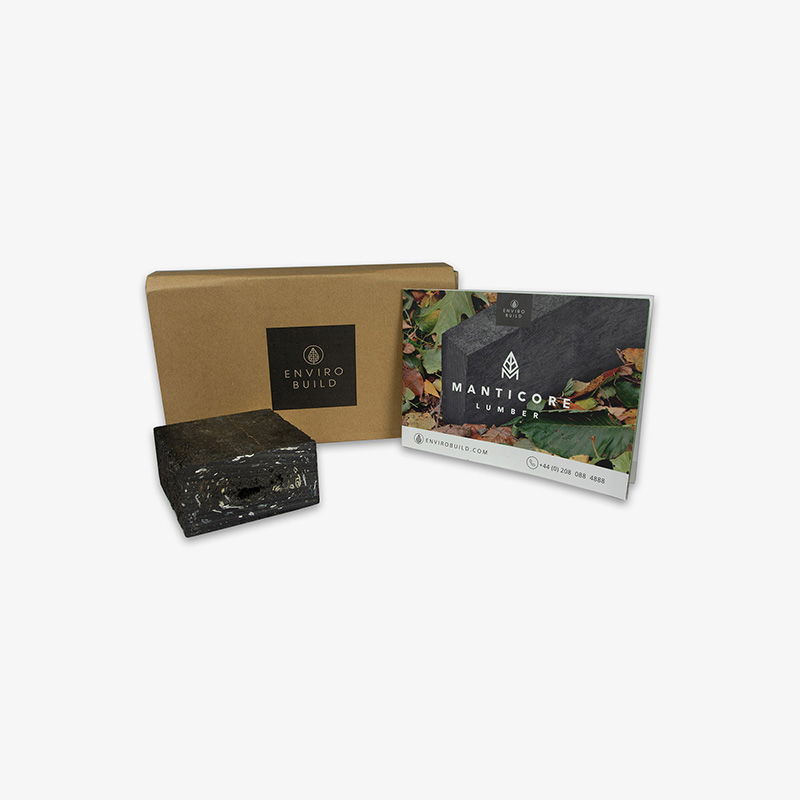
The ability to order samples before purchasing
Accessible technical advice and customer support
Clear installation guides and resources
Nationwide UK delivery
A full range of matching accessories available from a single source
Price alone is rarely the best basis for comparison.
Choose EnviroBuild
Choosing the right deck boards UK buyers can rely on means thinking beyond the initial purchase. EnviroBuild's composite decking is manufactured from recycled materials and FSC-certified wood fibres, backed by warranties of up to 25 years, making it a durable, sustainable choice for residential and commercial projects. Use our decking boards cost calculator to plan quantities before ordering or request a decking quote for a tailored estimate. You can order samples to see colours in your own space and explore our blogs and case studies for installation guidance and real-world inspiration. Looking for quality decking boards ‘near me’? EnviroBuild delivers nationwide across the UK.
Frequently Asked Questions
1. What are the best deck boards for UK weather?
Capped composite deck boards, such as those at EnviroBuild, that UK professionals recommend perform best in British conditions, with minimal moisture absorption, a UV-stabilised surface and strong resistance to freeze-thaw cycling year-round.
2. What thickness of deck boards should I choose?
Thickness determines how well a board spans the gap between joists. Thicker boards offer better structural performance over wider spans. Always check the manufacturer's spanning guidance before ordering.
3. How many deck boards will I need?
Calculate your deck area in square metres, then account for board width, fixing gaps, angle cuts and a wastage allowance. EnviroBuild's online decking calculator helps you order the right quantity the first time.
4. What accessories are required to install deckin
A standard installation requires joists, fixing clips, starter clips, stainless steel screws, fascia boards and edge trims. Elevated decks also require balustrades. Sourcing all components from the same supplier ensures compatibility and a consistent finish.
5. How long do composite deck boards last?
Capped composite deck boards in the UK can last 25 years or more when properly maintained. EnviroBuild backs its composite ranges with residential warranties of up to 25 years.