
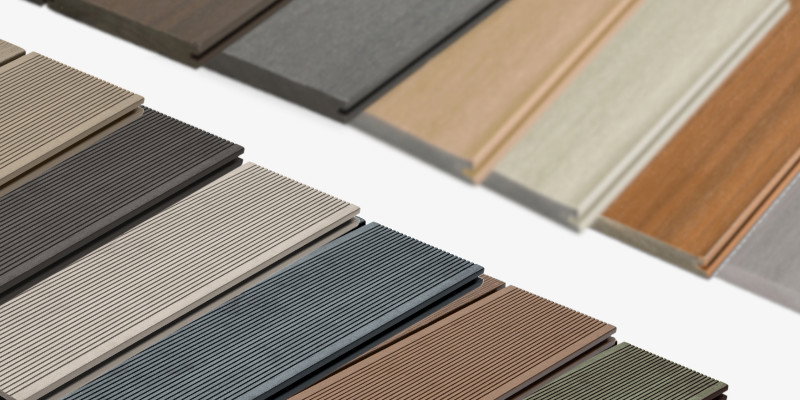
Quick Comparison Table
Feature
Explorer Decking
Frontier Decking
Board Construction
Hollow-core board
Solid-core board
Board Size
145 x 21mm
143 x 23mm
Board Length
4m
4m
Capped or Uncapped
Uncapped
Capped
Surface Options
Woodgrain / Grooved
Softwood / Hardwood
Warranty
15 years residential
25 years residential
Fade Resistance
Natural weathering in first months
Enhanced fade protection
Stain Resistance
Standard composite resistance
Enhanced stain protection
Moisture Resistance
Good
Higher resistance due to plastic capping
Slip Resistance
Low slip potential
Low slip potential
Moisture Resistance
Good
Higher resistance due to plastic capping
Joist Span
300mm
400mm
Typical Applications
Residential gardens and patios
Premium residential and high-traffic areas
Maintenance
Low maintenance
Very low maintenance
Appearance & Finish
Both decking ranges are designed to provide a more refined and consistent appearance than traditional timber decking, while avoiding common issues such as splintering, warping, and rot.
Explorer Decking Appearance
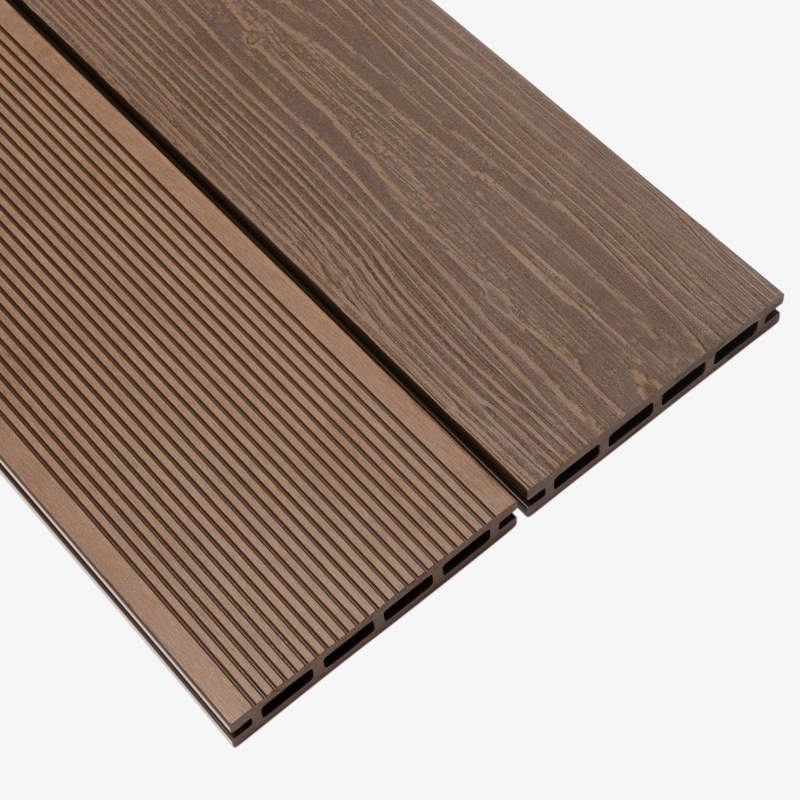
Explorer boards feature two usable surfaces:
A 3D embossed woodgrain finish
Traditional decking grooves on the reverse
This allows homeowners to choose between a more natural timber-style appearance or a more classic grooved decking finish depending on the project style. The embossed woodgrain surface creates a textured appearance designed to replicate timber while maintaining the low-maintenance benefits of composite decking.
Frontier Decking Appearance
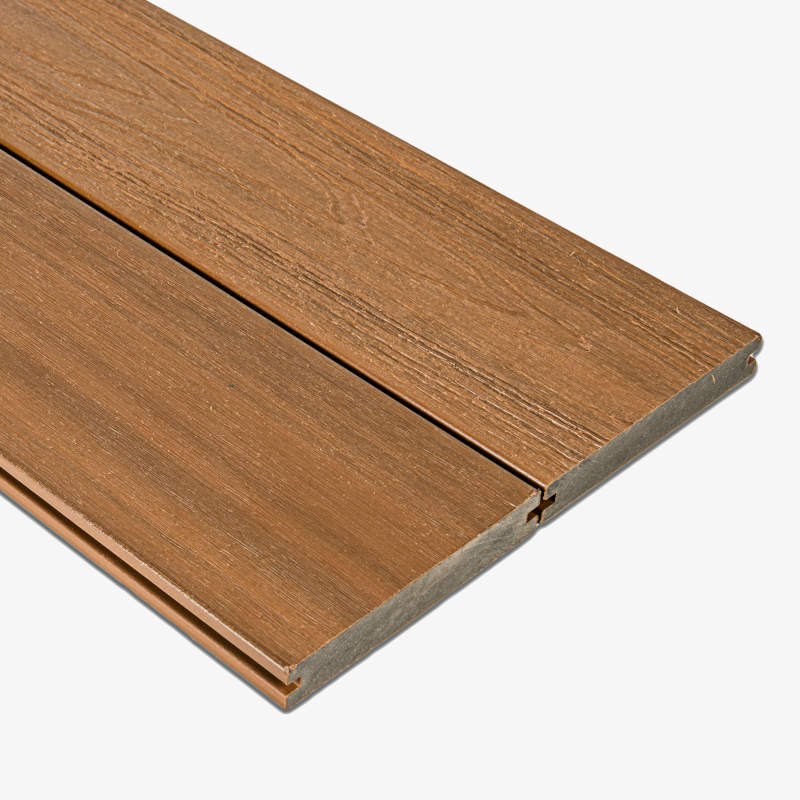
Frontier boards also feature two finishes:
A 3D embossed softwood grain
A flat brushed hardwood-style finish
The brushed hardwood side creates a more contemporary, premium appearance often associated with modern garden design and commercial outdoor spaces. Because Frontier boards are capped, they retain a more consistent appearance over time with reduced weathering and colour variation compared to uncapped boards.
Board Construction: Hollow vs Solid
One of the biggest differences between the two ranges is the board construction.
Hollow Core Composite Decking
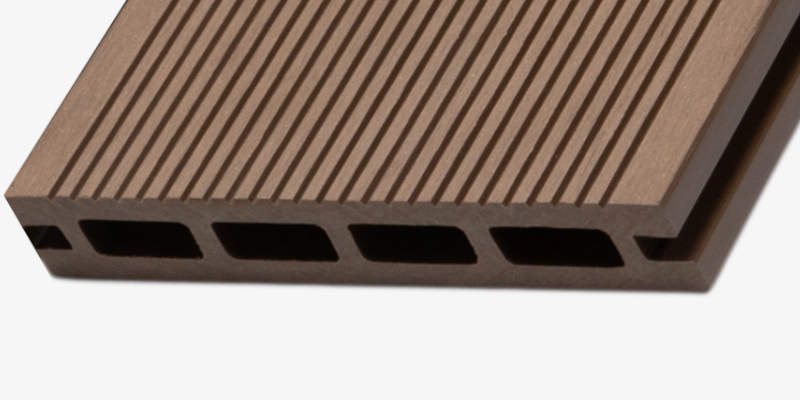
Explorer uses a hollow-core board structure.
Benefits of hollow composite decking include:
Lower upfront material cost
Reduced board weight
Easier handling during installation
Excellent value for residential decking projects
Despite the hollow construction, Explorer boards are designed to provide long-term durability and are backed by a 15-year residential warranty. Explorer boards require joist spacing at 300mm centres.
Solid Core Composite Decking
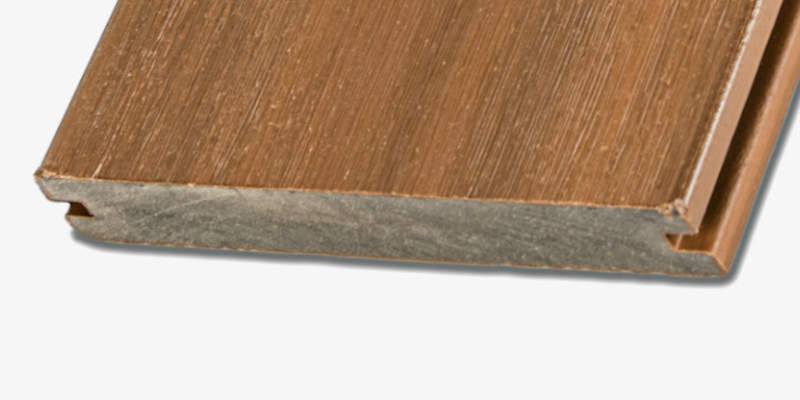
Frontier uses a solid-core board structure.
Benefits of solid composite decking include:
Increased strength and rigidity
Wider joist spans
Improved suitability for high-traffic areas
More premium underfoot feel
Frontier boards allow for joist spacing at 400mm centres, which can reduce the amount of required substructure. Although Frontier boards have a higher initial board cost, the reduced substructure requirement can narrow the overall installed price difference between the two systems.
Frontier is often recommended for:
Commercial decking
Rooftop terraces
Busy entertaining spaces
High-traffic residential gardens
Edging Options
The edging and finishing details differ noticeably between the Explorer and Frontier ranges and can influence the final appearance, durability and installation style of the deck.
Explorer Edging Detail
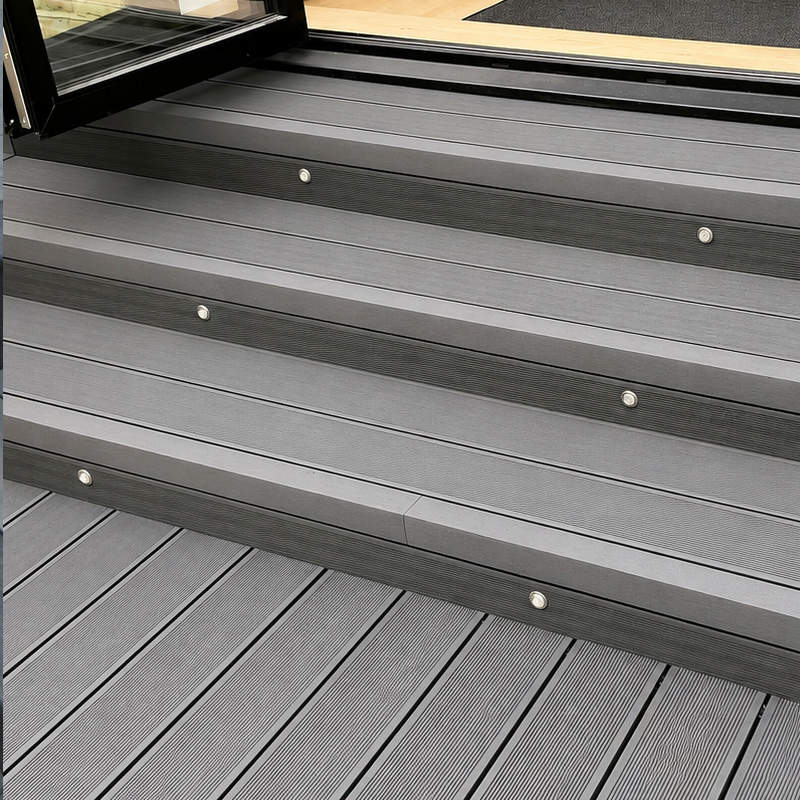
Explorer decking uses a solid 54 x 54mm L-shaped edge board for both step edging and perimeter finishing.
Key benefits include:
Solid profile construction for improved long-term durability
Designed to withstand concentrated foot traffic on deck edges and steps
Flush finish aligned with the thickness of the deck boards
Cleaner visual transition between boards and edging
Because the edging profile matches the board thickness, Explorer deck boards can also be used as fascia or riser boards. This helps reduce visible screw fixings and creates a more consistent appearance across the deck perimeter.
Frontier Edging Detail
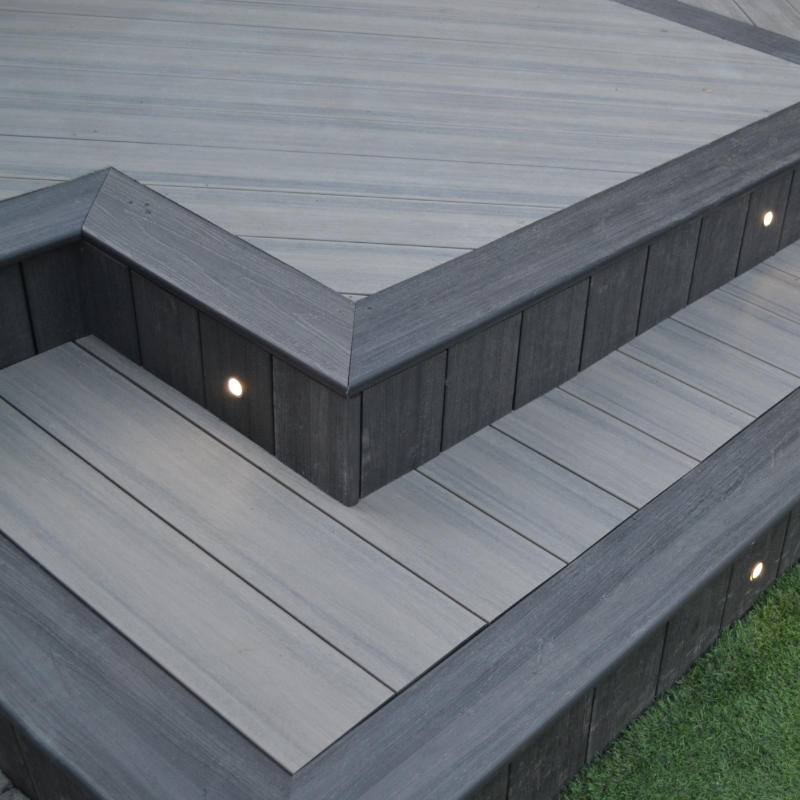
Frontier uses a rounded bullnose board to create a more traditional premium step edge finish.
The bullnose profile matches the deck board profile, helping maintain a more seamless and higher-end appearance around steps and exposed deck edges.
To finish deck faces and risers, Frontier uses a separate 140 x 12mm fascia board which can be fixed using colour-matched screws to minimise fixing visibility.
Benefits of the Frontier edging system include:
More premium architectural appearance
Traditional rounded step nosing detail
Cleaner finishing for contemporary terraces and rooftop decks
Reduced visible fixings through colour-matched screw options
Installation Considerations
Both ranges use the same fixing systems and installation approach.
Hidden Fixing Systems
6mm Spacing Clips
Benefits include:
Improved drainage
More cost-effective installation
Ability to remove individual boards more easily
3mm Spacing Clips
Benefits include:
Narrower board gaps
Cleaner visual appearance
Consideration:
Removing a board later may require lifting additional boards installed afterwards
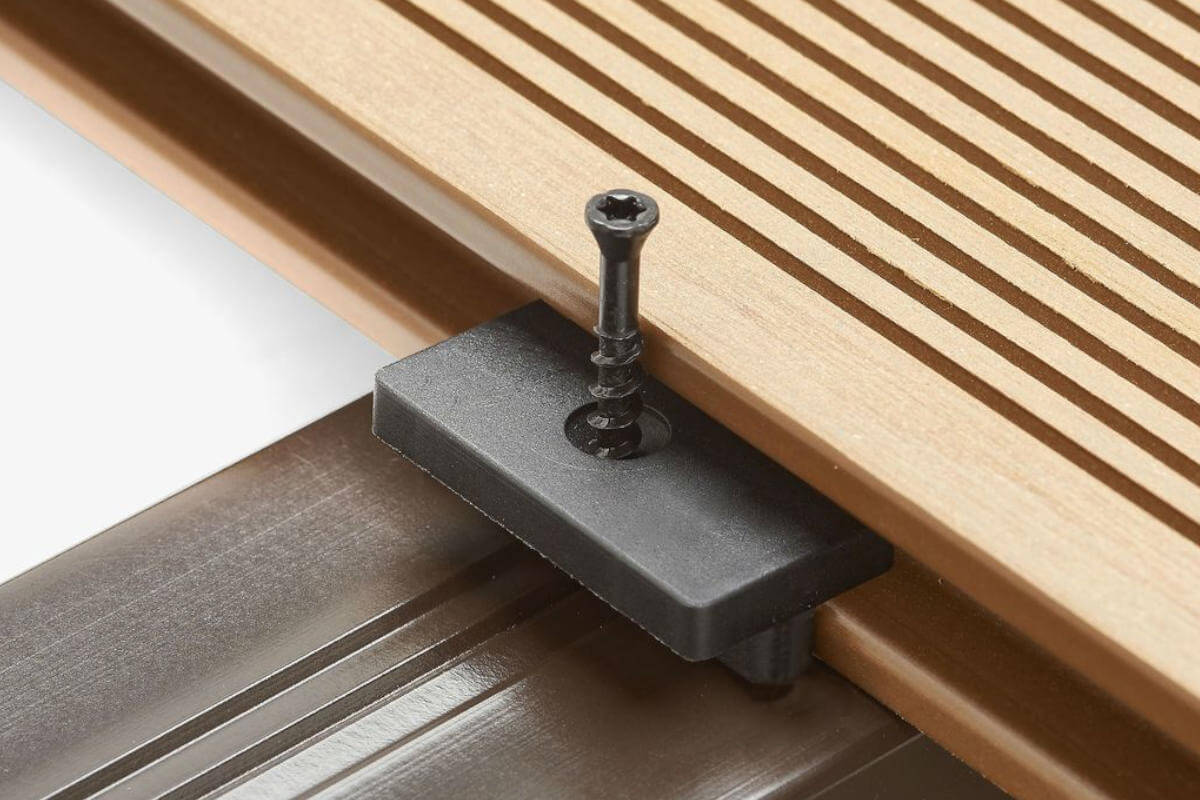
Starting Clips
Both ranges use hidden starting clips designed to create a cleaner deck edge appearance.
Substructure
Both Explorer and Frontier decking boards can be installed onto:
Recycled plastic joists
Aluminium joists
Timber joists
However, the choice of substructure can significantly affect the long-term durability, maintenance requirements and structural performance of the deck.
Durability & Lifespan
Both ranges are designed as long-lasting alternatives to timber decking and are resistant to common timber issues such as:
Rot
Splintering
Insect damage
Warping
Explorer Durability
Explorer is designed as a durable and affordable decking solution suitable for most residential garden applications.
Key durability features include:
Hollow structural design
Long-lasting composite construction
15-year warranty
Low-maintenance performance
Frontier Durability
Frontier is designed for projects where longevity, appearance and strength are higher priorities.
Key durability features include:
Solid-core construction
Protective polymer capping
Enhanced moisture resistance
25-year warranty
The capped surface also helps protect the board from staining and environmental exposure, making it especially suitable for:
Outdoor dining areas
Waterside decking
Commercial environments
Fade & Stain Resistance
Explorer Weathering
Explorer boards are uncapped, meaning the composite material is consistent throughout the board.
As a result, Explorer boards naturally weather and lighten during the first two to three months of outdoor exposure, particularly when exposed to rainfall and UV light.
This creates a softer, more natural aged appearance over time.
Frontier Weathering
Frontier boards feature a fully capped outer shield made from 100% plastic.
Benefits of capped composite decking include:
Reduced moisture absorption
Improved stain resistance
Enhanced colour retention
Reduced weathering
Because tannins within the board are sealed beneath the protective layer, Frontier boards maintain a more consistent appearance over time.
Slip Resistance
Both Explorer and Frontier decking boards are designed with low slip potential surfaces.
Explorer Slip Resistance
Explorer dual-sided board offers:
Embossed woodgrain surface
Traditional grooved surface
Both sides provide similar slip performance, allowing homeowners to choose primarily based on appearance preference.
Frontier Slip Resistance
Frontier dual-finish board offers:
Softwood grain texture
Brushed hardwood-style texture
Again, both surfaces maintain a low slip potential while offering different aesthetic finishes.
For projects where anti-slip performance is a major consideration, surface texture selection can be based more on design preference than on significant performance differences.
Maintenance Requirements
Both decking ranges are designed as low-maintenance alternatives to timber decking.
Unlike traditional timber decking, neither range requires:
Sanding
Staining
Oiling
Regular sealing
Explorer Maintenance
Explorer requires standard cleaning to maintain appearance. As an uncapped board, it will naturally weather over time, which many homeowners prefer for a more natural appearance.
Frontier Maintenance
Frontier requires minimal maintenance due to the protective outer capping.
The capped surface provides:
Easier cleaning
Reduced staining risk
Lower moisture absorption
Improved long-term appearance retention
For homeowners prioritising the lowest possible ongoing maintenance, Frontier is generally the stronger option.
Sustainability Credentials
Both decking ranges support more sustainable outdoor construction compared to traditional hardwood decking.
Environmental benefits include:
High levels of recycled materials
Manufactured using renewable energy
Long product lifespan
Reduced maintenance chemicals
Reduced demand for tropical hardwoods
Pairing the decking with non-rot substructure systems such as recycled plastic joists or aluminium joists can further improve long-term durability and reduce maintenance requirements.
Which Decking Range Should You Choose?
Neither range is universally “better”. The right choice depends on:
Project budget
Installation environment
Desired appearance and trim
Traffic levels
Long-term maintenance priorities
Choose Explorer If You Want:
A more affordable composite decking option
Excellent long-term value
A natural weathered appearance
A residential garden decking solution
Hollow-core boards with lower upfront cost
Traditional grooved decking aesthetics
Choose Frontier If You Want:
Premium composite decking
Enhanced fade and stain resistance
Wider joist spans
A solid-core decking board
Better suitability for humid or waterside areas
Reduced maintenance requirements
A more contemporary finish
Decking for high-traffic or commercial spaces
Ready to Compare Explorer and Frontier Decking in More Detail?
If you are still deciding which decking range is right for your space, there are several ways to explore the systems further.
Compare Decking Colours and Trims
Use the decking visualiser to compare board colours and edging styles across both ranges.
This can be particularly useful when planning which finish will best suit your garden.
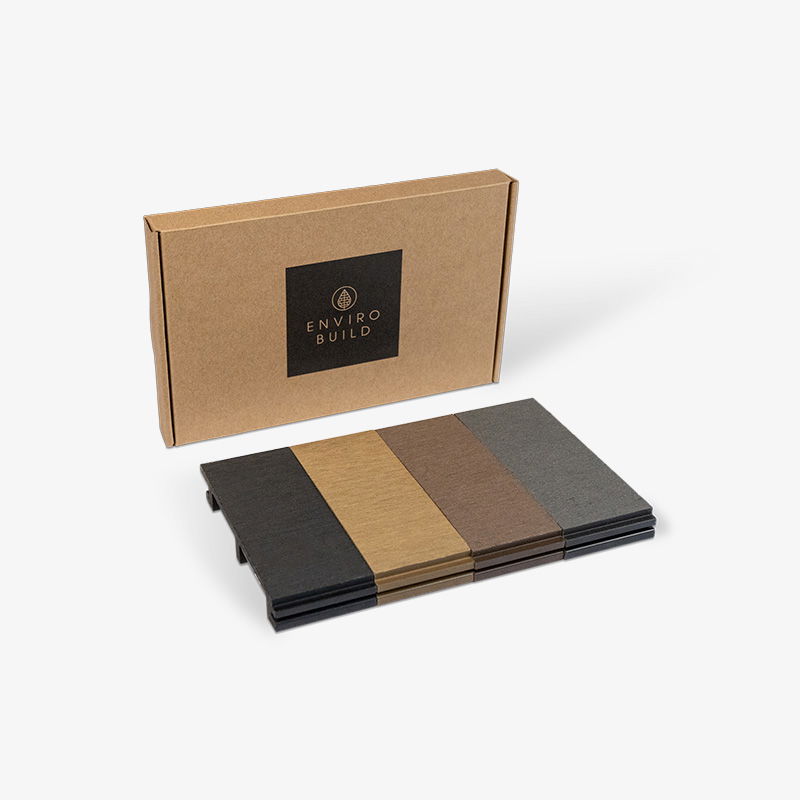
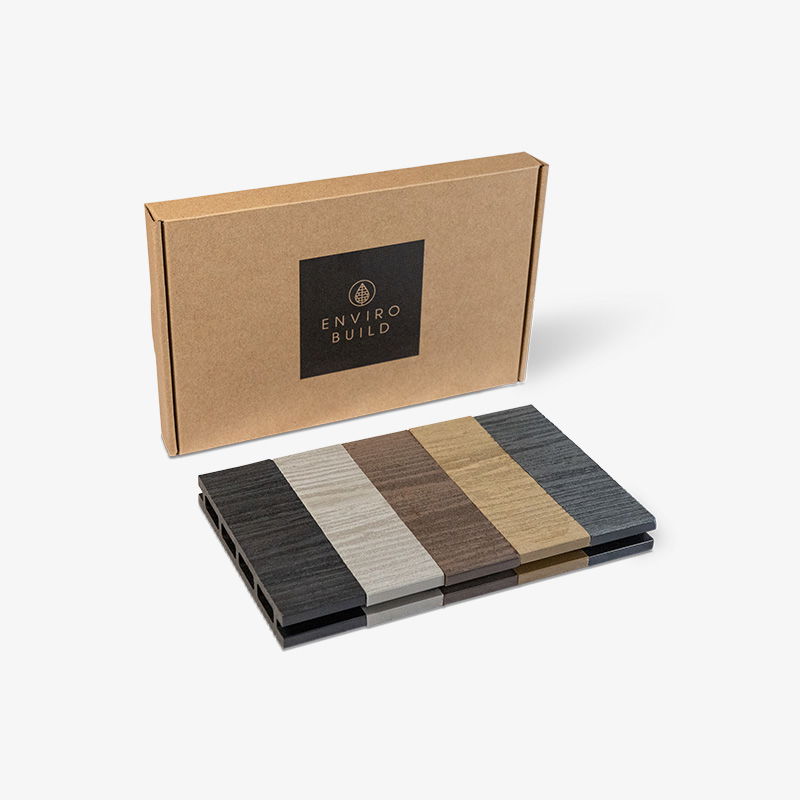
Order Composite Decking Samples
Seeing the boards in person is often the best way to compare:
capped vs uncapped finishes
woodgrain textures
colour tones
surface styles
board construction
Sample packs allow you to compare Explorer and Frontier directly before committing to a full installation.
Estimate Materials with the Decking Calculator
Use the decking calculator to estimate:
deck boards
joist quantities
fixing clips
edging requirements
substructure materials
This can help compare overall project requirements between Explorer and Frontier, including the effect of different joist spans.
Speak to the Technical Team
For larger, more complex, or commercial projects, EnviroBuild’s technical team can provide guidance on:
joist spacing
substructure selection
rooftop decking systems
waterside installations
edging and finishing details
fixing system recommendations
This is particularly useful for projects involving aluminium substructures, low-ground installations, or high-traffic areas.
Contact us to get expert advice for your project or call our team on 020 8088 4888