

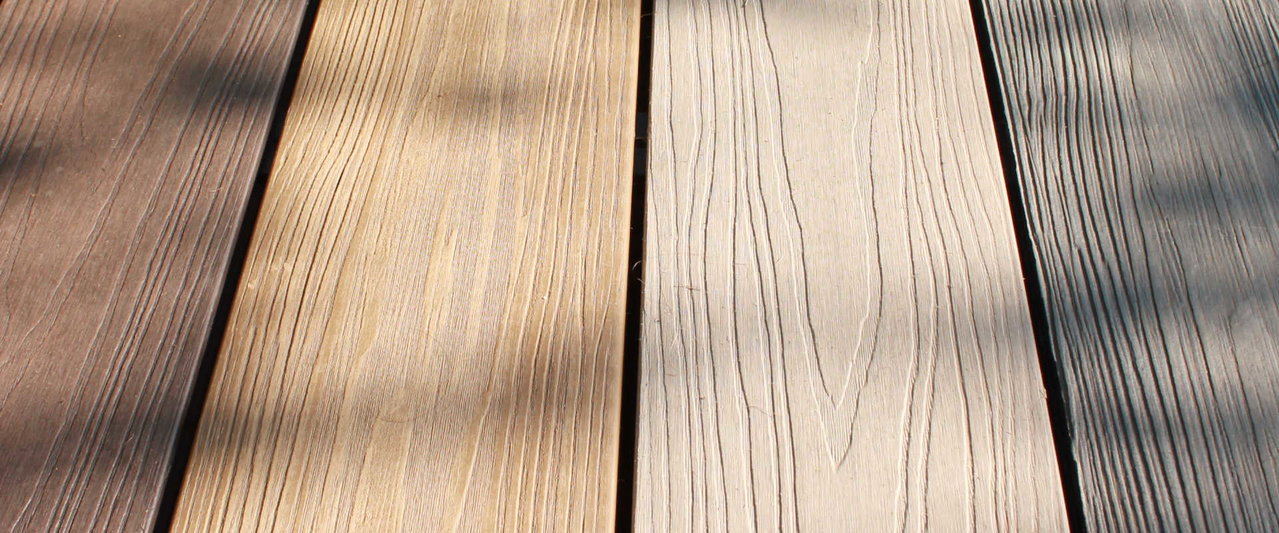
Capped vs Uncapped: The Most Important Decision
The cap layer is the single most significant variable in composite decking performance, and it is the first question to settle before anything else.
What Is a Capped Decking Board?
A capped decking board has a solid HDPE polymer layer fused to its outer surfaces during manufacture using a process called co-extrusion. This creates a non-porous shell around the WPC core that resists moisture, staining, algae and UV-driven colour fade.
The cap is fused directly to the core during production, which is an important distinction: post-applied surface coatings can peel or delaminate over time, whereas a co-extruded cap bonds permanently with the board. Some composite board for decking manufacturers also offer four-sided capping, which covers the board ends, and underside as well as the top and side faces, providing maximum protection against moisture at every point.
Premium capped composite decking boards can carry manufacturer warranties of up to 25 years. For any deck exposed to British weather, a capped board is the stronger specification.
When Uncapped Boards Are Appropriate
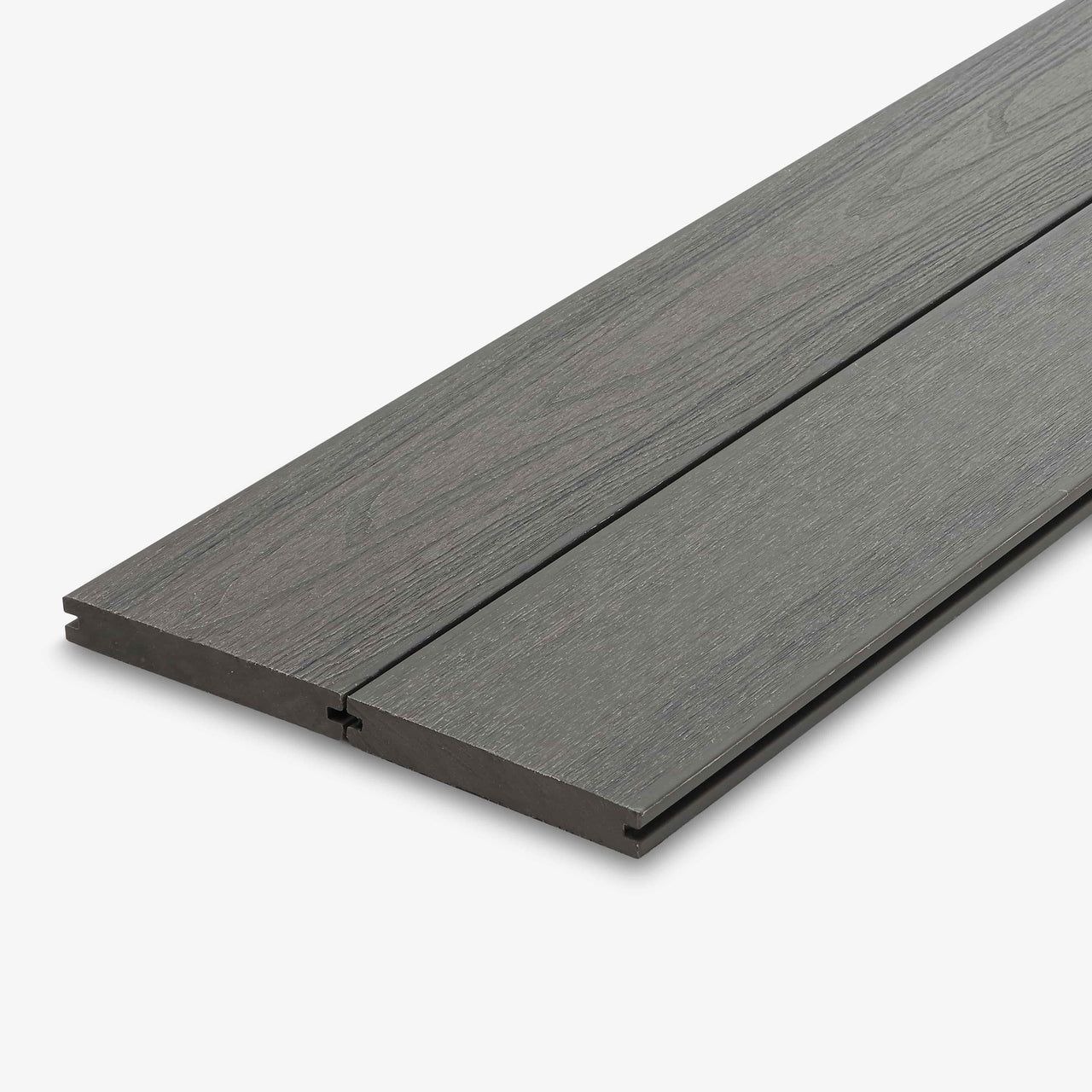
Uncapped boards use the same WPC (wood plastic composite) material throughout, with no outer protective layer. They are more affordable and perform adequately in covered or sheltered locations with consistent maintenance, but they absorb more moisture over time and fade sooner in exposed conditions.
Surface algae and green discolouration, which are common on any outdoor surface in the UK, tend to penetrate more deeply into uncapped boards, making them harder to clean and more prone to permanent staining over time. In open settings, the additional upkeep required by uncapped boards typically outweighs the initial cost saving.
The decision for which composite board for decking to choose comes down to exposure level and long-term maintenance expectations.
Hollow vs Solid: Choosing the Right Core Profile
Once the cap layer decision is settled, core construction is the next consideration. The internal profile of a composite board affects its weight, load capacity, underfoot feel and joist spacing requirements.
Hollow Composite Decking
Hollow composite decking boards have internal chambers running along their full length. This reduces weight to approximately 2.5 to 3.5 kg per linear metre for a 150 mm board, making them easier to handle on site and reducing structural loading on elevated installations. Hollow boards require a maximum joist spacing of 300 mm centres, and exposed ends must be fitted with end caps to seal them.
Solid Composite Deck
A solid composite deck board is dense throughout, typically weighing between 4.5 and 6 kg per linear metre. This density distributes point loads more effectively, produces a quieter and more substantial feel underfoot, and makes solid boards the right choice for commercial settings, pool surrounds and high-traffic residential areas. They are also the better choice anywhere heavy garden furniture, large planters or wheeled equipment will be used regularly, as the solid core resists localised indentation more effectively than a hollow profile under repeated point loading. Solid-capped boards are the preferred specification for commercial projects across the UK.
Both composite board for decking profiles are widely available from UK suppliers, and the right choice depends on your structural requirements and intended use.
Composite Decking Sizes and Lengths: What to Know Before You Order
Ordering the right dimensions upfront reduces waste, avoids unnecessary joins and simplifies installation.
Standard Board Widths and Thicknesses
There is no UK-wide standard for composite decking sizes, so dimensions vary between manufacturers. The following ranges reflect what is commonly available in the UK market in 2026:
Width: 120 mm to 150 mm, with 140 mm to 150 mm the most widely specified
Thickness: 20 mm to 32 mm, with 22 mm to 25 mm the most common for residential use
Wider boards lay faster across larger decks, while narrower profiles can be easier to work with around obstacles or step edges. The direction of board installation also affects how much material you need: running boards parallel to the house generally wastes less material than a diagonal or herringbone pattern, which can increase overall waste by 15 per cent or more.
Composite Decking Lengths
The most common composite decking lengths available in the UK are 3.6 m and 4 m, with 4 m being the standard for commercial projects. Boards should not be joined mid-span without additional joist support beneath the join, so plan your frame layout around the lengths you are ordering. Allow 5 to 10 per cent extra material for cuts and waste, and always confirm dimensions with your supplier before placing an order, as they can vary between product lines.
Confirming sizes before ordering prevents costly returns and project delays.
Framework, Posts and Edge Finishing
Composite board for decking is only part of what makes a composite deck successful. The structure beneath and around them is equally important.
Composite Decking Framework
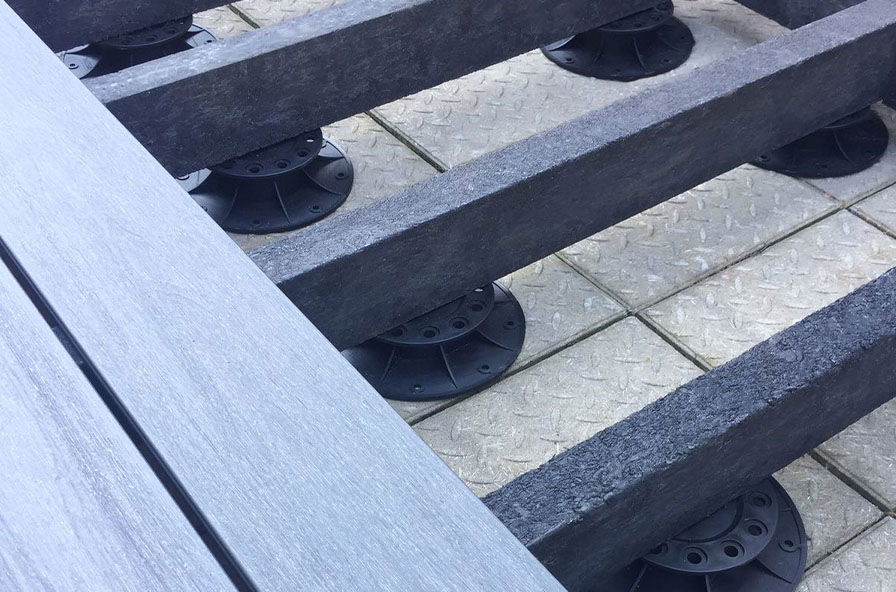
The composite decking framework, made up of joists, beams and support posts, is the foundation on which the deck depends. A joist spacing of 300 mm centres is the standard recommendation for composite boards, though always follow the installation guide for your specific product.
Frame options include treated timber (10 to 15-year lifespan), recycled plastic composite (matches the board lifespan) and aluminium (suited to elevated installations). Regardless of frame material, applying a self-adhesive joist tape to the top face of each joist before laying boards significantly extends subframe life by preventing moisture from accumulating at the contact point between boards and timber.
Recycled plastic beams and adjustable pedestals are available from specialist suppliers as a low-maintenance alternative to timber.
Composite Decking Posts
Composite decking posts carry the structural load of the deck to ground level. In most residential installations, structural timber posts are standard. Composite post sleeves are available to clad them, providing a consistent finish that matches the surrounding deck surface.
Composite Decking Edge Board
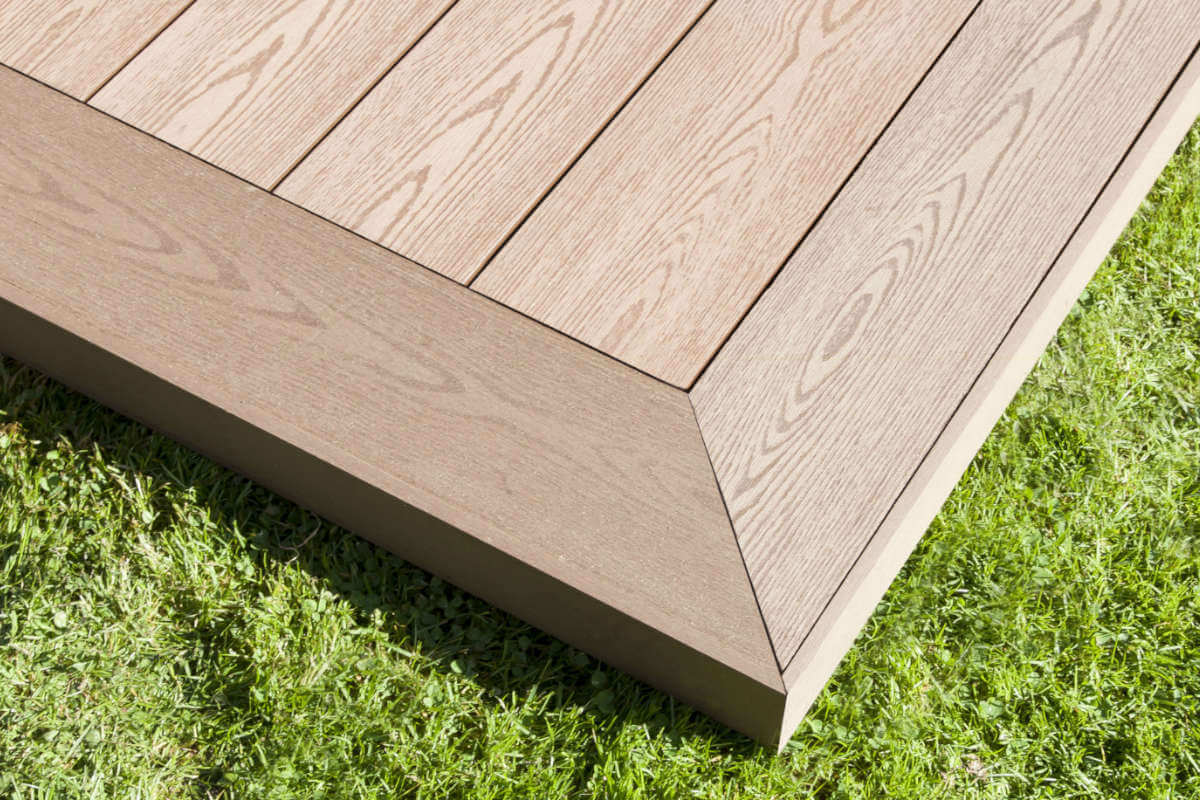
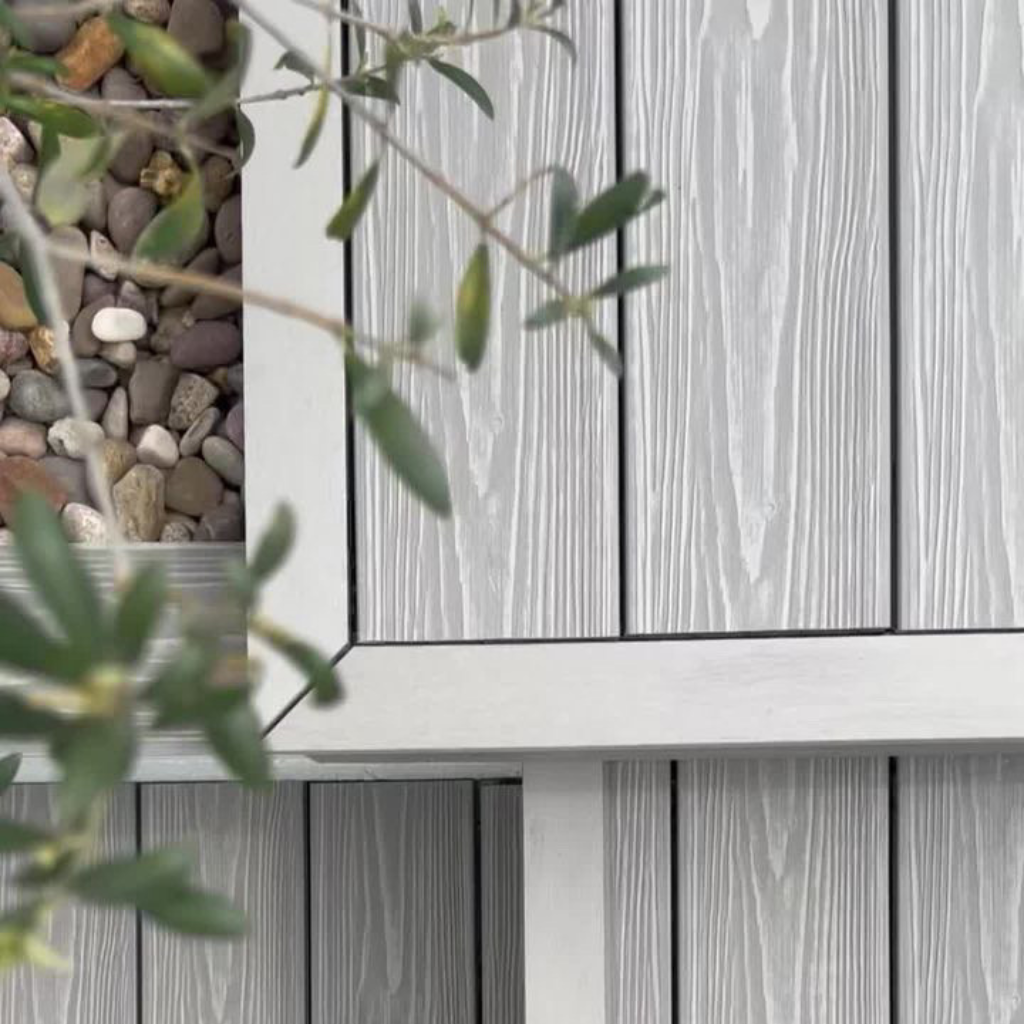
A composite decking edge board is an L-shaped profile that fits over the outer joist and uses the same hidden fastener system as the deck boards, creating a flush, screw-free perimeter. A fascia board is a different product: a flat, thin board fixed with screws directly to the front face of the outer joist to conceal the subframe. Both are colour-matched to the deck range. On hollow boards, end caps on any exposed ends are essential to prevent moisture ingress into the internal chambers.
Finishing the structure with matched accessories gives a composite deck a complete, professional appearance, and choosing components from the same product family as the deck boards ensures colour consistency across the whole installation.
How Much Does It Cost for Composite Decking?
The cost of a composite board for decking varies by board type, frame specification and whether you include installation. Based on 2026 UK market data, board-only prices typically fall within these ranges:
Uncapped hollow: £37 to £55 per m²
Capped hollow: £55 to £75 per m²
Capped solid: £70 to £92 per m²
For fully installed decks, total costs range from £130 to £350 per m², varying by specification, site access and contractor rates. Labour typically accounts for 40 to 60 per cent of the total installed cost, which means DIY installation can reduce the overall project cost substantially. That said, the subframe must be built correctly, and the manufacturer's installation guide followed precisely, as a poorly built frame will compromise even a premium deck board over time.
Which Board Is Right for You? A Simple Decision Tree
The right board depends on exposure, use and surface finish. The three steps below work through each decision in sequence to identify the correct composite board for decking for your project, whether a residential garden or a high-traffic commercial deck.
Step 1: Is the deck exposed to weather?
Yes → Choose capped. Go to Step 2.
No (covered or sheltered) → Uncapped may be adequate. Go to Step 2.
Step 2: What use and surface finish do you need?
Commercial, heavy traffic, or slip-critical areas (poolside, steps) → Solid capped, grooved finish, PTV ≥ 36 (Class C, BS 7976-2). Go to Step 3.
Residential, light to moderate use → Hollow-capped, grooved or woodgrain embossed finish. Go to Step 3.
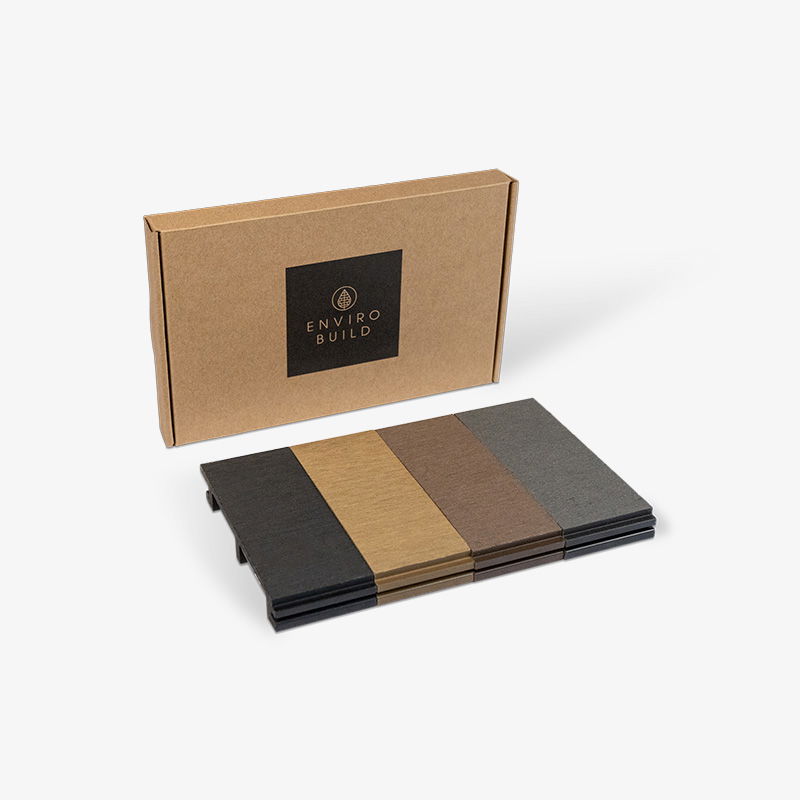
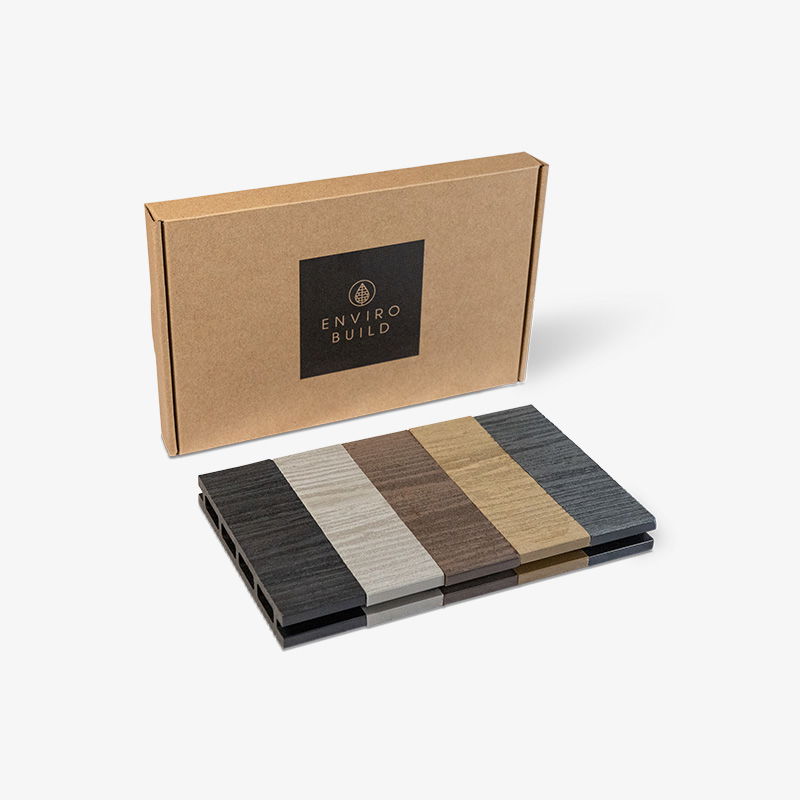
Step 3: Order a colour sample and confirm your choice.
Always request a physical sample before committing: boards lighten during the first months of outdoor exposure, and screen colours can be unreliable.
High-traffic or commercial: look for a solid-capped board with a 25-year manufacturer warranty.
Residential garden: a hollow-capped board with a 15-year warranty suits most applications.
These three steps cover the key variables for most UK projects, from cap layer and core profile to surface finish and colour. If you need more guidance on slip-resistant decking, have a look at our article
Waterproof & Slip Resistant Composite Decking: Safety, Style & Durability Combined.
Ready to Order? Here Is What to Do Next
If you are looking to delve deeper into the types of composite decking, then have a look at our blog, Types of Composite Decking: A Complete Guide. Choosing the right composite board for decking before work starts prevents rework, returns and unnecessary expense. At EnviroBuild, we offer two ranges for all project types: the Explorer for residential gardens
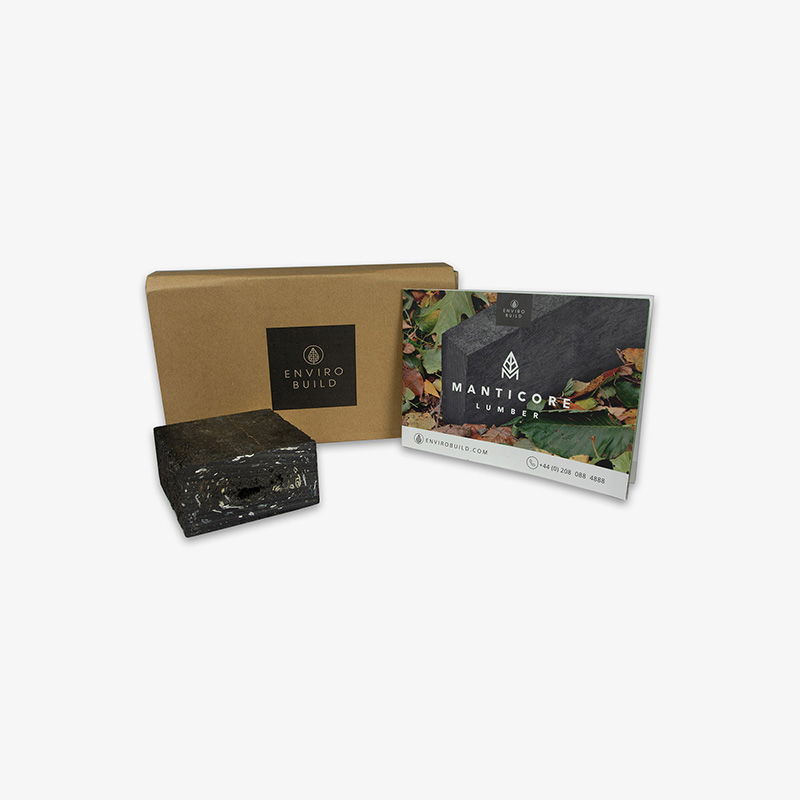
and the Frontier for high-traffic and commercial projects. Both use recycled materials and carry manufacturer warranties. Browse the range or request a free sample pack.
Frequently Asked Questions
1. What is the difference between capped and uncapped composite decking?
Capped boards have a solid HDPE polymer shell fused to their outer surfaces, making them non-porous and resistant to staining, fading and moisture. Uncapped boards use the same WPC material throughout, with no protective layer. Capped boards require less maintenance and perform better over time in exposed outdoor conditions.
2. Do I need hollow or solid composite decking?
Hollow boards are lighter and suit most residential garden decks. Solid boards handle higher loads and are the right specification for commercial use, pool surrounds and high-traffic areas. If you are unsure, our team can help you match the correct profile to your project.
3. What joist spacing does composite decking require?
A maximum joist spacing of 300 mm centres is the standard recommendation for composite boards in the UK. Always verify this against the installation guide for the specific board you are using, as requirements can vary between products.
4. How long does composite decking last?
Our Explorer range carries a 15-year residential warranty, and our Frontier range is backed by a 25 year stain and fade warranty. In practice, lifespan depends on installation quality, maintenance and exposure level. Capped boards consistently outlast uncapped boards in exposed outdoor conditions.
5. Which composite board for decking is right for a commercial project?
For commercial or public-access areas, a solid-capped board is the correct specification. It should carry a documented Pendulum Test Value (PTV) of 36 or above, which is Class C under the UK standard BS 7976-2, and is the minimum rating for any external area accessible to the public. Our Frontier range is a solid-capped composite board for decking designed to meet commercial project requirements, and sample packs are available from our commercial site.