
Types of Composite Decking: A Complete Guide
If you’re considering upgrading your outdoor space, you’ve probably come across composite boards. But what is a composite decking? At its core, it’s a blend of wood fibres and recycled plastics that creates a sustainable, long-lasting alternative to timber. At EnviroBuild, we design our decking with up to 90% recycled content, meaning it not only looks great but also helps reduce environmental impact.
In this blog, we’ll break down the types of composite decking available, their unique features, and which ones might suit your project best. Whether you’re building a sleek residential deck or a high-traffic commercial terrace, understanding the different options ensures you’ll choose the right product for your needs.

Author Name
Chief Writer
Thu, 28 Jul 2026

Types of Composite Decking: A Complete Guide to Choosing the Right Boards
Composite decking comes in four main construction types — solid or hollow core, and capped or uncapped — which can be combined with smooth, grooved, embossed or slip-resistant surface finishes. Solid capped boards are the most durable and expensive; hollow uncapped boards are the lightest and cheapest. UK composite boards are tested to BS EN 15534 and typically carry 10–25 year warranties. EnviroBuild's own range covers both ends of that spectrum: the solid, capped Frontier range and the hollow, uncapped Explorer range — you can compare both, in every available colour, on the composite decking shop page.
At a Glance
Core types: Solid (dense, heavier, most rigid) or hollow (chambered, lighter, cheaper)
Surface types: Capped/co-extruded (protective plastic shell) or uncapped (composite exposed on all faces)
Material: Typically 50–60% reclaimed wood fibre bonded with recycled HDPE or PP plastic, plus additives — exact ratios vary by manufacturer
EnviroBuild's own ranges: Frontier is solid and capped, from £37.99/board, 90% recycled content, 25-year residential warranty; Explorer is hollow and uncapped, from £24.99/board, 87% recycled content, 15-year residential warranty [17][18]
Governing standard: BS EN 15534 (parts 1–8) covers test methods and specifications for wood-polymer composite decking [1]
Fire performance: Rated under BS EN 13501-1 on the Euroclass A1–F scale; untreated timber is typically Class D, most WPC decking is combustible and needs product-specific test data [2][3]
Slip resistance: Measured in the UK by the BS 7976-2 pendulum test, reported as a Pendulum Test Value (PTV); the HSE's recommended minimum for wet outdoor areas is PTV 36 [4]
Thermal movement: Composite boards expand and contract with temperature; installation guides recommend larger end gaps in cold weather and smaller gaps in hot weather [5]
Joist spacing: Typically 300mm centres for boards laid straight, tightened to around 250mm for diagonal/herringbone layouts or heavy point loads [6]
Typical UK cost: Roughly £40–£140/m² for materials and £150–£350/m² fully installed, depending on tier [7]
What Is Composite Decking Made Of?
Composite decking is a wood-plastic composite (WPC): a blend of wood fibre (usually reclaimed sawdust, wood chips or offcuts) and a thermoplastic — most commonly high-density polyethylene (HDPE) or polypropylene (PP) — combined with bonding/coupling agents, pigments and UV stabilisers. The mixture is heated and forced through a die (extrusion) or, less commonly, formed in a heated mould (compression moulding) to create the finished board profile [8].
Wood-fibre-to-plastic ratios vary by manufacturer, but a roughly 50–60% wood fibre to 40–50% recycled plastic split is common across the industry — one UK manufacturer publicly states a 55% reclaimed wood fibre to 45% recycled HDPE mix [8]. EnviroBuild states that its Explorer range uses "up to 87% recycled materials" and its Frontier range "up to 90% recycled materials," with FSC 100%-certified wood fibre, manufactured using 100% renewable energy — figures taken from EnviroBuild's own product pages [9][10]. Both ranges break down to the same core recipe of 57% FSC-certified wood powder, 30% recycled HDPE, 6% stone powder and 7% additives, with the difference between them coming down to the core structure and cap layer discussed below [17][18]. For a fuller breakdown of the raw materials, see EnviroBuild's own article, What Is Composite Decking Made Of?
What Are the Main Types of Composite Decking Board?
There are two structural variables (core and cap) and one cosmetic variable (surface finish) that define almost every composite board on the market.
Solid Core vs Hollow Core Boards
Solid core boards are extruded as a single dense profile with no internal voids:
Higher resistance to deflection (bounce) under load — better for commercial areas, hot tubs or heavy furniture
Better sound dampening than a hollow board
Heavier, which makes them more cumbersome to move around site
More expensive for the boards, however the increased strength usually reduces substructure required, so overall build costs are marginally higher
Hollow core boards are extruded with internal chambers running the board's length:
Lighter, so installation is faster and less tiring
Generally cheaper per metre than an equivalent solid board
More dependent on correct joist spacing, since the chambers reduce edge-to-edge rigidity versus a solid section of the same width
Neither profile is inherently "better" — solid boards suit high-traffic or high-load applications, while hollow boards are a practical, budget-conscious choice for standard residential decks [11][12]. EnviroBuild's own range sits on either side of this line: Frontier is a solid board (13.44kg per 4m length) built for heavier use and minimal deflection, while Explorer is a hollow board (11.20kg per 4m length) aimed at standard garden decks where budget matters more [17][18]. If you're unsure which suits your project, EnviroBuild's decking calculator will estimate board and substructure quantities for either range, and their joists and pedestals pages cover the substructure each profile needs.
Capped (Co-Extruded) vs Uncapped Boards
Capped boards are made by co-extrusion: a thin plastic "cap" layer loaded with UV inhibitors, colourants and antioxidants is extruded around the composite core in the same production pass that forms the core, fusing the two together. Capping on all four sides, not just the top and sides, gives the most complete protection against moisture, staining and fading, at a higher manufacturing cost [8][13]. EnviroBuild's Frontier range is a fully capped board of this type, backed by a 25-year residential stain and fade warranty [10][18].
Uncapped boards have no separate protective shell — the wood-plastic composite is exposed on every face. Many are dual-sided, with a grooved profile on one face and embossed wood-grain on the other, giving two finishes from one board. Uncapped boards are more porous, so they are somewhat more prone to staining and colour change, but remain far more rot- and insect-resistant than solid timber, and typically cost less [9]. EnviroBuild's Explorer range is this type — a reversible, dual-finish board with a grooved face for extra grip, priced from £24.99/board with a 15-year residential warranty [10][17].
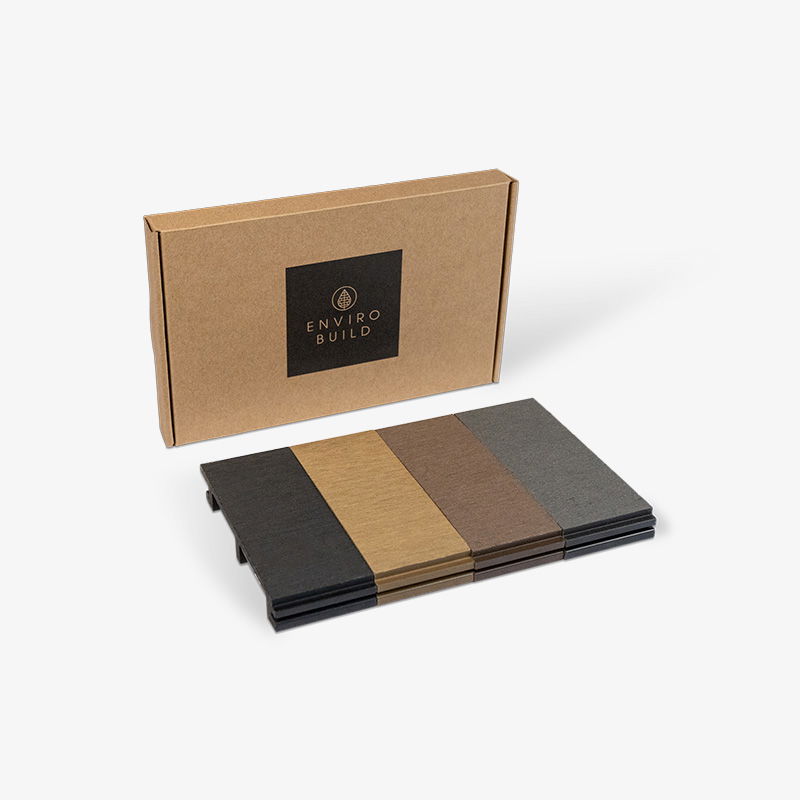
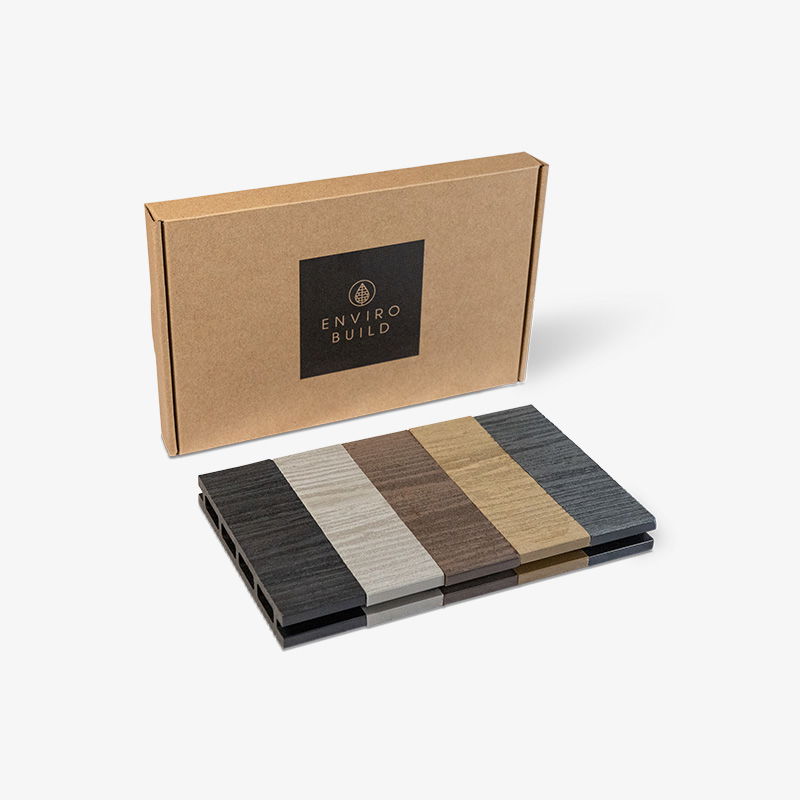
For a closer look at how the two ranges weather over time, EnviroBuild's own Does Composite Decking Fade? article compares capped and uncapped colour stability directly [19]. Not sure which finish suits your garden — order a free Frontier sample pack or Explorer sample pack to compare both in person before you buy.
Smooth, Grooved and Textured Finishes
Smooth finishes look contemporary but can be more slippery when wet unless specifically textured
Wood-grain embossed finishes mimic natural timber and add mechanical grip
Grooved/ribbed finishes are often used as a secondary face and can improve underfoot grip
Enhanced anti-slip finishes use a coarser or aggregate-loaded cap layer to raise the board's Pendulum Test Value for pool surrounds, ramps and step treads
Both EnviroBuild ranges use this dual-finish approach — Explorer boards are reversible with a grooved face and an embossed wood-grain face, while Frontier boards carry a natural wood-grain textured cap on a hidden fastener system — so you get a finish choice built into every board rather than needing a separate product line [17][18]. Browse the full set of finishes across both ranges in the composite decking gallery.
Comparison Table: Composite Decking Profile Types
Profile Type
Typical Weight
Structural Rigidity
Maintenance
Typical UK Cost (Materials)
Typical Service Life
EnviroBuild Equivalent
Solid, capped
Heaviest
Highest — minimal deflection
Lowest — occasional soap-and-water clean
£80–£140/m²
25–30+ years, often with 20–25 year warranty
Frontier range — from £37.99 per board, 25 year residential warranty
Solid, uncapped
Heavy
High
Low-moderate — periodic cleaning, some fade over time
£60–£90/m²
15–25 years, often with 10–15 year warranty
Not currently offered by EnviroBuild
Hollow, capped
Moderate
Good, but check joist spacing
Low
£60–£100/m²
20–25 years, often with 15–25 year warranty
Not currently offered by EnviroBuild
Hollow, uncapped
Lightest
Moderate — needs correct support
Moderate — periodic cleaning, more fade-prone
£40–£70/m²
10–20 years, often with 10–15 year warranty
Explorer range — from £24.99 per board, 15 year residential warranty
Costs and lifespans above are general UK market ranges compiled from third-party pricing and installation guides [7][14], not brand-specific EnviroBuild figures. EnviroBuild's own published warranty terms (see "How Long Does Composite Decking Last?" below) should be treated as the authoritative figures for EnviroBuild products specifically. EnviroBuild's Frontier and Explorer ranges sit at the two ends of this table — the solid-capped and hollow-uncapped rows respectively — so between them they cover the lowest-maintenance option and the lowest-cost option on the market, without a mid-tier hollow-capped or solid-uncapped product currently in the range [17][18].
Which Composite Decking Type Is Most Slip-Resistant?
Slip resistance in the UK is normally assessed using the BS 7976-2 pendulum test, which produces a Pendulum Test Value (PTV). The HSE recommends a minimum PTV of 36 in wet conditions for outdoor areas exposed to water, the benchmark referenced by BS EN ISO 16165:2021 [4]. The German ramp-test R-rating (R9–R13), sometimes seen on imported boards, is used less for UK outdoor decking because it models wet, weathered conditions less directly than the pendulum test [15].
Textured or embossed capped boards generally test higher for slip resistance than smooth, uncapped boards, since the cap layer can be formulated with a coarser, grip-enhanced finish. If a specific PTV figure is quoted for a named product range, ask for the independent test certificate — we could not independently verify PTV figures for EnviroBuild's own ranges from public sources, so any specific number should be confirmed directly with EnviroBuild. Both the Frontier and Explorer product pages list downloadable slip test documentation alongside their other technical downloads, so check the individual Frontier or Explorer product listing for the current certificate before specifying either range for a pool surround, ramp or step tread.
How Fire-Resistant Is Composite Decking?
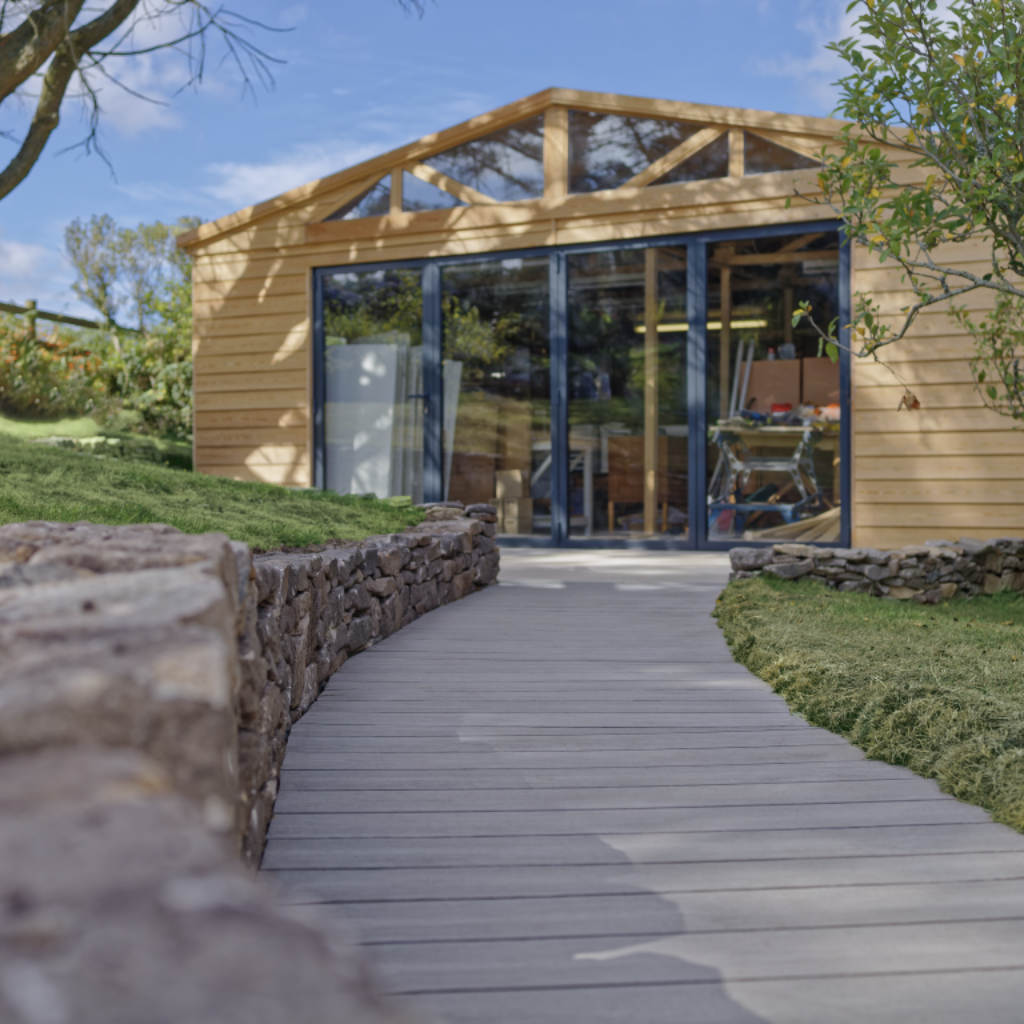
UK and EU fire performance for construction products is classified under BS EN 13501-1, which uses the Euroclass system: A1 and A2 are non-combustible or near non-combustible, B to E cover increasingly combustible materials, and F is unclassified. Additional suffixes cover smoke production (s1–s3) and flaming droplets (d0–d2) [2].
Untreated softwood timber typically achieves only Euroclass D. Because WPC decking contains both wood fibre and thermoplastic, it is combustible and, depending on formulation and any fire-retardant additives, generally tests somewhere in the B–D range rather than A1/A2 [3]. This matters most for balconies on buildings over 18 metres in England, where rules introduced in December 2018 require decking on relevant balconies to achieve Euroclass A2-s1,d0 — a standard currently met only by non-combustible materials such as aluminium, porcelain or specific fibre-cement/GRP-phenolic products; most timber and composite boards do not qualify for that high-rise application [3][16]. For low-rise residential gardens there is no legal minimum Euroclass, though some specifiers treat Class B as good practice.
If your project does need an A2-s1,d0 rated finish — for example a balcony on a high-rise building — composite decking is not the right product regardless of brand; EnviroBuild's commercial division offers non-combustible aluminium ,fibre cement and porcelain balcony decking systems that are engineered specifically for that requirement.
Does Composite Decking Expand and Contract in the Heat?
Yes. Like most plastics-containing products, WPC boards have a measurable coefficient of thermal expansion, tested as part of the BS EN 15534 series. Published test-derived figures put capped boards at roughly 33–36 x 10⁻⁶ per Kelvin and uncapped boards at roughly 44–46 x 10⁻⁶ per Kelvin — uncapped boards move noticeably more across a UK seasonal temperature range [5][1].
This is why installers use expansion gaps rather than butting boards tightly together:
End-to-end gaps: around 8mm for 4m length boards (2% of the boards length)
Side-to-side (long edge) gaps: around 3-6mm
Gaps against walls or fixed structures: 15–20mm
Angled/mitred cuts: around 2% of the boards length
Some guides also adjust the end gap by fitting temperature — a
round 4mm above 25°C, up to 10mm below 1°C — so boards have room to expand in summer without buckling [5]
Getting these gaps right matters most for uncapped and hollow boards, which tend to move more than dense, capped profiles — so it's worth following the manufacturer's own fixing guide rather than a generic rule of thumb. EnviroBuild's step-by-step composite decking installation guide sets out fastener spacing and fitting instructions specific to the Frontier and Explorer profiles, including their hidden fastener systems.
How Long Does Composite Decking Last, and What Do Warranties Cover?
Composite decking is widely marketed on a 25–30 year usable lifespan with minimal maintenance, and UK warranties across the market commonly range from 10 to 25 years depending on tier and whether the installation is residential or commercial [7][14].
EnviroBuild's own published warranty terms state:
Frontier (capped) range: 25 years residential / 15 years commercial, covering splitting, splintering, rot, termite/fungal damage, fading beyond a stated maximum colour-change threshold, and staining if cleaned within a specified window
Explorer (uncapped) range: 15 years residential / 10 years commercial, covering defects in workmanship and materials, splitting, splintering, rot, and termite/fungal structural damage
Both are prorated after the first period, exclude removal/reinstallation labour, and allow one transfer to a new owner within five years of purchase for residential properties (commercial warranties are freely transferable) [10]
These figures come directly from EnviroBuild's composite decking warranty page and should be checked against the current published terms before reuse. Both warranties apply automatically to boards bought through EnviroBuild — there's no separate registration step — so the coverage above is already included whether you order Frontier or Explorer boards.
Solid vs Hollow vs Capped: Which Type Should You Choose?
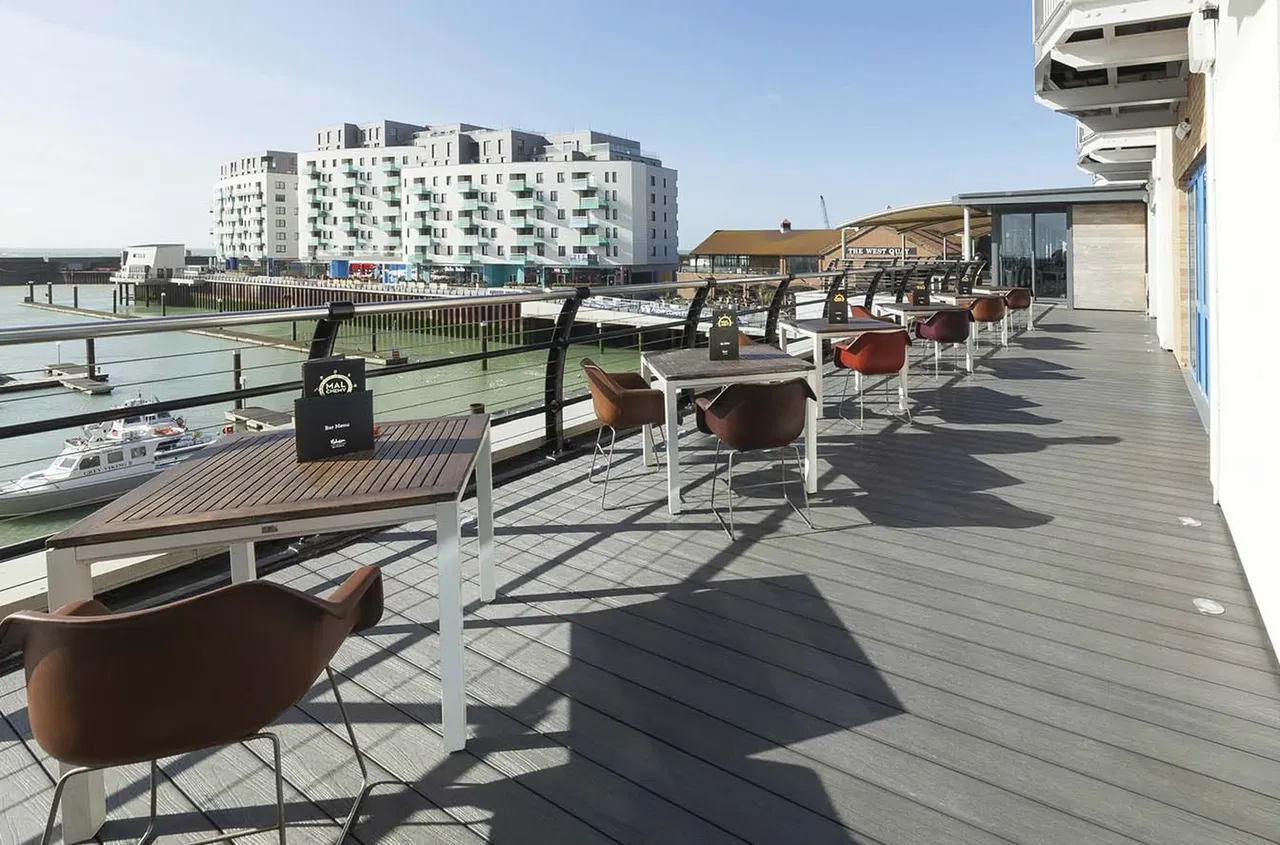
Solid, capped boards — lowest long-term maintenance and highest load capacity (hot tubs, heavy furniture, commercial footfall), the highest upfront cost, however with reduced substructure requirement by a small margin. This is exactly the spec of EnviroBuild's Frontier range: a solid, fully capped board with a 25-year residential warranty, ideal if you want to fit the deck once and not think about it again.
Hollow, capped boards — most of the low-maintenance benefit of a cap layer, with a lower strength and weight to offer a lower price, provided joists are spaced correctly for a hollow profile.
Solid or hollow uncapped boards — the budget option; slightly more surface maintenance and colour change over time, but lower purchase price and, on dual-sided boards, two finishes from one product. EnviroBuild's Explorer range fits this bracket: a hollow, uncapped, reversible board from £24.99/board with a 15-year residential warranty, a sensible choice for standard garden decks where budget is the priority.
Whatever profile you choose, check the manufacturer's joist-spacing requirement — commonly 300mm centres for straight-laid boards, tightened to around 250mm for diagonal/herringbone patterns and heavy point loads — since spacing that is too wide is the most common cause of a "bouncy" or sagging composite deck [6]. EnviroBuild's decking calculator will work out how many boards, joists and pedestals your layout needs for either range before you order.
Ready to Choose Your Boards?
If you've decided which construction type suits your project, the fastest way to compare EnviroBuild's own Frontier and Explorer ranges side by side is to:
Browse every colour in both ranges on the composite decking shop page
Order a free Frontier sample pack or Explorer sample pack to check the finish and colour in person before committing
Run your dimensions through the composite decking calculator to get a materials list, including joists and pedestals
Get design inspiration from the composite decking gallery
For larger or commercial projects, request a quote directly from EnviroBuild's team
Frequently Asked Questions
What is the difference between capped and uncapped composite decking?
Capped boards have a co-extruded plastic shell fused around the wood-plastic core, protecting against UV fading, staining and moisture. Uncapped boards expose the composite on every face, so they cost less but weather slightly faster. EnviroBuild's Frontier range is capped; its Explorer range is uncapped — see the comparison table above for how the warranties and pricing differ between the two.
Is solid or hollow composite decking better?
Neither is universally better. Solid boards are heavier, quieter underfoot and more resistant to deflection, suiting heavy loads and commercial use. Hollow boards are lighter and cheaper, and work well for standard residential decks when the manufacturer's joist spacing is followed.
Should I buy EnviroBuild's Frontier or Explorer range?
Frontier (solid, capped) suits anyone prioritising the lowest maintenance and longest warranty, at a higher price point (from £37.99/board, 25-year residential warranty). Explorer (hollow, uncapped) suits budget-conscious garden projects that can accept slightly more upkeep and fade over time, at a lower price point (from £24.99/board, 15-year residential warranty). Ordering both Frontier and Explorer sample packs is the easiest way to compare them before ordering full boards.
Does composite decking need gaps between boards?
Yes. Boards expand and contract with temperature, so manufacturers specify expansion gaps — typically a few millimetres between ends and edges, and larger gaps against walls — to prevent buckling in hot weather [5]. EnviroBuild's own installation guide sets out the exact fixing centres for Frontier and Explorer boards.
Is composite decking slippery when wet?
It can be, particularly smooth, uncapped surfaces. UK slip performance is measured with the BS 7976-2 pendulum test (PTV); the HSE's recommended minimum for wet outdoor areas is PTV 36, and textured, grip-enhanced capped boards generally test higher [4].
How long does composite decking last?
Quality composite decking is typically designed to last 25–30 years with minimal maintenance, and UK warranties usually run from 10 to 25 years depending on product tier and residential/commercial use. Always check the specific manufacturer's warranty document — EnviroBuild's is published on its composite decking warranty page.
Is composite decking fire-resistant?
Not inherently — WPC decking is combustible because it contains both wood fibre and plastic. Fire performance is tested under BS EN 13501-1 (Euroclass A1–F); most composite boards test in the B–D range, below the A1/A2 grades required for balconies on buildings over 18 metres in England [2][3]. Where an A2-rated finish is required, EnviroBuild's commercial aluminium balcony decking is a non-combustible alternative.
Sources
BSI/CEN, BS EN 15534 series — Composites made from cellulose-based materials and thermoplastics (WPC/NFC): test methods and specifications for decking profiles and tiles — knowledge.bsigroup.com, en-standard.eu
Dura Composites, Fire Safety: Designing out the Risk — duracomposites.com/insight/fire-safety-testing
Gripsure, Required Fire Rating for Balcony Deck Boards — gripsure.co.uk/2019/07/04/what-fire-rating-do-deck-boards-need-on-balconies
Outdoor Deck, Safer Decking: Get to Grips with Slip Resistance (BS 7976-2 pendulum test, PTV, HSE guidance) — outdoordeck.co.uk/technical-blogs/safer-decking-get-to-grips-with-slip-resistance
Ultra Decking, Does Composite Decking Expand? An Ultimate Guide to Installation Gaps — ultradecking.co.uk/does-composite-decking-expand-an-ultimate-guide
Tough Decking, Composite Decking Joist Spacing (300mm Guide) — toughdecking.co.uk/composite-decking-joist-spacing
Arbordeck, Composite Decking Cost UK: Real 2026 Price Guide — arbordeck.co.uk/2026/03/composite-decking-cost-uk
Ecoscape, How Is Composite Decking Made? — ecoscape.co.uk/advice/how-is-composite-decking-made
EnviroBuild, What Is Composite Decking Made Of? — envirobuild.com/blogs/articles/what-is-composite-decking-made-of
EnviroBuild, Composite Decking Warranty — envirobuild.com/pages/composite-decking-warranty
BuildDeck, Capped vs Hollow Core Decking: What's the Key Difference? — builddeck.co.uk/solid-vs-hollow
Maple Plastics, Types of Composite Decking (Hollow, Solid & Capped) — mapleplastics.co.uk/types-of-composite-decking
Hosung Deck, Types of Composite Wood Decking: Complete Guide for Buyers — hosungdeck.com/wpc-industry-trends/types-of-composite-wood-decking
Tough Decking, Composite Decking Cost UK: 2026 Price Guide — toughdecking.co.uk/composite-decking-cost-uk
Velocity Safety, Pendulum Slip Testing Guide: PTV Values & Floor Safety — velocitysafety.co.uk/blog/what-is-pendulum-slip-testing
Dura Composites, Non-combustible decking — duracomposites.com/insight/non-combustible-decking
EnviroBuild, Granite Composite Decking – Explorer (product spec: hollow/uncapped construction, 145x21mm profile, 11.20kg per 4m board, 87% recycled content, 15-yr residential/10-yr commercial warranty, 27.1 kg CO₂e/m²) — envirobuild.com/products/composite-decking-explorer-granite
EnviroBuild, Slate Composite Decking – Frontier (product spec: solid/capped construction, 143x22mm profile, 13.44kg per 4m board, 90% recycled content, 25-yr residential/15-yr commercial warranty, 32.5 kg CO₂e/m²) — envirobuild.com/products/frontier-slate
EnviroBuild, Does Composite Decking Fade? — envirobuild.com/composite-decking/does-it-fade
This article references EnviroBuild's own published product, warranty and shop pages for all EnviroBuild-specific figures (recycled content percentages, warranty lengths, warranty terms, pricing, dimensions and weights). Any figures not directly sourced from envirobuild.com — including generic industry wood/plastic ratios, generic Euroclass fire ratings, and generic PTV slip figures — are presented as general market information and should be confirmed against EnviroBuild's own test data before being attributed to a specific EnviroBuild product. Pricing shown was correct at the time of research and should be checked against the live site before publishing.